Planning a journey across Egypt requires balancing monumental river history with ancient desert outposts and coastal waters. This guide breaks down ideal trip durations, key regions, and practical routes for an unforgettable visit.
A classic trip to Egypt requires between 7 and 10 days to explore the core historic spine along the Nile, while 12 to 14 days allows you to include Alexandria or the Red Sea coast. Seven days provides enough time to cover Cairo's ancient monuments and take a short journey through Luxor and Aswan. Extending your route past ten days lets you slow your pace, add desert valleys, or relax by coastal reefs.
How Many Days Do You Need in Egypt?
Determining your trip length depends on your travel style and how widely you plan to travel between regions.
- 7 Days: Best for first-time visitors focused strictly on signature historical landmarks. This timeframe splits days between Cairo and the primary temple complexes in Upper Egypt.
- 10 Days: The sweet spot for most travelers. You can tour Cairo without rushing, take multi-day Nile Cruises between Aswan and Luxor, and visit roadside sanctuaries like Kom Ombo Temple.
- 12 to 14 Days: Ideal for a balanced journey. You can pair the river corridor with the Mediterranean heritage of Alexandria or the marine reefs of Hurghada and Sharm El Sheikh.
- 15+ Days: Essential if you want to venture deep into South Sinai to climb Mount Sinai or take desert expeditions across distant oases like Siwa.
Classic 7-Day Egypt Itinerary: Cairo, Luxor, and Aswan
A one-week schedule concentrates on the core historical corridor, moving south along the Nile.
Days 1–3: Historic and Islamic Cairo
Begin your journey in Cairo. Dedicate your first morning to the Giza Plateau to stand before the Great Sphinx of Giza. Spend the afternoon exploring central museums before discovering Coptic Cairo, where the historic Hanging Church sits atop the Roman Babylon Fortress.
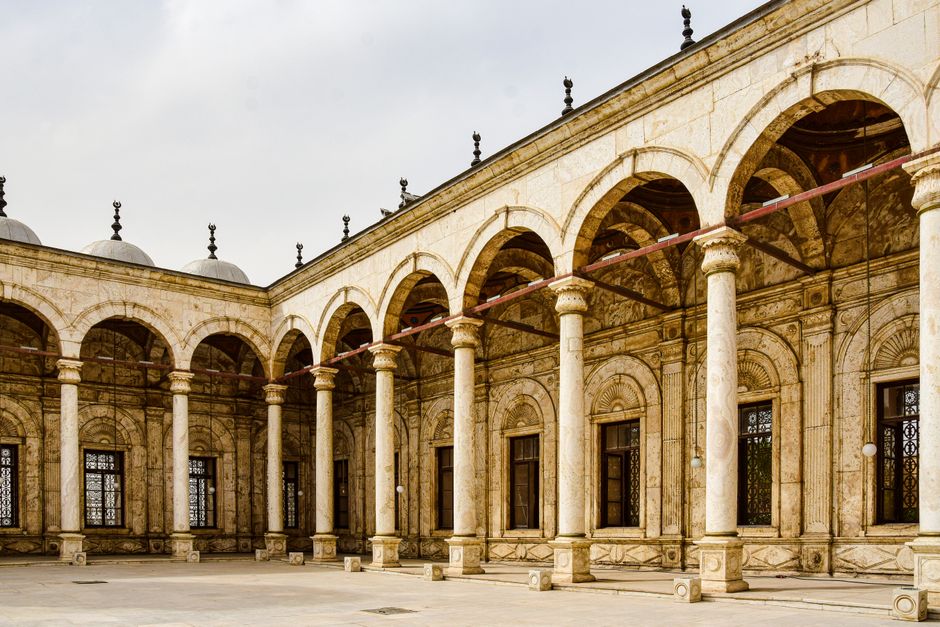
On day two, ascend to the Citadel of Saladin and admire the towering domes of the Mosque of Muhammad Ali. Spend your evening wandering the labyrinthine alleyways of Khan el-Khalili, where copper merchants, spice vendors, and historic cafes have operated for centuries. Use your third morning to travel south to Upper Egypt via domestic flight or sleeper train.
Days 4–5: The Open-Air Museum of Luxor
Arrive in Luxor, ancient Thebes. Devote one full day to the West Bank, where golden limestone cliffs shelter centuries of royal burials. Stand beneath the towering quartzite figures of the Colossi of Memnon, admire the stepped terraces of the Mortuary Temple of Hatshepsut, and study the deep relief carvings covering the pylons of Medinet Habu.
On the East Bank, spend your second day walking through the colossal hypostyle hall of Karnak Temple. The complex grew across fifteen centuries, leaving a vast stone record of pharaonic architecture.
Days 6–7: The River Frontier of Aswan
Head south toward Aswan. Travel by wooden river taxi to the island sanctuary of Philae Temple, saved from rising reservoir waters during the construction of the High Dam. In the afternoon, cross the current to explore ancient ruins and Nubian village paths on Elephantine.
Extended 10 to 14-Day Route: Alexandria and the Red Sea
With extra time, you can branch out from the river valley toward the coasts.
Adding Alexandria to the North (2 Days)
Add a northern excursion from Cairo to Alexandria. Face the Mediterranean surf beside the circular architecture of the Bibliotheca Alexandrina. Descend into the subterranean chambers of the Catacombs of Kom El Shoqafa, where Roman, Greek, and Egyptian decorative styles fuse into bedrock tombs. Nearby stands Pompey's Pillar, a massive red granite monolith erected under Roman rule. Stroll through the seaside gardens flanking Montaza Palace before returning inland.
Adding the Red Sea Coast (3 to 4 Days)
After touring Upper Egypt, take an overland transfer from Luxor to Hurghada. The coastal city offers access to offshore coral reefs around the Giftun Islands and evening strolls past yachts along the Marina. Take a late afternoon Desert Safari into the rugged granite foothills of the Red Sea Hills, or pause near the historic fishing harbor to view the ornate minarets of the waterfront Mosque.
Alternatively, cross over to the Sinai Peninsula to explore Sharm El Sheikh. Snorkel the warm waters of Naama Bay or pick up handmade crafts in the lively pedestrian alleys of the Old Market.
Where to Go in Egypt: Key Regions and Highlights
Egypt divides into distinct geographic regions, each presenting unique history and landscape.
- Lower Egypt (Cairo & Alexandria): Characterized by broad river delta plains, bustling urban avenues, medieval Islamic defense towers, and breezy Mediterranean corniche walks.
- Upper Egypt (Luxor & Aswan): The agricultural Nile valley narrows between sandstone cliffs. This region preserves intact temple complexes, rock-cut tombs, and traditional felucca sailing routes.
- Red Sea Riviera (Hurghada & Sharm El Sheikh): A marine playground defined by hyper-arid coastal plains backed by jagged granite peaks, offering sheltered bays and fringing reefs.
- Sinai Peninsula & Western Deserts: Rugged interior territories home to Bedouin communities, ancient pilgrimage routes leading to Mount Sinai, and remote desert oases.
How to Get Around Egypt
Navigating between Egyptian hubs is straightforward once you know the transit options.
Domestic flights connect Cairo directly to Luxor, Aswan, Hurghada, and Sharm El Sheikh within an hour. For the overland route along the Nile, passenger trains run regular services between Cairo, Edfu, Luxor, and Aswan. River vessels and traditional wooden launches handle daily island crossings in Upper Egypt.
Best Time to Visit and Travel Tips
The cooler winter months between October and April offer comfortable temperatures for walking through unshaded limestone ruins in Upper Egypt. Summer brings extreme daytime heat to Luxor and Aswan, making sunrise sightseeing essential. Coastal destinations like Hurghada and Sharm El Sheikh remain popular year-round due to cooling marine breezes.
Pack lightweight, breathable clothing that covers shoulders and knees to stay comfortable in heat and respect local customs in active places of worship. Drink bottled water, keep small cash notes accessible for service gratuities, and refuel between temple stops with hearty street koshari or a fresh glass of chilled hibiscus tea.