
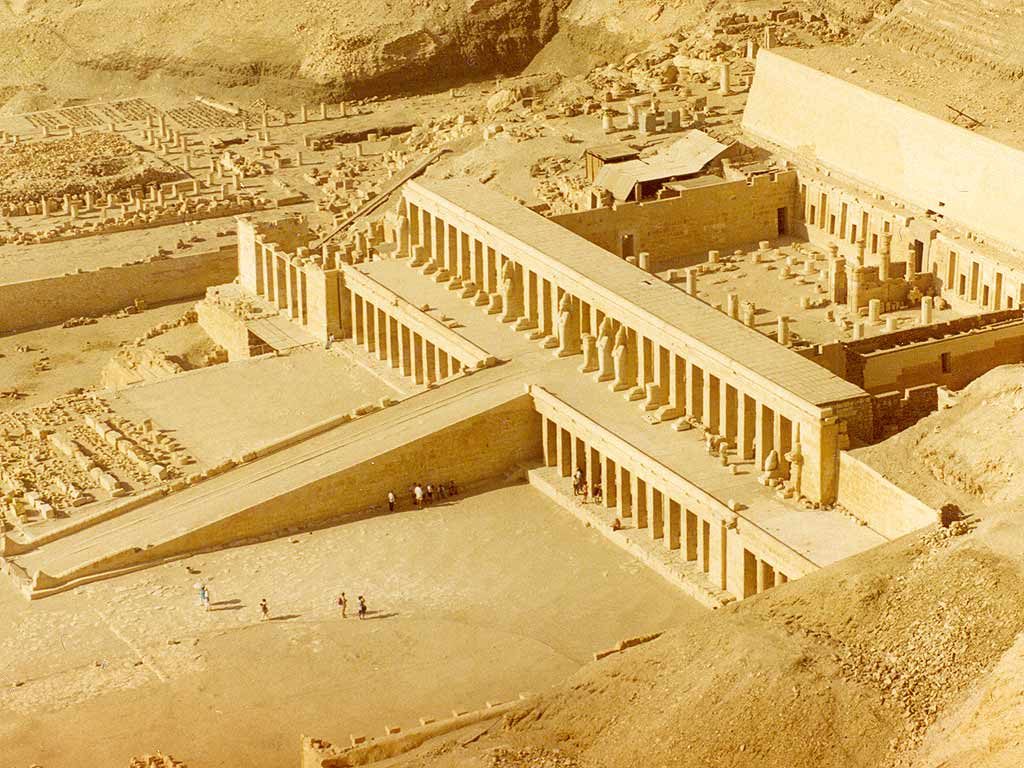
Mortuary Temple of Hatshepsut
Carved directly into the towering, sun-bleached limestone amphitheater of Deir el-Bahari, the 15th-century BCE mortuary temple of Pharaoh Hatshepsut—known antiquity as *Djeser-Djeseru* ("Holy of Holies")—stands as a radical departure from standard New Kingdom architecture. Conceived by the royal architect Senenmut around 1470 BCE during the 18th Dynasty, the structure harmonizes with the sheer cliff face through three monumental, tiered terraces linked by expansive central ramps. Approaching across the baking desert floor, travelers are met by colonnades of rhythmic symmetry where surviving polychrome reliefs depict Hatshepsut’s divine birth alongside her historic trading expedition to the land of Punt, detailed with carvings of frankincense trees, foreign fauna, and heaped treasures. Ascending to the upper platforms, visitors step from the dazzling Theban glare into the cool, shadowed colonnades of the Hathor and Anubis sanctuaries, where intact wall paintings still blaze in vivid turquoise, ochre, and iron-red pigments. Along the highest terrace, imposing Osiride statues of Hatshepsut, crowned and bearing the ceremonial false beard, stand sentinel overlooking the fertile Nile plain. Standing before these surviving colossi, one can trace the stark chisel marks left by her successor Thutmose III in his post-mortem attempt to obliterate her rule from memory, offering a tangible encounter with one of history's most fascinating dynastic power struggles.
More in Luxor
Photo credits (3)
- Ian Lloyd, CC BY-SA 3.0, via Wikimedia Commons
- Diego Delso, CC BY-SA 4.0, via Wikimedia Commons
- Chabe01, CC BY-SA 4.0, via Wikimedia Commons