
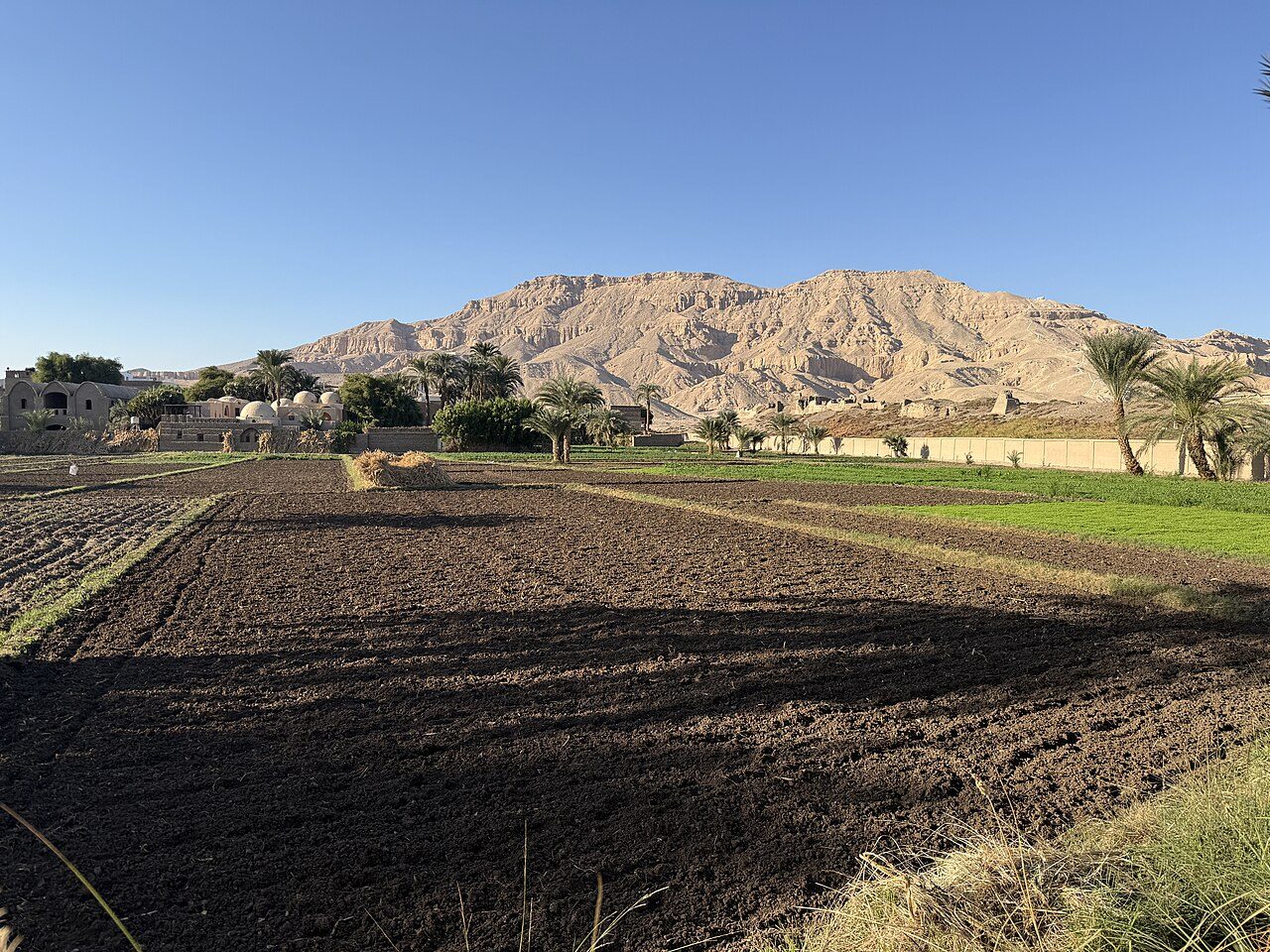
Medinet Habu
Guarded by the towering mudbrick ramparts of a fortified Syrian-style *migdol* gate, the Mortuary Temple of Ramesses III stands as the final monumental architectural flourish of Egypt’s New Kingdom (c. 1184–1153 BCE). Built to immortalize a pharaoh who ruled during an era of Mediterranean collapse, its sandstone pylons bear massive, deeply incised sunken reliefs designed to resist erosion and political erasure. Here, dramatic wall carvings depict Ramesses annihilating the mysterious Sea Peoples in savage naval battles, capturing capsizing galleys and fallen invaders with forensic, propagandistic detail. Stepping beyond the monumental first pylon into the shaded peristyle courtyards, travelers encounter an astonishing survival: brilliant polychrome paint that has defied three millennia of desert sun. Looking upward along the soaring architraves and the capitals of colossal Osiride pillars reveals vivid turquoise blues, warm ochres, and terra-cotta reds clinging to intricate astronomical ceilings and winged sun-disks. The site envelops visitors in a cloistered stillness far removed from Luxor's busier monuments, allowing you to trace the deep-cut hieroglyphs recording lists of captured weaponry and severed hands while wandering through the sun-bleached remnants of royal apartments and vaulted treasury halls.
More in Luxor
Photo credits (3)
- Chabe01, CC BY-SA 4.0, via Wikimedia Commons
- Ian Lloyd, CC BY-SA 3.0, via Wikimedia Commons
- Diego Delso, CC BY-SA 4.0, via Wikimedia Commons