
Luxor
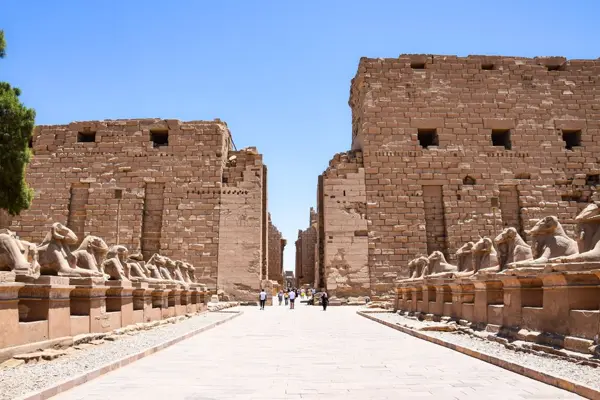
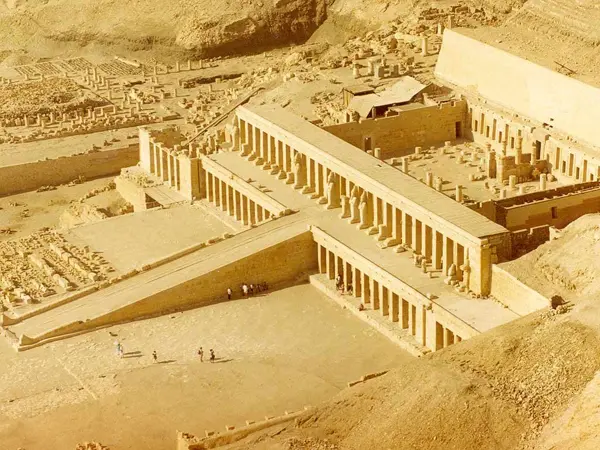
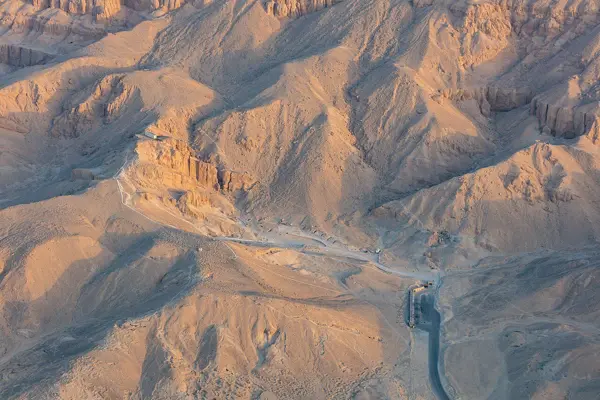
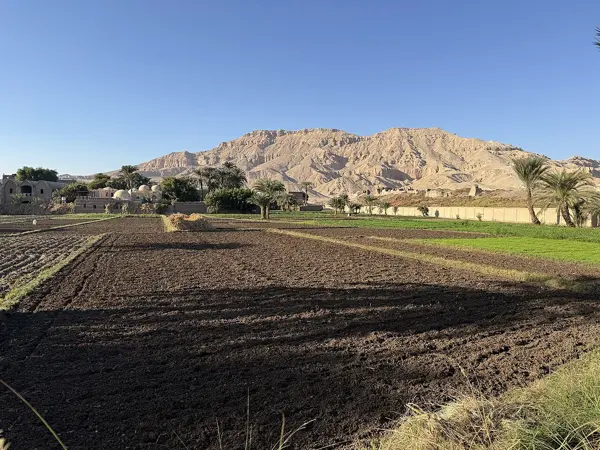
Bisected by the Nile in Upper Egypt, Luxor sits pressed between fertile palm groves and the stark limestone ridge of the Theban hills. Strolling the East Bank corniche brings the clatter of horse-drawn carriages, the chug of wooden passenger ferries, and the aroma of charred pigeon and baking flatbread drifting from side alleys into dry desert air. Once known as Thebes, the settlement flourished as the religious center of Egypt throughout the New Kingdom from roughly 1550 to 1077 BCE. On the East Bank, the Karnak complex features a hall of 134 soaring sandstone columns carved with deep hieroglyphs, linked to Luxor Temple by a restored three-kilometer Avenue of Sphinxes. Across the river, the West Bank holds the subterranean tombs of the Valley of the Kings and the terraced limestone colonnades of Hatshepsut at Deir el-Bahari. In the covered market streets, vendors sell sacks of dried hibiscus and cumin beside small cafes serving stewed fava beans. During the mid-Shaaban festival of the Moulid of Abu el-Haggag, residents parade decorated wooden boats through the streets to honor the thirteenth-century Sufi saint whose mosque was built directly into Luxor Temple. Plan visits between November and February to escape intense heat, start West Bank explorations at sunrise, and use the local public ferry to cross the Nile for pennies.
Read more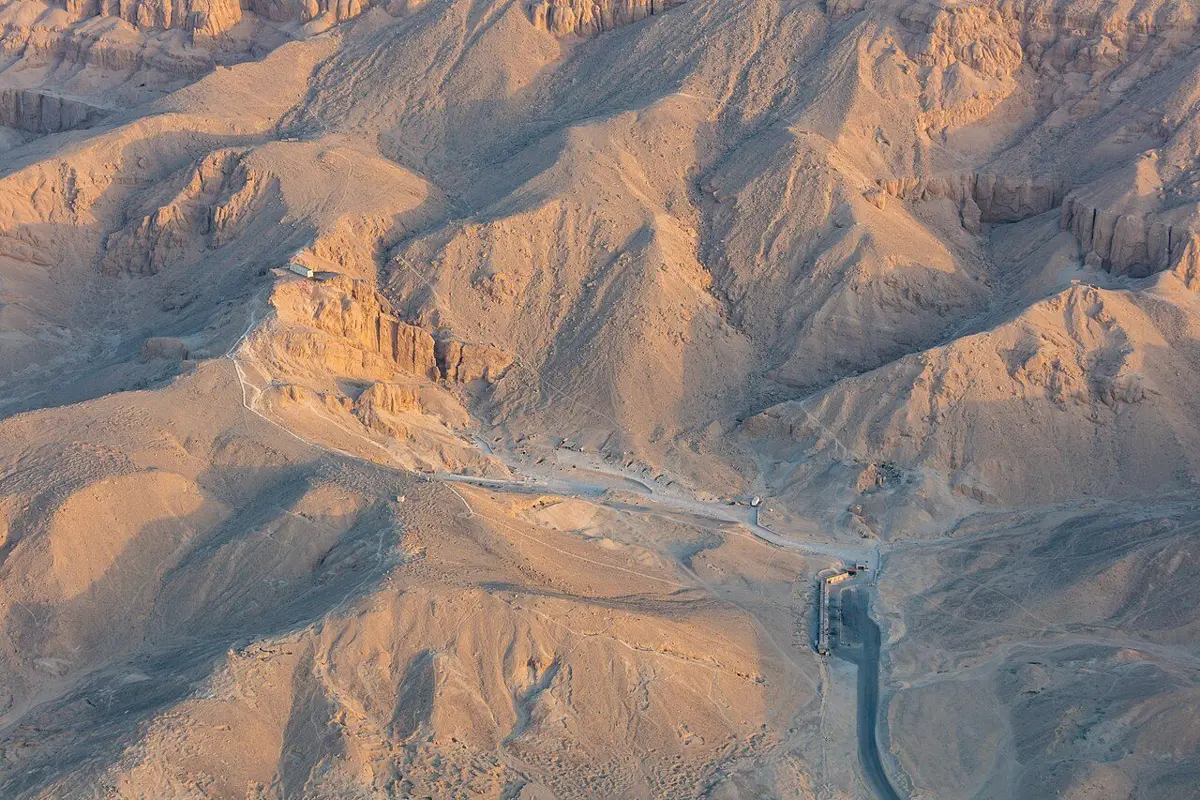
What's on in Luxor
Africa's oldest marathon, starting under Queen Hatshepsut's Temple and traversing ancient West Bank archaeological treasures and rural Nile villages.
Official infoEvents are collected automatically from the web. Dates can change, so please check the official information before you travel.
What to see in Luxor
Travel guides for Luxor
Photo credits (3)
- Diego Delso, CC BY-SA 4.0, via Wikimedia Commons
- Ian Lloyd, CC BY-SA 3.0, via Wikimedia Commons
- Chabe01, CC BY-SA 4.0, via Wikimedia Commons