
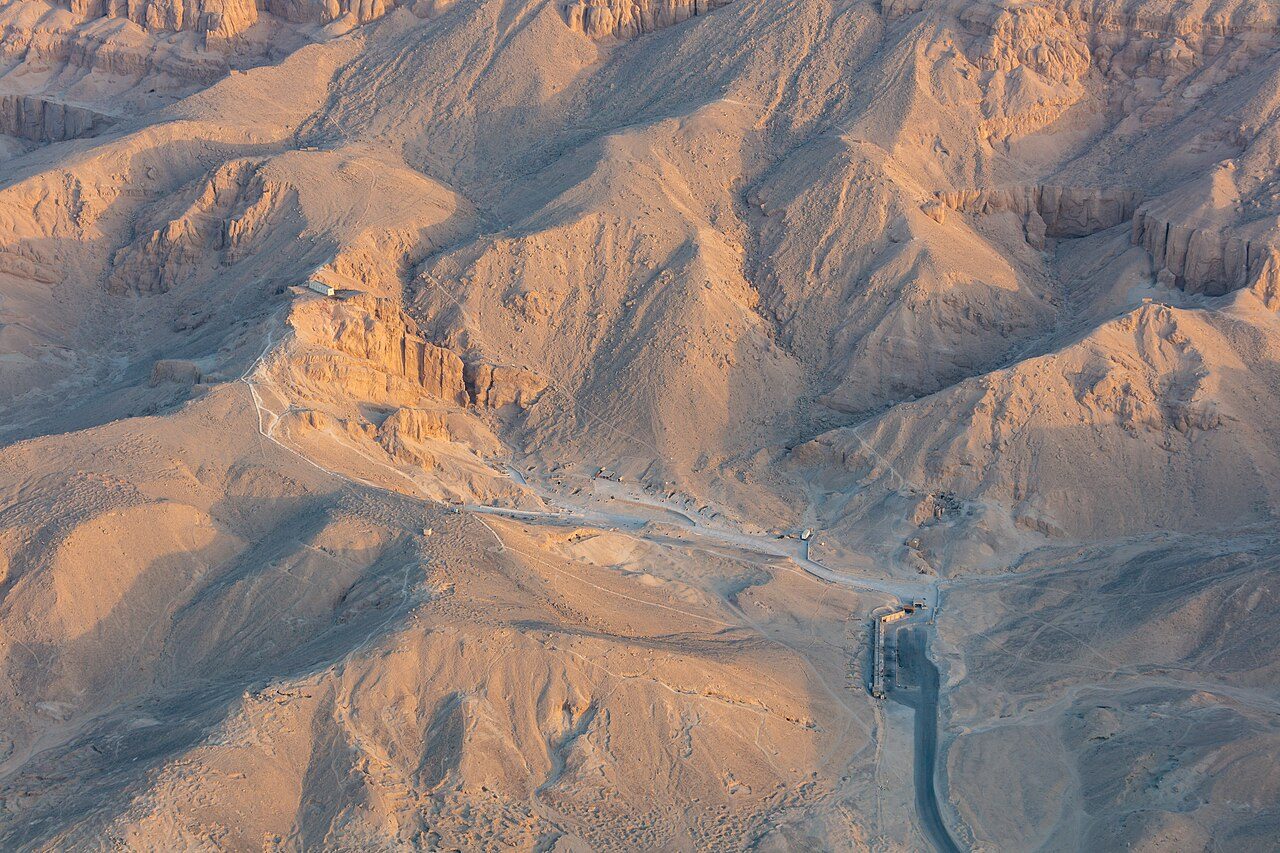
Valley of the Queens
Carved into the sun-scorched foothills of Luxor's West Bank, the Valley of the Queens—known in antiquity as *Ta-Set-Neferu*, or "The Place of Beauty"—served as the sacred necropolis for royal consorts and children during the New Kingdom (c. 1550–1070 BCE). Over ninety rock-cut tombs punctuate the canyon floor, engineered not as monuments of military triumph, but as divine vessels designed to usher royal women and princes into the realm of Osiris. Its historical pinnacle arrived in the 19th Dynasty, when Pharaoh Ramesses II commissioned the hypogeum of his beloved Great Royal Wife, Queen Nefertari, producing an architectural triumph that redefined ancient Egyptian funerary art. Descending from the blinding desert glare into the cool stillness of Nefertari’s tomb (QV66), travelers encounter walls glowing with astonishingly intact polychrome plaster. Lapis lazuli ceilings studded with golden stars shelter vivid, raised-relief murals of the queen wearing pleated diaphanous linen, playing the board game *Senet* and offering cattle to Hathor. In the nearby tomb of Prince Amun-her-khepeshef (QV55), visitors step past antechambers adorned with scenes of Ramesses III presenting his young son—depicted with the braided sidelock of youth—to underworld deities. Standing beneath the vaulted rock ceilings, enveloped by the faint mineral scent of ancient limestone, one feels the visceral intimacy of royal mourning rendered eternal in strokes of malachite, soot-black, and raw ochre.
More in Luxor
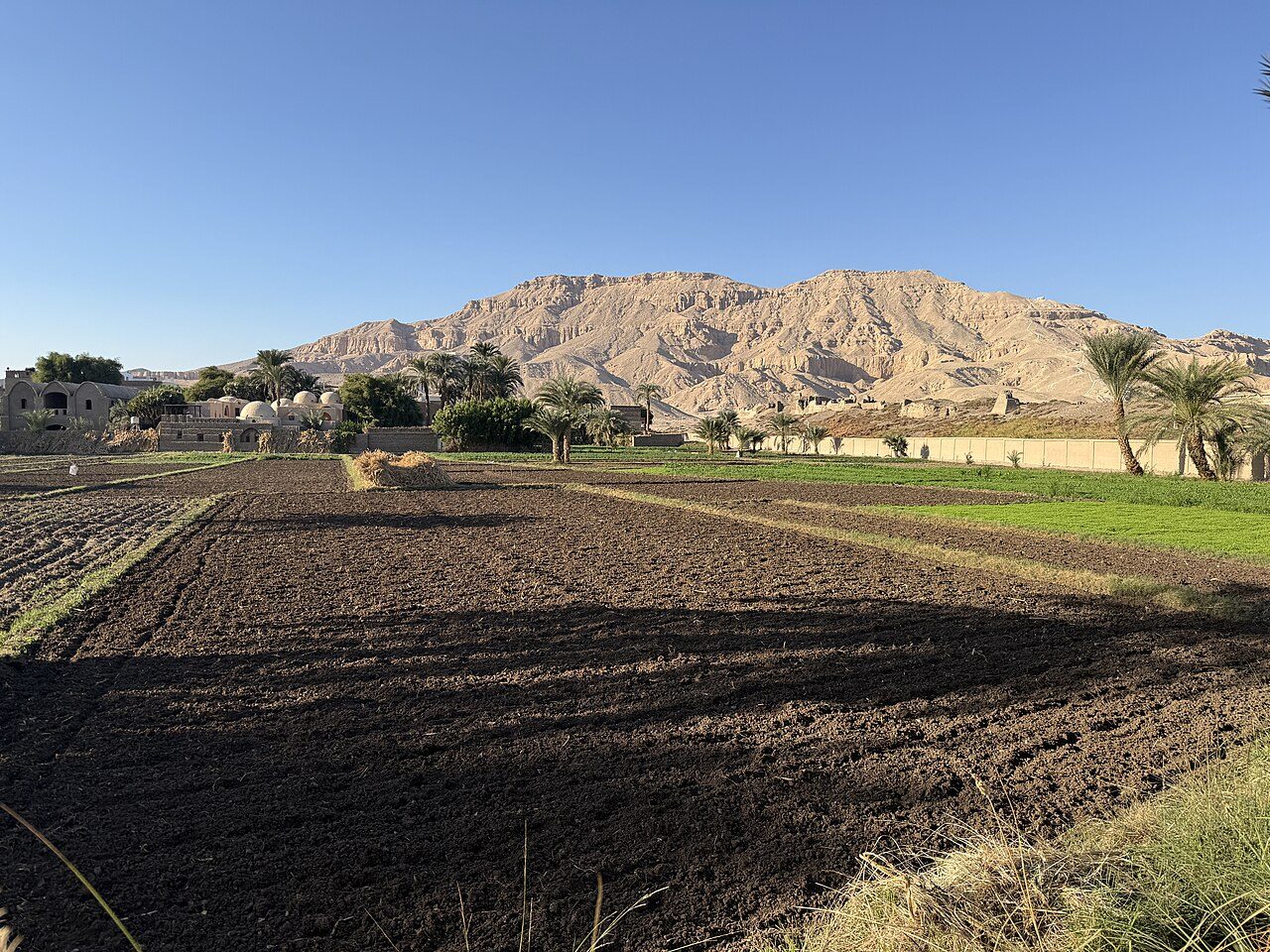
Photo credits (3)
- Diego Delso, CC BY-SA 4.0, via Wikimedia Commons
- Ian Lloyd, CC BY-SA 3.0, via Wikimedia Commons
- Chabe01, CC BY-SA 4.0, via Wikimedia Commons