
 New added
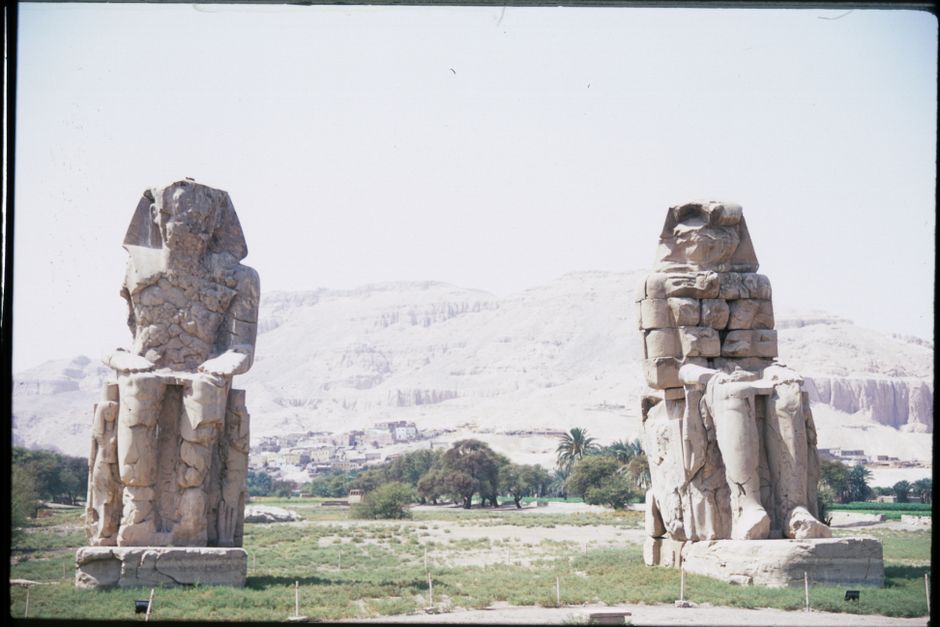
Colossi of Memnon
Rising abruptly from the agricultural flats of Luxor’s West Bank, two weathered quartzite sentinels have guarded the vanished mortuary temple of Pharaoh Amenhotep III since approximately 1350 BCE. Towering nearly 18 meters above the floodplain, these twin monoliths depict the Eighteenth-Dynasty ruler seated with hands on his knees, gazing eastward toward the Nile. Though stripped of their fine facial features by millennia of seismic shocks and annual inundations, the thrones retain remarkable detail; the side panels reveal deep-cut relief carvings of Hapy performing the *sema-tawy*—binding papyrus and lotus stalks to symbolize the unification of Upper and Lower Egypt—while smaller carved figures of Queen Tiye and Queen Mother Mutemwiya stand beside the Pharaoh's massive legs. Visitors standing in the dust beneath these battered giants experience an immediate brush with classical antiquity. Following an earthquake in 27 BCE, the cracked northern colossus began producing a resonant acoustic vibration at sunrise, caused by the morning heat expanding dew inside the porous stone. Roman and Greek travelers, including Emperor Hadrian in 130 CE, flocked here believing the statue was the fallen Trojan hero Memnon crying out to his mother Eos, leaving Latin and Greek graffiti etched into the lower pedestal. Though Roman-era repairs by Septimius Severus silenced the singing stone around 199 CE, the sheer scale of the sun-drenched, ochre-tinted colossi against the stark backdrop of the Theban hills still commands quiet reverence.
More in Luxor
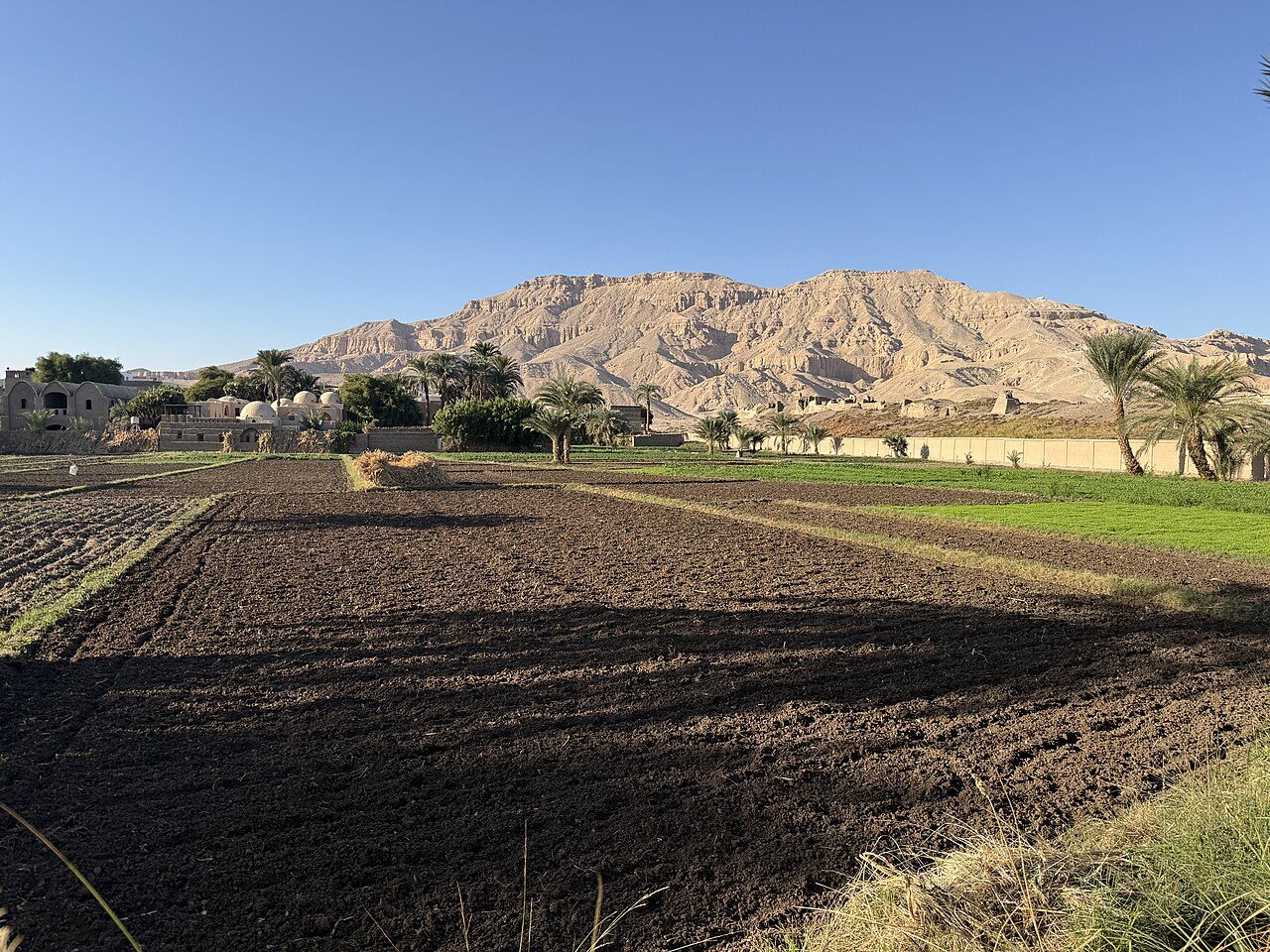
Photo credits (3)
- Ian Lloyd, CC BY-SA 3.0, via Wikimedia Commons
- Diego Delso, CC BY-SA 4.0, via Wikimedia Commons
- Chabe01, CC BY-SA 4.0, via Wikimedia Commons