
 New added
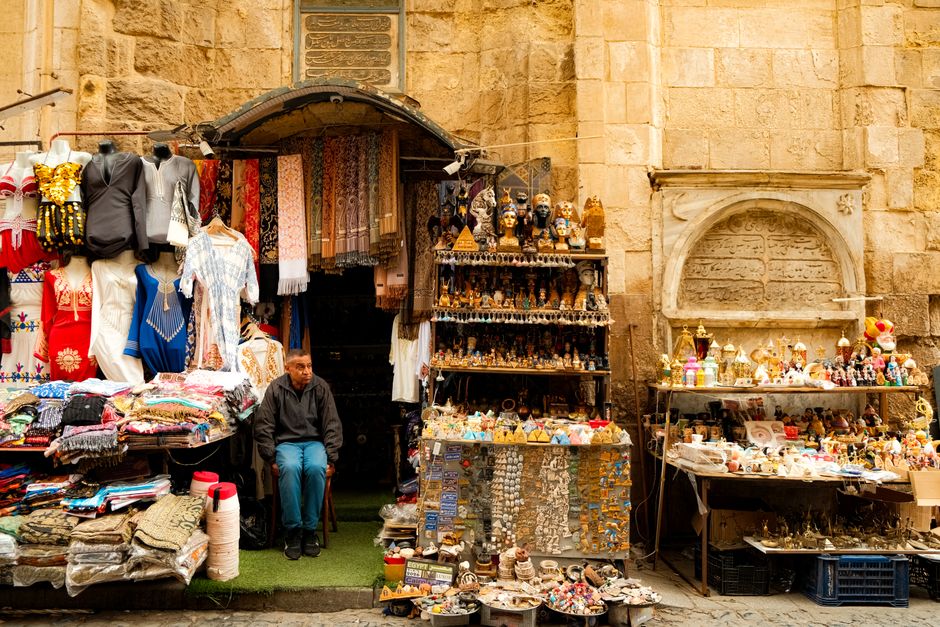
Khan el-Khalili
Erected in 1382 by Emir Djaharks el-Khalili during the reign of Burji Mamluk Sultan Barquq—and extensively reconstructed in 1511 under Sultan Qansuh al-Ghuri—this sprawling commercial nexus stands as Cairo’s preeminent medieval caravanserai. The district’s surviving Mamluk architecture is anchored by monumental stone portals like the monumental Bab al-Ghuri, characterized by towering horseshoe arches, carved corbels, and alternating bands of black-and-white *ablaq* masonry. Above the labyrinth of ground-level stalls, intricate wooden *mashrabiya* lattice screens and vaulted stone ceilings still delineate the historic *wikalas* (merchant inns), where trans-Saharan and Silk Road traders once secured raw silk, gems, and Arabian frankincense. Stepping beneath the market’s vaulted stone ribs plunges travelers into a kaleidoscopic sensory barrage. Overhead, clusters of hand-pierced brass and stained-glass lanterns cast intricate, lace-like patterns of light across uneven flagstones, illuminating shelves overflowing with beaten copper platters, silver filigree, and lapis lazuli. The air is dense with the dry heat of crushed cumin, pyramids of crimson hibiscus, and resinous plumes of burning oud. Deep within the passage of Al-Fishawy, operational since 1797, visitors squeeze past tarnished gilt mirrors to sip fresh mint tea from etched glasses, enveloped by the rhythmic clinking of artisans’ chisels and spirited street haggling.
More in Cairo
Photo credits (4)
- MusikAnimal, CC BY-SA 3.0, via Wikimedia Commons
- Mohamed abdelzaher, CC BY-SA 4.0, via Wikimedia Commons
- Olaf Tausch, CC BY 3.0, via Wikimedia Commons
- Berthold Werner, CC BY-SA 3.0, via Wikimedia Commons