
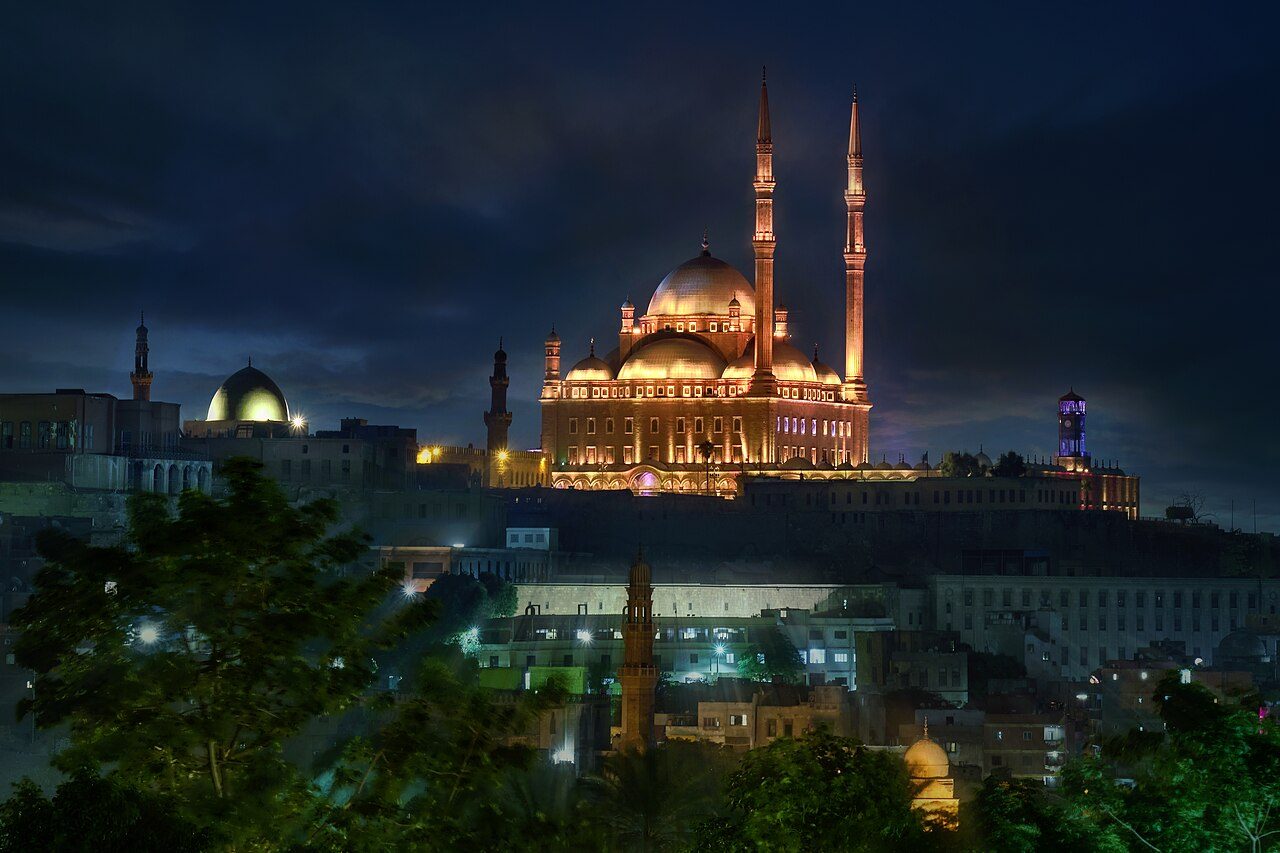
Mosque of Muhammad Ali
Perched atop the summit of the Citadel of Saladin, the Mosque of Muhammad Ali dominates the Cairo skyline with the unmistakable silhouettes of Ottoman Baroque architecture. Commissioned between 1830 and 1848 by Muhammad Ali Pasha in memory of his deceased son Tusun, the sanctuary was designed by the Istanbul-based architect Yusuf Bushnaq, intentionally echoing the grand imperial mosques of Turkey. Twin pencil-thin minarets pierce the desert haze to a height of 82 meters, framing a tiered cascade of lead-clad domes. Up close, the lower exterior and arcaded courtyard gleam with richly veined, honey-tinted stone quarried from Upper Egypt, earning the complex its enduring moniker: the Alabaster Mosque. Inside the cavernous prayer hall, visitors are engulfed in a warm, gilded glow cast by suspended concentric rings of crystal globes and chandeliers hanging low from the 52-meter-high central dome. The air carries a quiet stillness, cushioned by deep carpets and surrounded by intricate painted relief work and the ornate marble cenotaph of the Pasha himself. In the open-air courtyard, travelers encounter an eccentric historical artifact: an elaborate French brass clock tower gifted by King Louis Philippe in 1845 in exchange for the Luxor obelisk that now stands in Paris. Beyond the walls, the outer terrace offers a sweeping panorama over the sprawling, dust-hued metropolis, where on clear afternoons the sharp triangles of the Giza Pyramids rise dramatically along the desert horizon.
More in Cairo
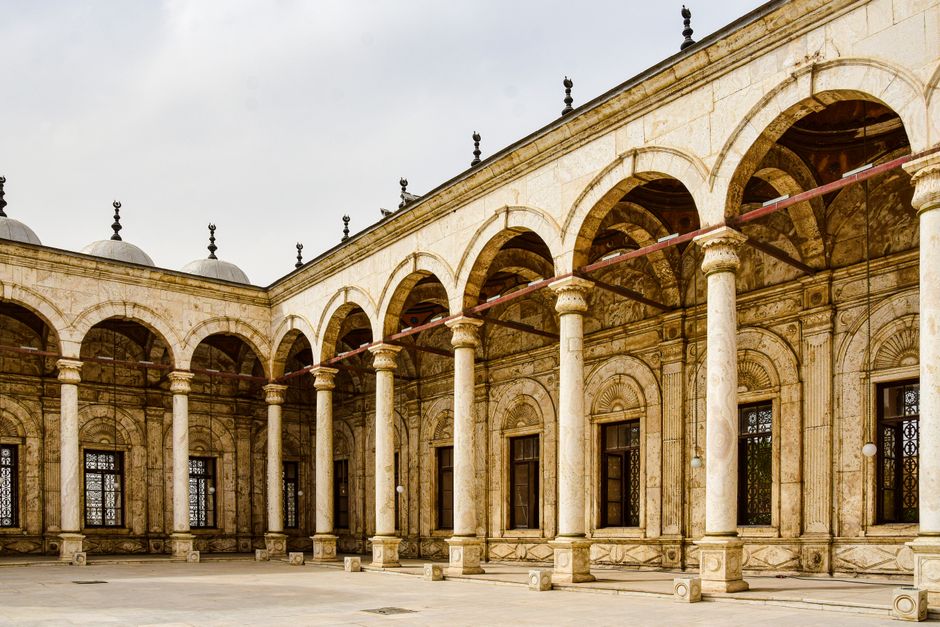
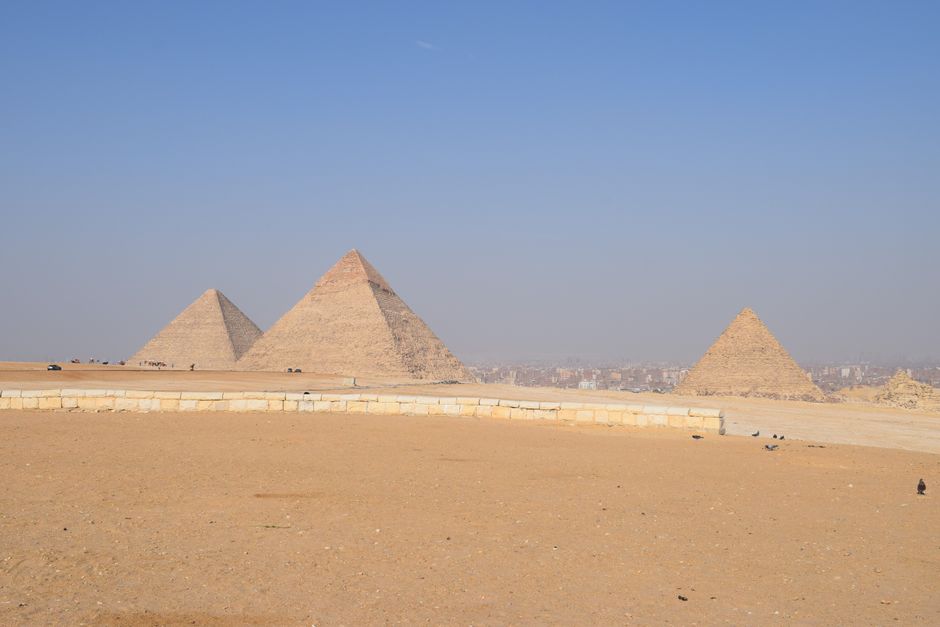
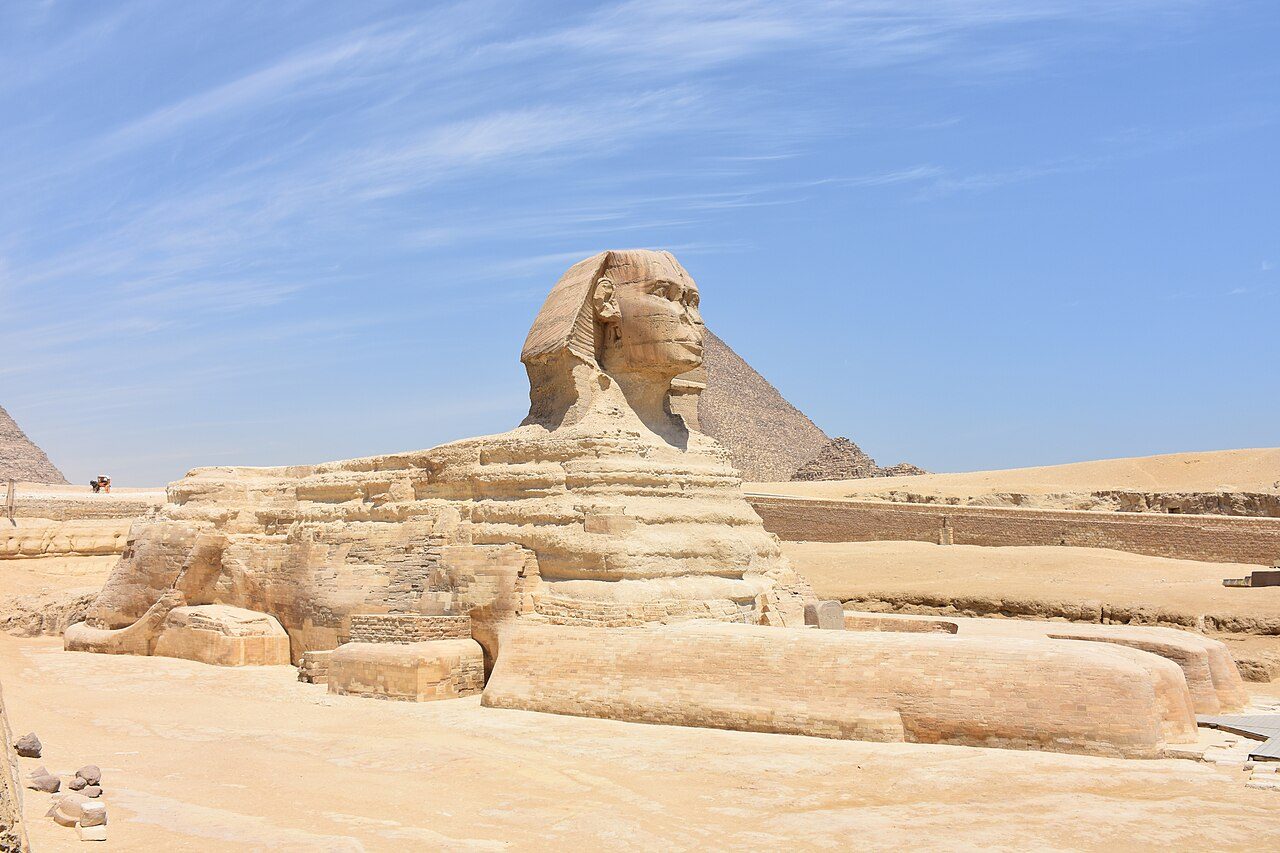

Photo credits (3)
- Mohamed abdelzaher, CC BY-SA 4.0, via Wikimedia Commons
- MusikAnimal, CC BY-SA 3.0, via Wikimedia Commons
- Olaf Tausch, CC BY 3.0, via Wikimedia Commons