
 New added
Pyramids of Giza
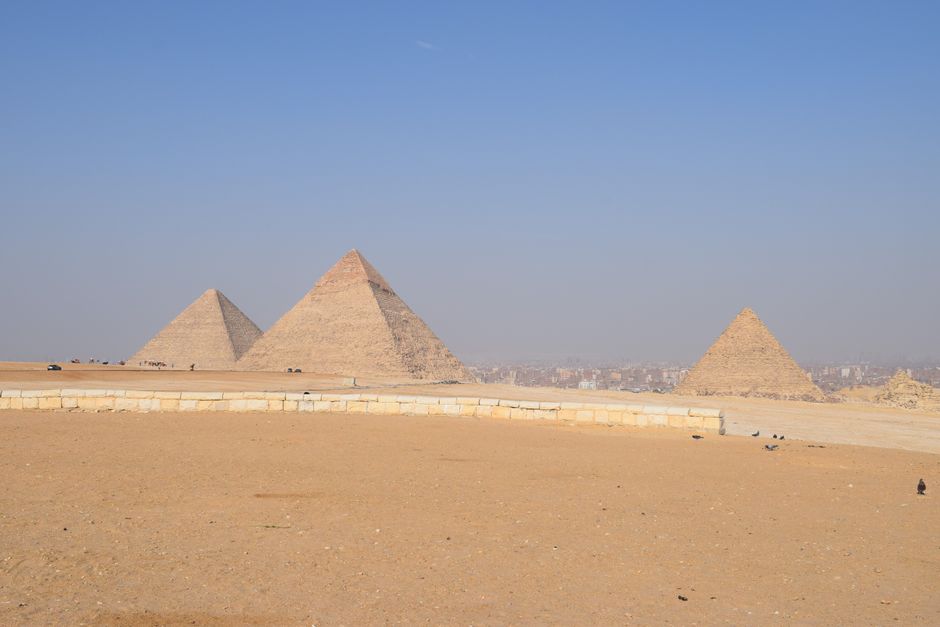
Rising from the rocky Giza plateau on the Nile’s western bank, these titanic Old Kingdom monuments were engineered during Egypt's Fourth Dynasty between roughly 2550 and 2490 BCE. Pharaoh Khufu initiated the necropolis with the Great Pyramid, an architectural feat anchored by an estimated 2.3 million quarried limestone blocks aligned with uncanny precision to true north. Flanking it stand the tombs of his successors: Khafre—whose slightly smaller pyramid still retains a cap of polished Tura limestone casing at its 136-meter apex—and Menkaure, distinguished by its lower courses of unpolished Aswan granite. Rather than isolated desert monoliths, they anchored an elaborate mortuary network of causeways, basalt-paved temples, and the colossal, recumbent figure of the limestone Sphinx keeping vigil over the desert margin. Standing at the base of Khufu’s monument, human scale dissolves against megalithic blocks that rise in weathered, golden-ochre tiers past chest height. The dry desert wind whips fine grit into the air while the afternoon sun throws knife-edge shadows across the bedrock. Travelers venturing inside trade the blinding desert glare for the suffocating, humid silence of the interior, climbing hunched through the ascending passage into the Grand Gallery—a soaring, 47-meter corbelled vault of sheer engineering bravura—before arriving in the dim, subterranean chill of the King’s Chamber, confronted by an austere, lidless sarcophagus of resonant red granite.
More in Cairo

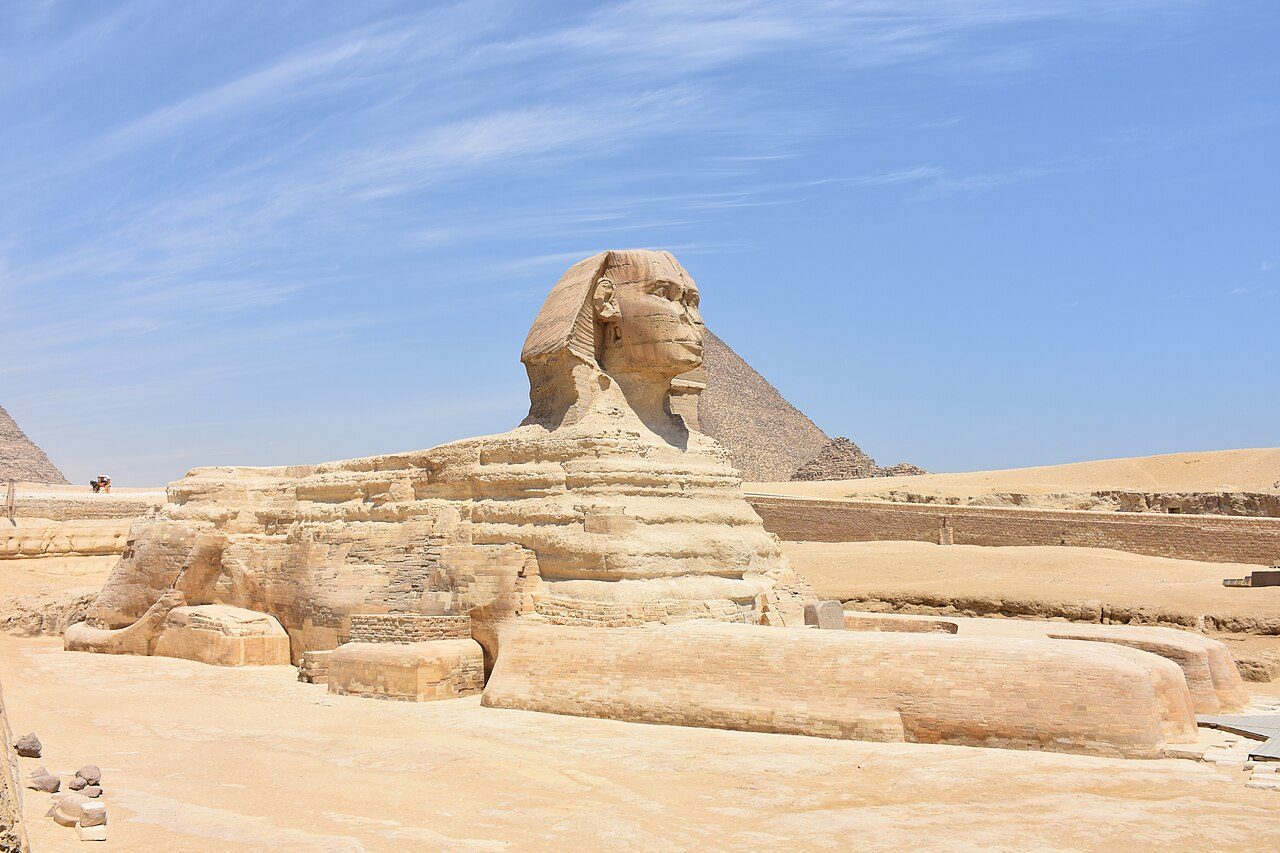

Photo credits (4)
- MusikAnimal, CC BY-SA 3.0, via Wikimedia Commons
- Mohamed abdelzaher, CC BY-SA 4.0, via Wikimedia Commons
- Olaf Tausch, CC BY 3.0, via Wikimedia Commons
- Berthold Werner, CC BY-SA 3.0, via Wikimedia Commons