
Edfu
Settled along the western bank of the Nile in Upper Egypt, halfway between Luxor and Aswan, Edfu moves to the clatter of horse hooves and the rustle of date palms. Away from the riverfront, the town unfolds as a network of dusty alleys, mud-brick houses, and open-fronted bakeries smelling of charred wheat and caraway. Farmers from surrounding cane fields haul produce on donkey carts, while the calls of street vendors mingle with river breezes, giving the town a distinctly agrarian pulse. Edfu owes its fame to the Ptolemaic dynasty, who began constructing the colossal Temple of Horus in 237 BCE under Ptolemy III, completing it nearly two centuries later in 57 BCE. Its soaring entrance pylon, intact hypostyle halls, and stone reliefs depicting Horus defeating Seth make it the most architecturally complete temple in Egypt. Just outside its enclosure sits Tell Edfu, an ancient settlement mound containing administrative buildings dating back to the Old Kingdom around 2500 BCE. Down along the river, the corniche provides a contrast of working feluccas anchored against the backdrop of barren sandstone bluffs. Daily life centers on Sharia al-Souq, a covered market lane filled with sacks of dark red hibiscus, cumin, and crates of winter citrus, where corner stalls fry fresh taameya and press cold sugarcane juice. During the Moulid of Sheikh Faris, communal feasts and religious hymns draw crowds into the streets. Arrive at the temple gates right at six in the morning to beat the Nile cruise groups, and hire a horse-drawn calèche to navigate the town, settling the price before boarding.
Read more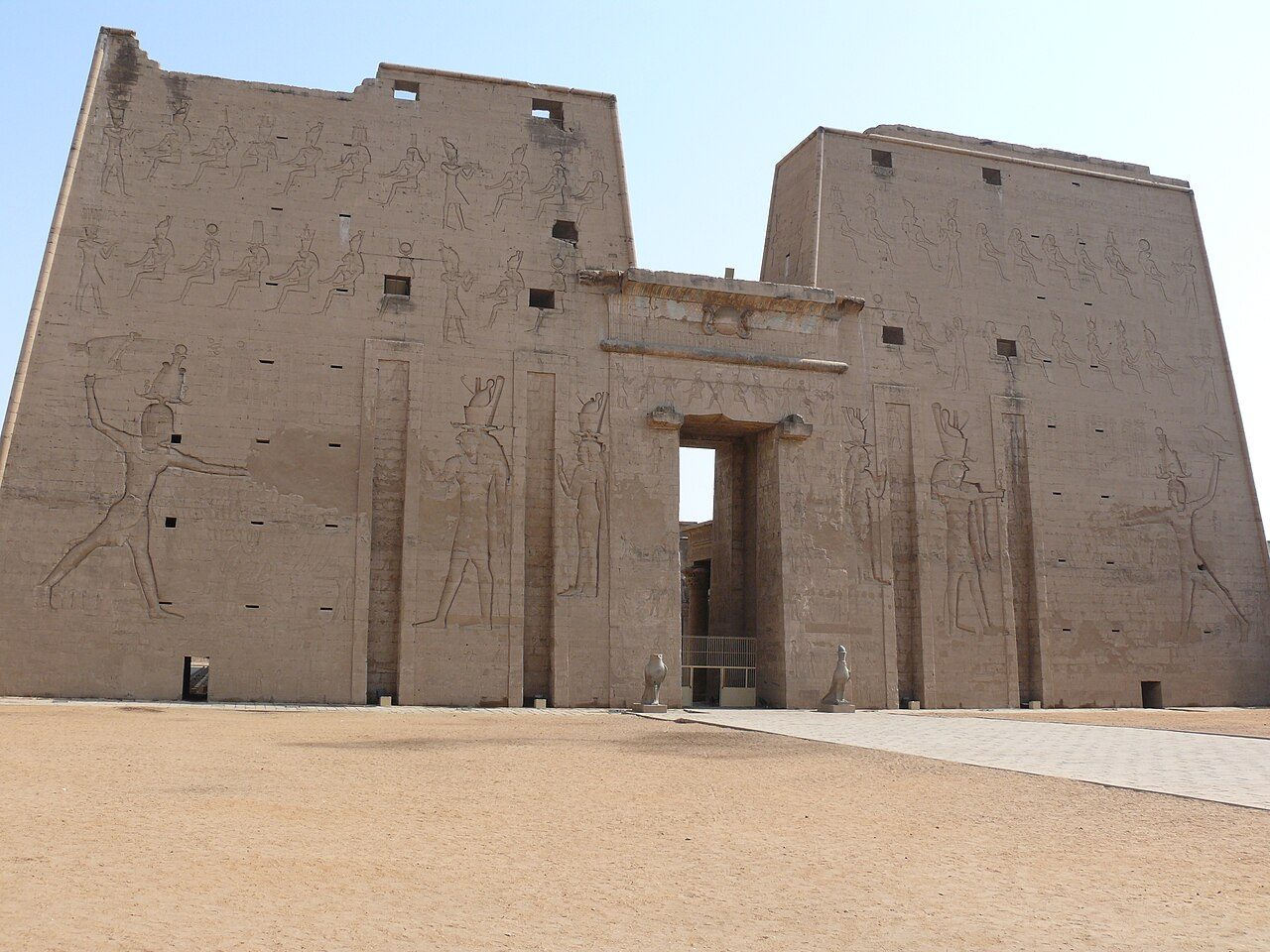
What to see in Edfu
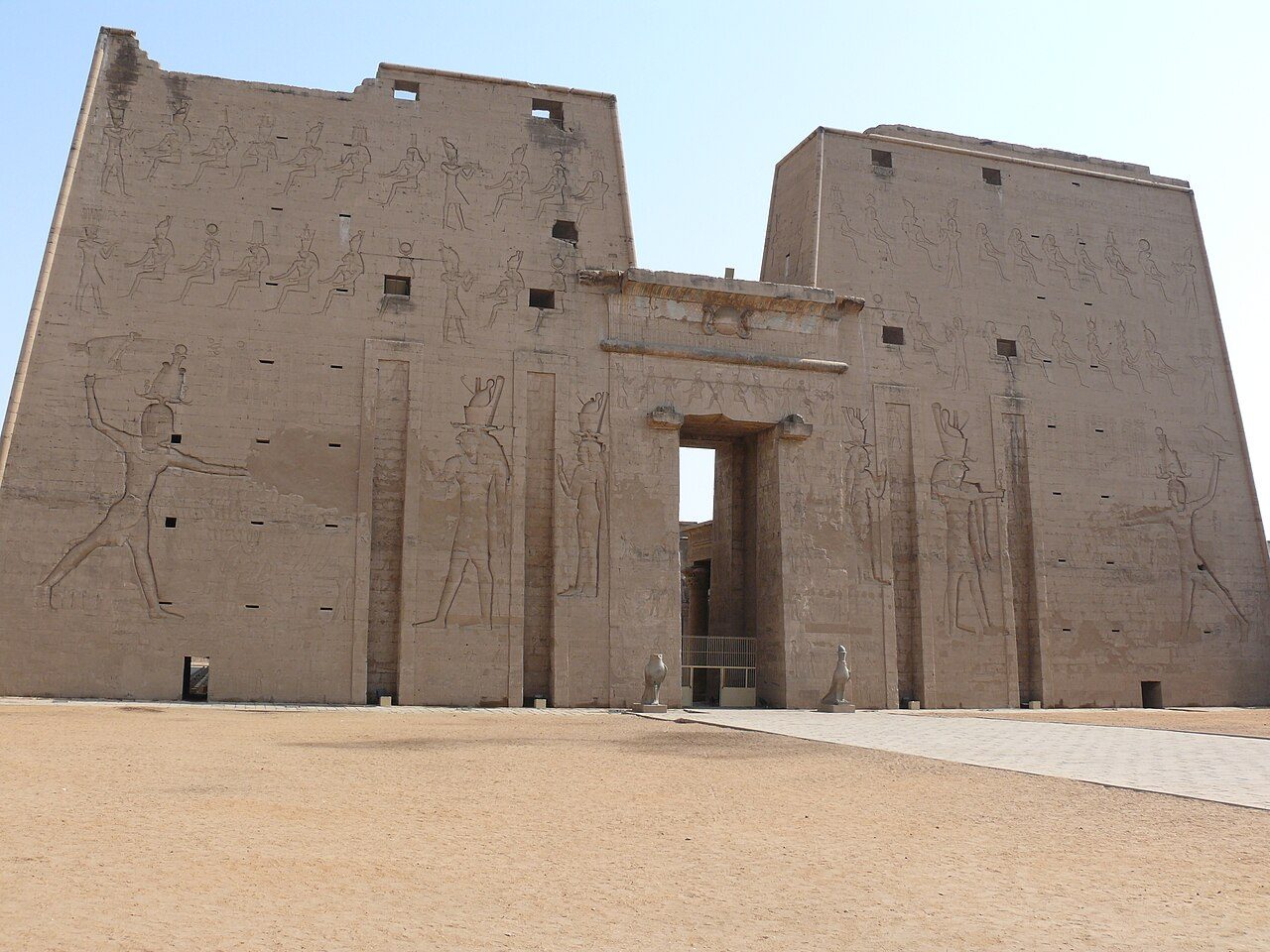
Photo credits (2)
- Ad Meskens, CC BY-SA 3.0, via Wikimedia Commons
- Ad Meskens, CC BY-SA 3.0, via Wikimedia Commons