Siwa
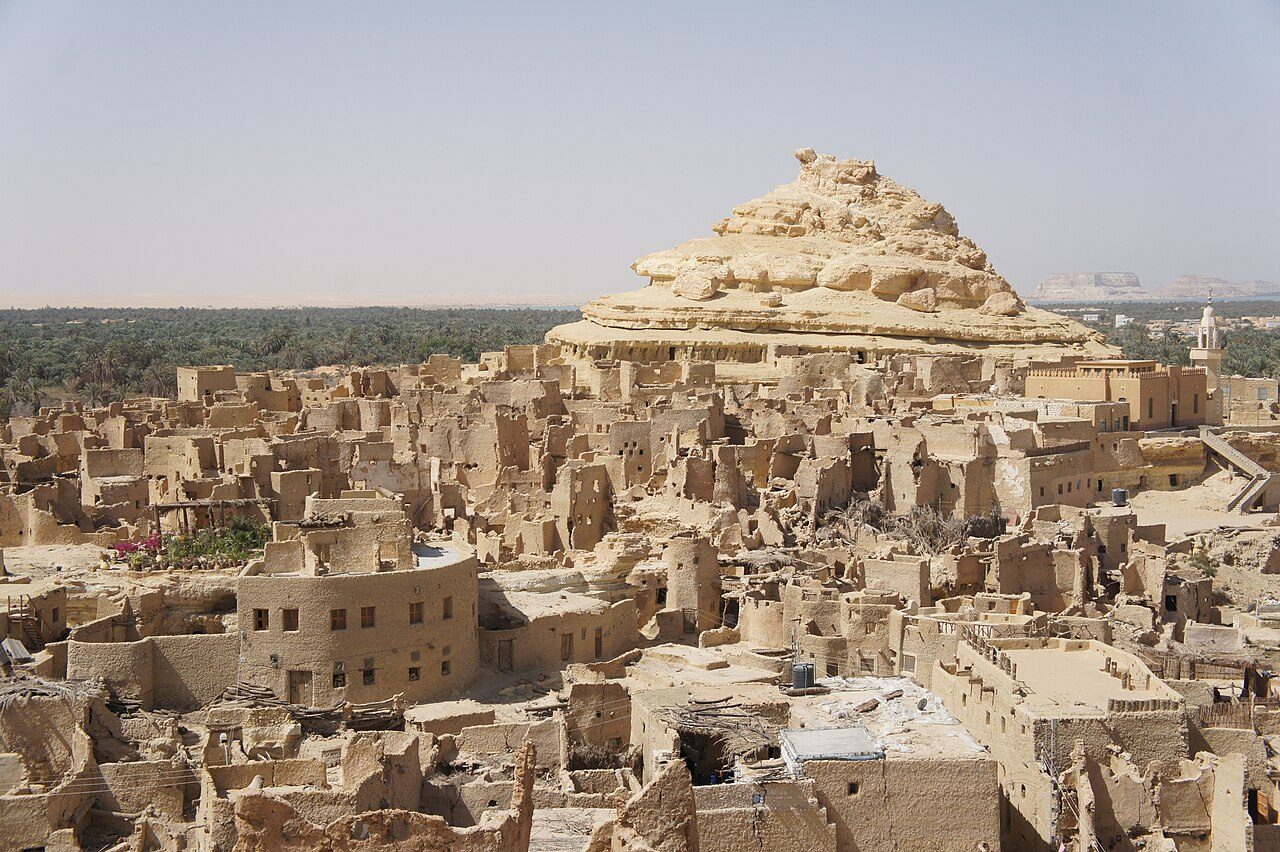
Deep in the Western Desert, fifty kilometers east of the Libyan border, Siwa rests in an oasis basin sunken below sea level. Walking its quiet lanes means stepping into an expansive sweep of date palms, olive groves, and pale salt pans. Donkey carts share unpaved tracks with single-speed bicycles, and the desert stillness is broken only by the rustle of palm fronds and water trickling through stone irrigation channels. The oasis gained fame in 331 BC, when Alexander the Great marched across the desert to consult the Oracle of Amun at Aghurmi. In the center of town looms the thirteenth-century Fortress of Shali, a maze of kershef—a local building material made of salt-crusted mud and palm logs—which melted into surreal shapes during torrential rains in 1926. To the north, the conical hill of Gebel al-Mawta houses rock-cut tombs dating back to the 26th Dynasty, while clear artesian pools like Cleopatra’s Spring provide shaded spots to cool off. Siwa’s Amazigh culture shapes everyday life and commerce. Small stalls sell sun-dried dates, cold-pressed olive oil, and sweet black tea brewed with wild desert mint. Each autumn during the October full moon, the community gathers at Gebel Dakrur for the three-day Siyaha festival to celebrate reconciliation, sing Sufi chants, and share communal meals of bread and meat. The most comfortable season runs from October through April. Renting a sturdy bicycle or hiring a three-wheeled tuk-tuk is the easiest way to wander between the mud-brick town center and the outlying orchards.
Read more