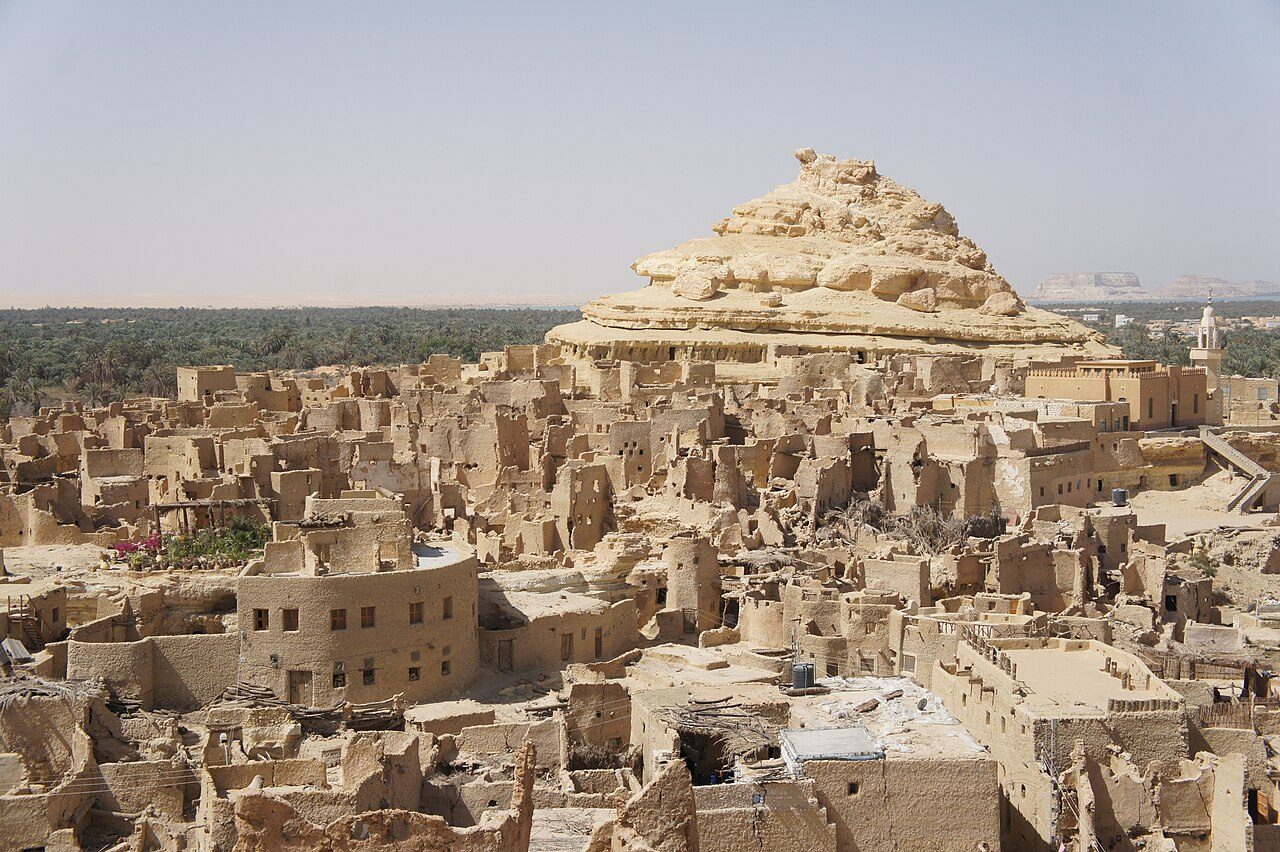
Temple of the Oracle of Amun
Crowning the fractured limestone crag of Aghurmi, the Temple of the Oracle of Amun was founded during the 26th Dynasty, roughly around 550 BCE under Pharaoh Amasis. Its worldwide fame was cemented in the winter of 331 BCE, when Alexander the Great marched across hundreds of miles of perilous desert to seek the seer's counsel, emerging anointed as the legitimate, divine son of Zeus-Amun. Unlike standard Nile Valley monuments, this citadel-sanctuary marries pharaonic limestone masonry with indigenous desert architecture. Within the inner naos, deliberate acoustic slits cut into the thick stone walls reveal the temple's secrets—hollow conduits that allowed hidden priests to project the god's disembodied voice directly into the ears of awe-struck rulers. Reaching the complex requires a climb through the crumbling, labyrinthine mud-brick ramparts of the abandoned medieval village of Aghurmi. Stepping past the temple's weathered threshold, you encounter dim, sun-baked chambers carved with eroded pharaonic bas-reliefs and Greek inscriptions that have withstood millennia of salt air and blowing silt. The oppressive silence inside the sanctuary contrasts sharply with the sweeping panorama awaiting at the roofline: from the ancient stone parapets, the desert opens into a vibrant green ocean of date palms and olive groves, ringed by the blinding, crystalline shores of Siwa’s turquoise salt lakes and the undulating dunes of the Great Sand Sea.