
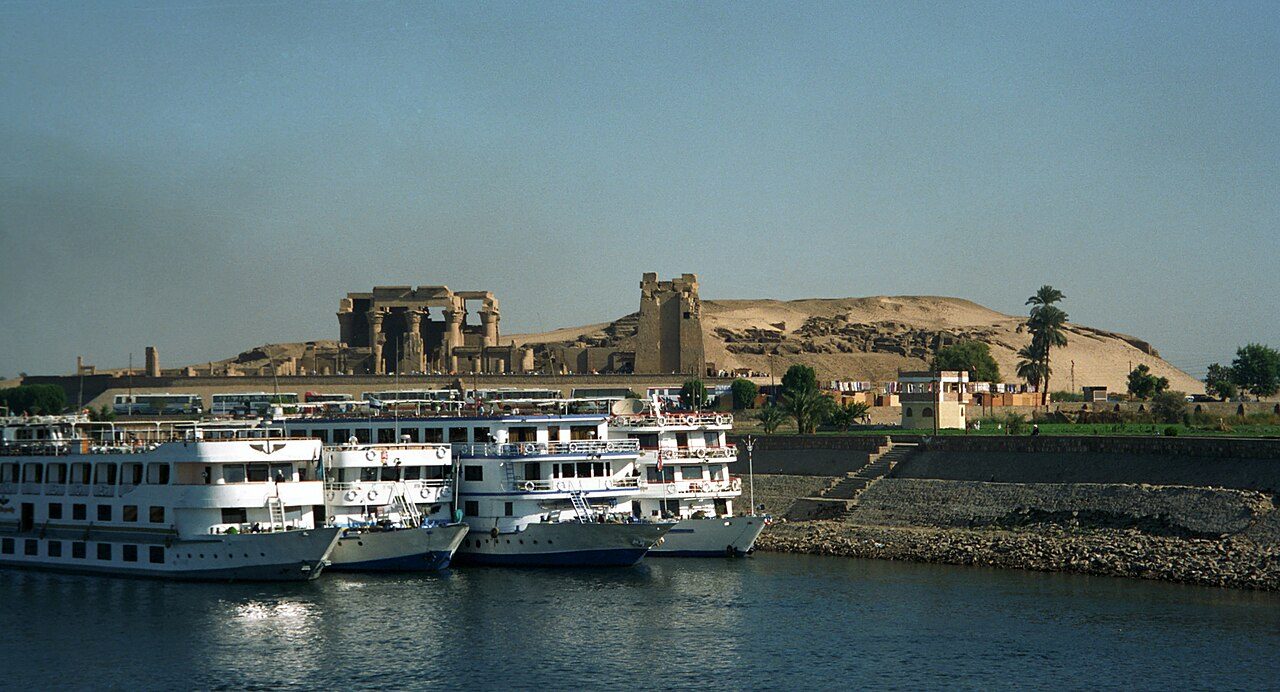
Kom Ombo Temple
Perched upon a high promontory overlooking a sharp bend in the Nile north of Aswan, Kom Ombo rises as an architectural anomaly: a completely symmetrical double temple. Constructed primarily under Ptolemy VI Philometor in the second century BC and expanded by Roman emperors, its mirrored blueprint was deliberately designed to appease two opposing theological forces. The northern axis belongs to Haroeris, the solar falcon god of light, while the southern axis venerates Sobek, the primordial crocodile deity associated with fertility and the river’s unpredictable wrath. Walking the grounds, travelers pass through twin gateways and duplicated hypostyle halls, flanked by soaring sandstone columns crowned with carved lotus and papyrus capitals that glow amber in the late afternoon sun. Along the temple’s inner enclosure walls, visitors encounter extraordinary, micro-detailed bas-reliefs displaying the ancient Mediterranean’s earliest known catalog of surgical tools, including bone saws, forceps, scalpels, and birthing chairs. Just beyond the central courtyards, a massive stone-lined circular Nilometer descends into the earth, where Ptolemaic priests once measured seasonal river swells to predict agricultural taxes. Standing on the terrace as the river breeze cuts through the dry heat, one can look down at the dark currents where sacred crocodiles once basked, then explore the adjacent museum to view those very reptiles preserved as linen-wrapped, resin-blackened mummies resting beneath dimmed gallery spotlights.
More in Aswan
Photo credits (3)
- Jerzy Strzelecki, CC BY-SA 3.0, via Wikimedia Commons
- Diego Delso, CC BY-SA 4.0, via Wikimedia Commons
- Hatem Moushir, CC BY-SA 4.0, via Wikimedia Commons