
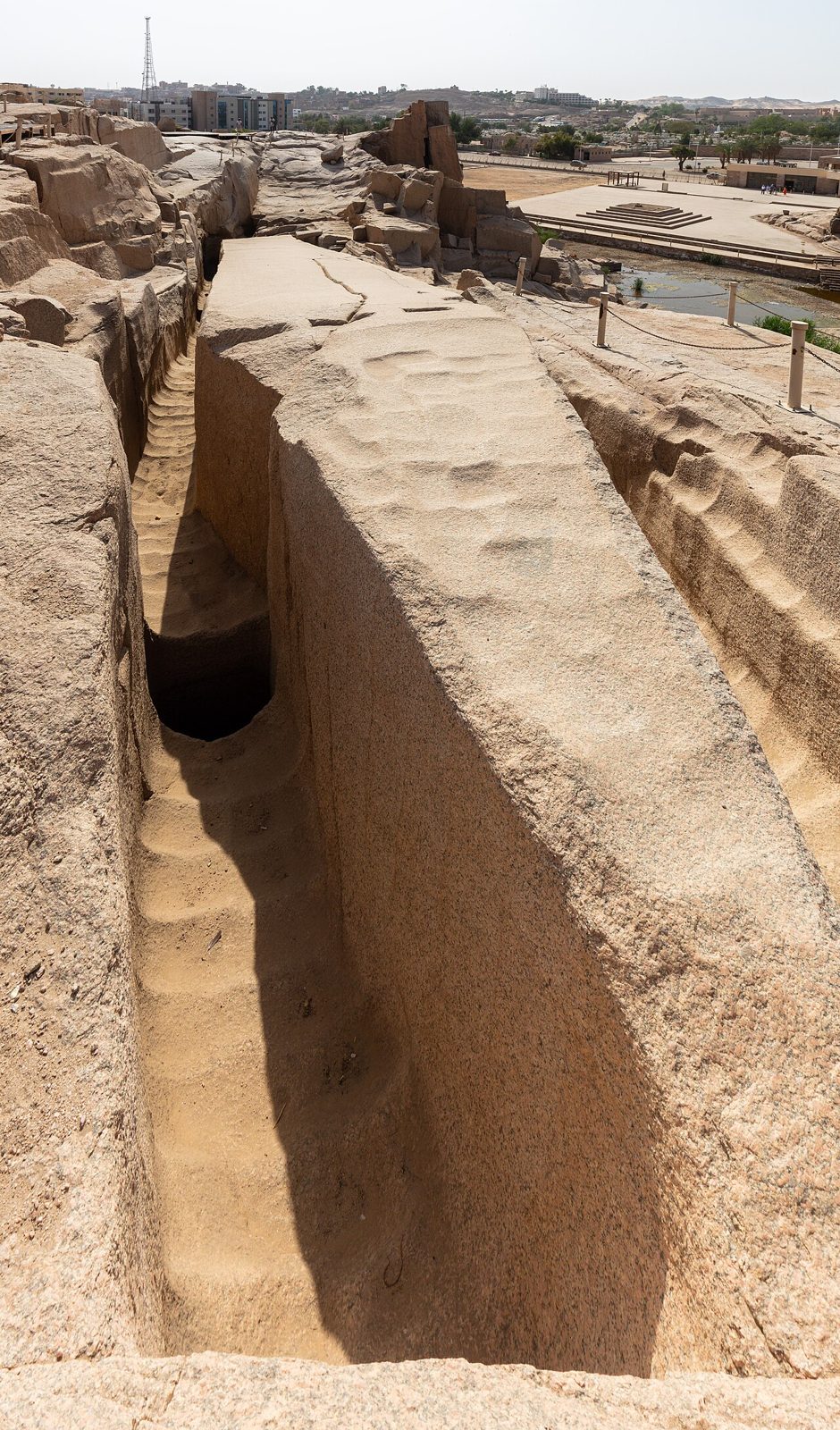
Unfinished Obelisk
Embedded directly within the pink-granite bedrock of Aswan’s northern quarries, this colossal monolith offers a frozen snapshot of New Kingdom engineering during the 18th Dynasty (circa 1470 BCE). Commissioned by Pharaoh Hatshepsut—likely intended to rival the Lateran Obelisk at Karnak—the project was abruptly abandoned when a catastrophic fissure fractured its spine during excavation. Had it been freed from the mountain, the monument would have stood as the ancient world’s heaviest single piece of worked stone, measuring an astonishing 42 meters in length and weighing roughly 1,200 metric tons. From the surrounding wooden walkways, visitors gaze directly into the excavated trench enveloping the recumbent stone, feeling the radiant desert heat baking off the blush-tinted rock. The obelisk remains an extraordinary open-air workshop: along its carved flanks, you can still trace the rhythmic, scoop-shaped depressions left by artisans tirelessly pounding the stubborn bedrock with heavy dolerite hammer stones. Standing above this trapped colossus exposes the raw mechanics of pharaonic architecture, capturing the exact, heartbreaking moment when royal ambition surrendered to a fatal flaw in the earth.
More in Aswan

Photo credits (3)
- Diego Delso, CC BY-SA 4.0, via Wikimedia Commons
- Hatem Moushir, CC BY-SA 4.0, via Wikimedia Commons
- Jerzy Strzelecki, CC BY-SA 3.0, via Wikimedia Commons