
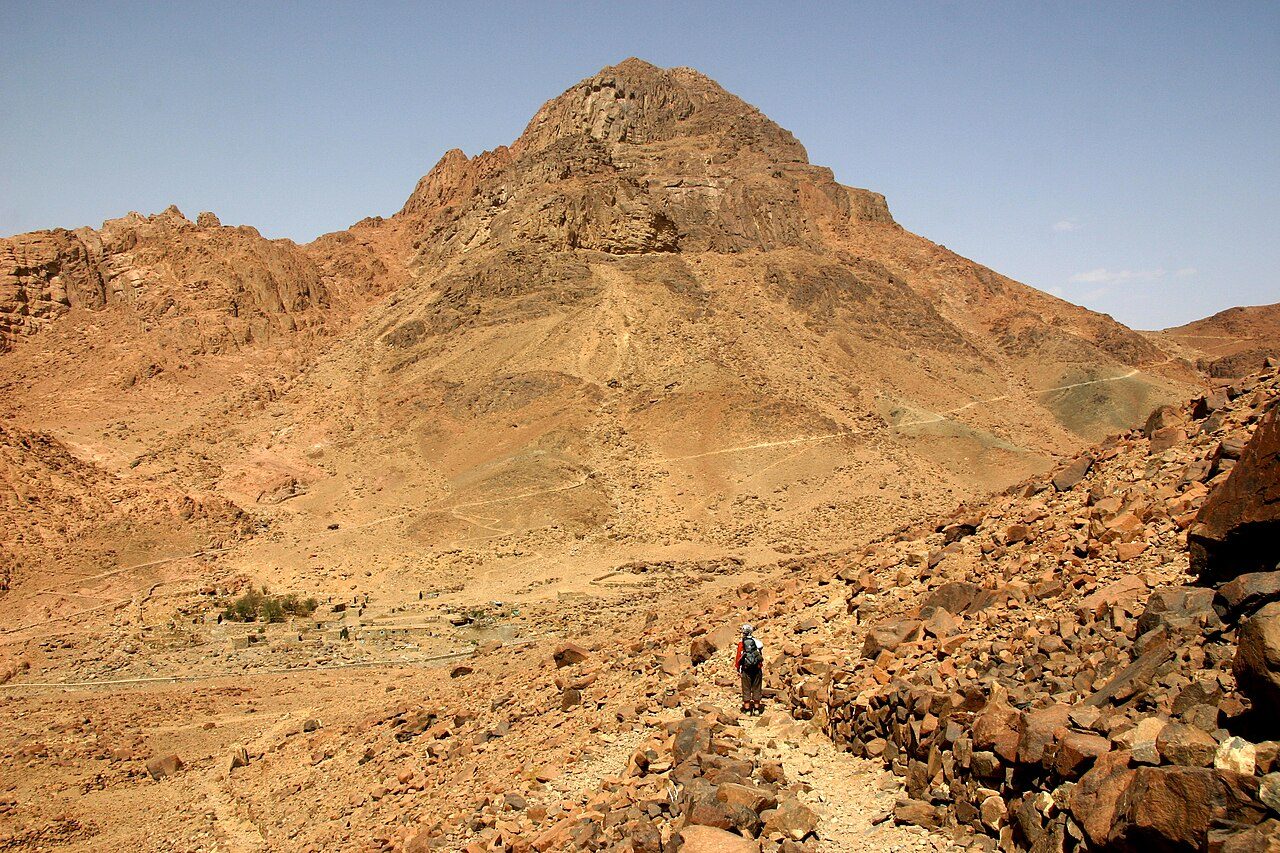
Mount Sinai
Rising 2,285 meters above the barren ridges of the southern Sinai Peninsula, Mount Sinai—known locally as Jabal Musa—marks the biblical sanctuary where Moses is revered to have received the Ten Commandments around the 13th century BCE. Rooted near the fortress walls of Saint Catherine’s Monastery, fortified by Byzantine Emperor Justinian I in 548 CE, the ascent culminates at the *Sikket Sayidna Musa* (Steps of Repentance), an arduous flight of 750 uneven stone steps hand-hewn by a penitent 6th-century monk. At the summit, raw granite gives way to twin sanctuaries of coexistence: the whitewashed Greek Orthodox Chapel of the Holy Trinity, reconstructed in 1934 atop the foundations of a 6th-century basilica, and a modest, rough-hewn 12th-century mosque. Standing on the wind-scoured summit in the pre-dawn chill, travelers brace against the desert gale wrapped in heavy camel-wool blankets, listening to hushed prayers murmured in a dozen languages. When dawn breaks, the darkness fractures across a serrated, lunar horizon, setting the surrounding peaks ablaze in stratified hues of ochre, burnt umber, and rose-pink. Looking down toward the windswept hollow of Elijah’s Basin and its solitary 500-year-old cypress tree, visitors encounter an overwhelming sense of ancient isolation, suspended between the desert sky and a petrified sea of rust-colored stone.
More in Saint Catherine
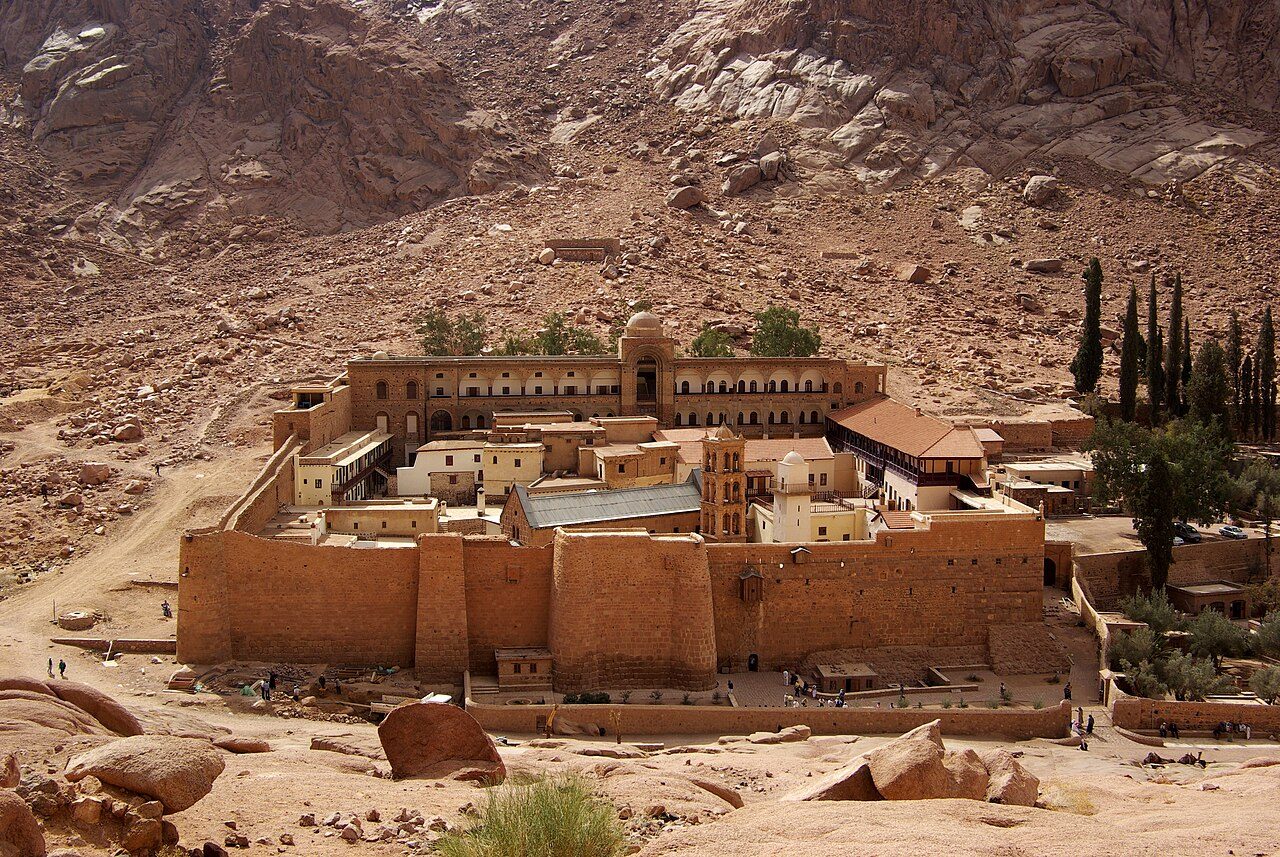
Photo credits (2)
- Gerd Eichmann, CC BY-SA 4.0, via Wikimedia Commons
- Berthold Werner, CC BY-SA 3.0, via Wikimedia Commons