
Saint Catherine
Nestled at an elevation of 1,600 meters in the rugged granite heart of South Sinai, the quiet township of Saint Catherine feels far removed from Egypt coastal resorts. Walking its unpaved village lanes, you encounter a sparse, contemplative atmosphere shaped by mountain winds, the scent of wild desert thyme, and the occasional chime of bells echoing off bare rock faces. The settlement developed around Saint Catherine Monastery, commissioned by Byzantine Emperor Justinian between 548 and 565 AD. Behind its fortified walls, visitors can view the sixth-century basilica, the Chapel of the Burning Bush, and an unrivaled collection of early Christian codices. Rising directly behind the complex is Mount Sinai, where winding footpaths lead past Elijah Basin to the summit chapel. Further along the valley floor, the walled compound of the Monastery of the Forty Martyrs shelters groves of olive trees, while the trail up Mount Catherine leads directly to the highest natural peak in Egypt. Life in the valley is anchored by the Jebeliya Bedouin, who have tended the gardens and guided travelers through these passes for centuries. Small village cooperatives sell mountain almonds, dried figs, and bundles of medicinal sage used to brew marmaraya tea, alongside freshly baked farasheeh flatbread. Each December, Greek Orthodox pilgrims gather for the traditional Feast of Saint Catherine. For clear footing and mild temperatures, plan visits during spring or autumn, relying on local Bedouin guides to arrange transport and lead hikes along the rocky mountain trails.
Read more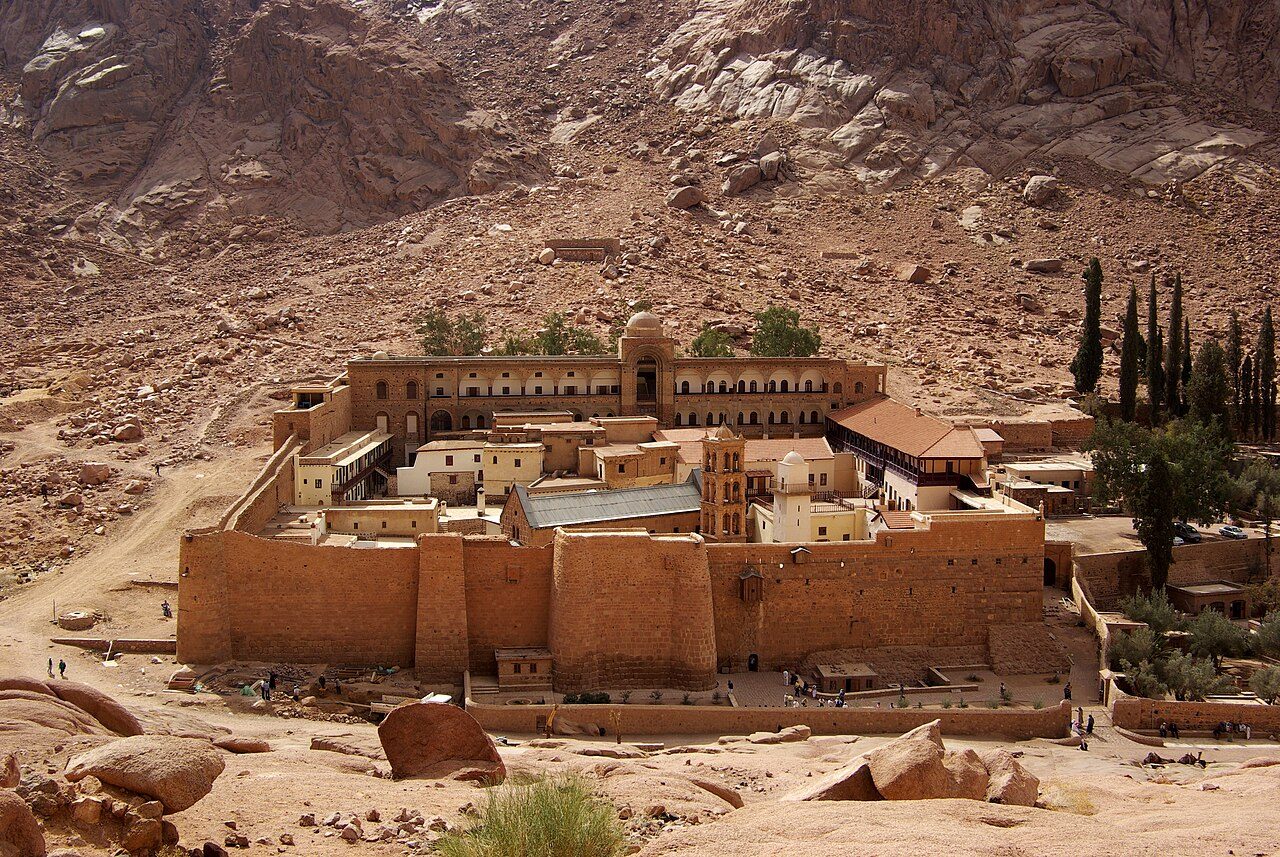
What to see in Saint Catherine
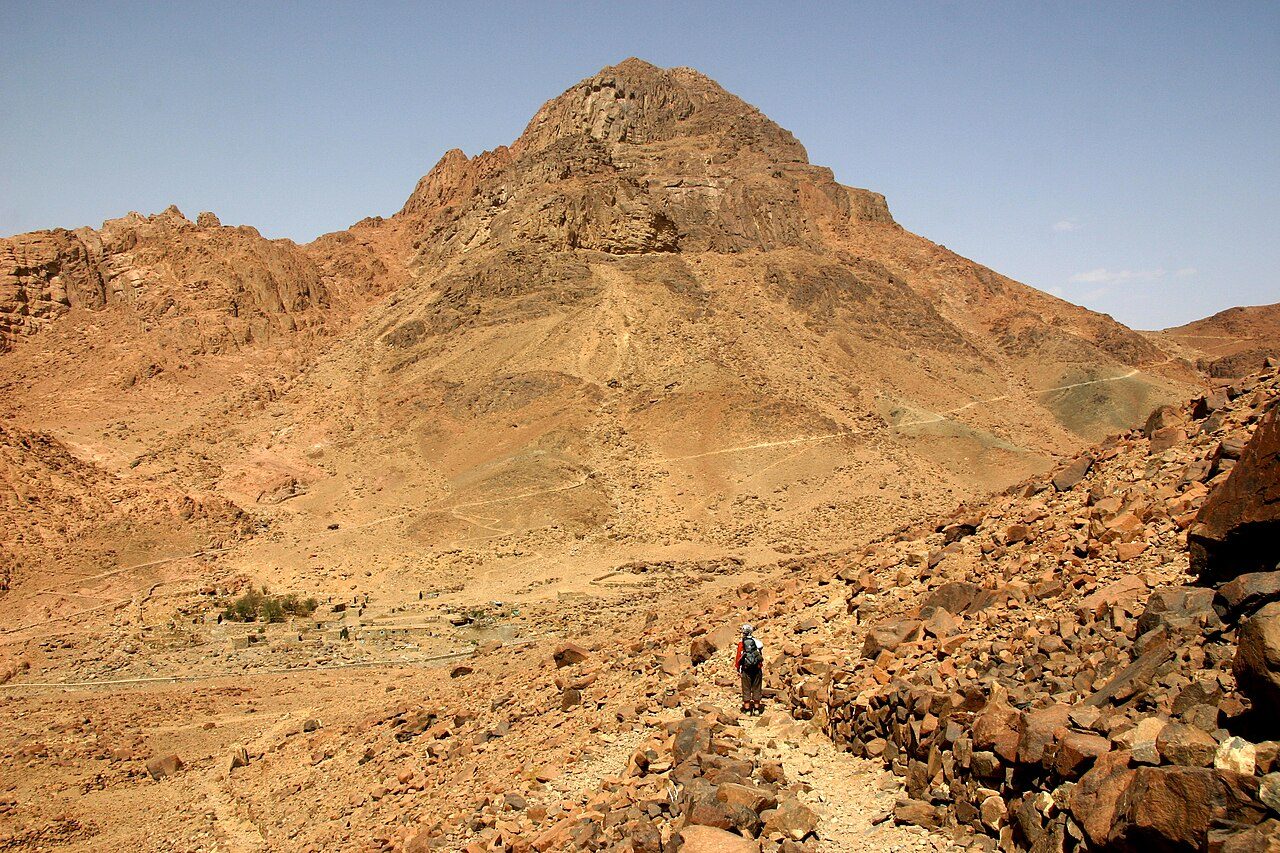
Photo credits (2)
- Berthold Werner, CC BY-SA 3.0, via Wikimedia Commons
- Gerd Eichmann, CC BY-SA 4.0, via Wikimedia Commons