
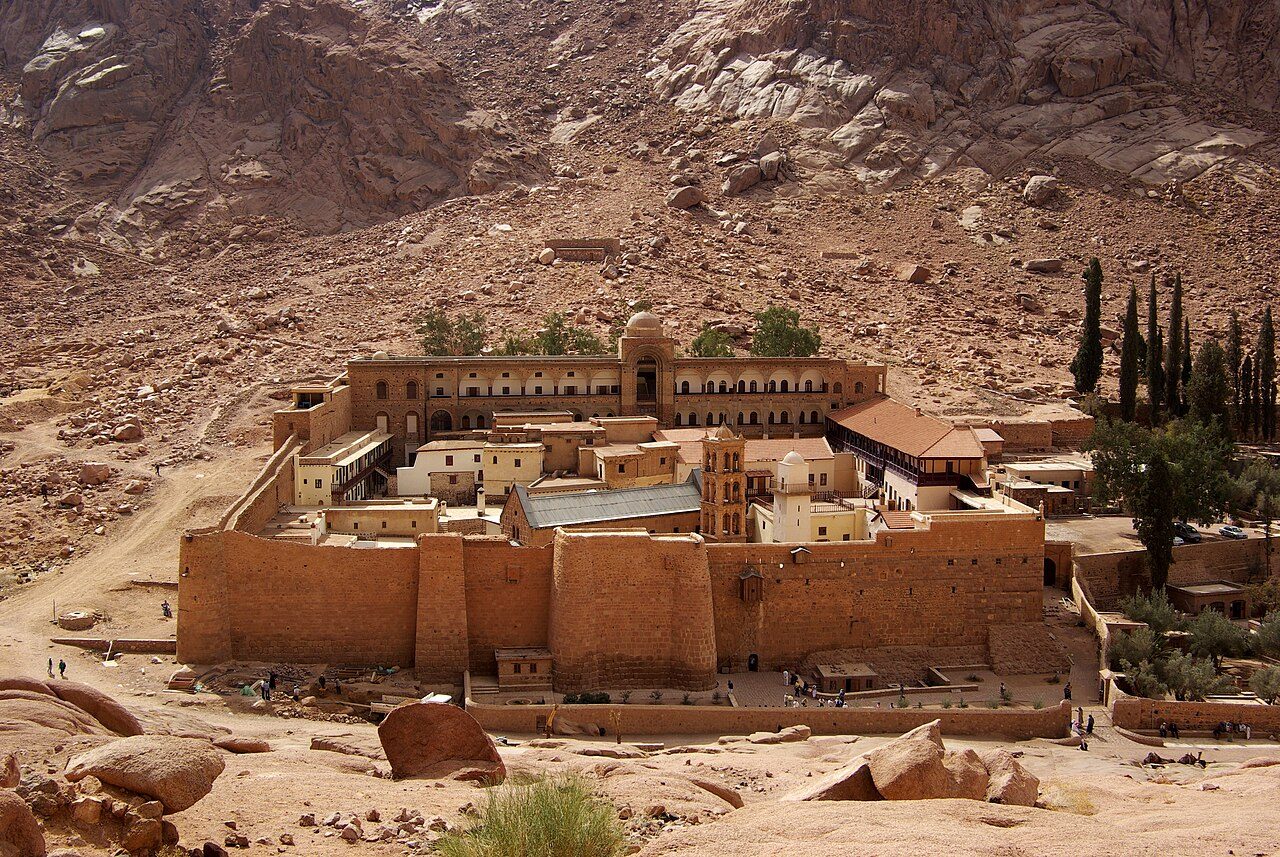
Saint Catherine's Monastery
Crouched in the arid shadows of Mount Sinai, this fortified sanctuary has endured uninterrupted since Emperor Justinian I ordered its construction between 548 and 565 CE. Built to protect Christian ascetics at the biblical site of Moses's divine encounter, the complex is encased within colossal, sun-baked red granite ramparts reaching heights of up to twenty meters. Inside this defensive shell, the Byzantine Basilica of the Transfiguration reveals a treasure of sacred antiquity: sixth-century apse mosaics gleaming with gold leaf and lapis lazuli, intricate gilded iconostases, and hand-carved cedar roof trusses inscribed with Justinian’s name. Just beyond the church wall thrives the monastery’s living relic—a sprawling bramble bush revered as the botanical descendant of the Burning Bush. Passing through the narrow stone entrance, travelers trade the desert glare for a cool, cloistered realm scented with beeswax and burning frankincense. The monastery museum displays world-renowned treasures, notably the piercing gaze of the sixth-century encaustic icon of Christ Pantocrator and glimpse-worthy codices from a manuscript library rivaled only by the Vatican. Outside the sanctuary, stone pathways meander past the somber Charnel House, where the stacked skulls of centuries of monks rest beside quiet cypress and olive groves. As the wooden *semantron* sounds its rhythmic wooden knock against the granite amphitheater, visitors encounter an unbroken, fifteen-century lineage of monastic silence and desert devotion.
More in Saint Catherine
Photo credits (2)
- Berthold Werner, CC BY-SA 3.0, via Wikimedia Commons
- Gerd Eichmann, CC BY-SA 4.0, via Wikimedia Commons