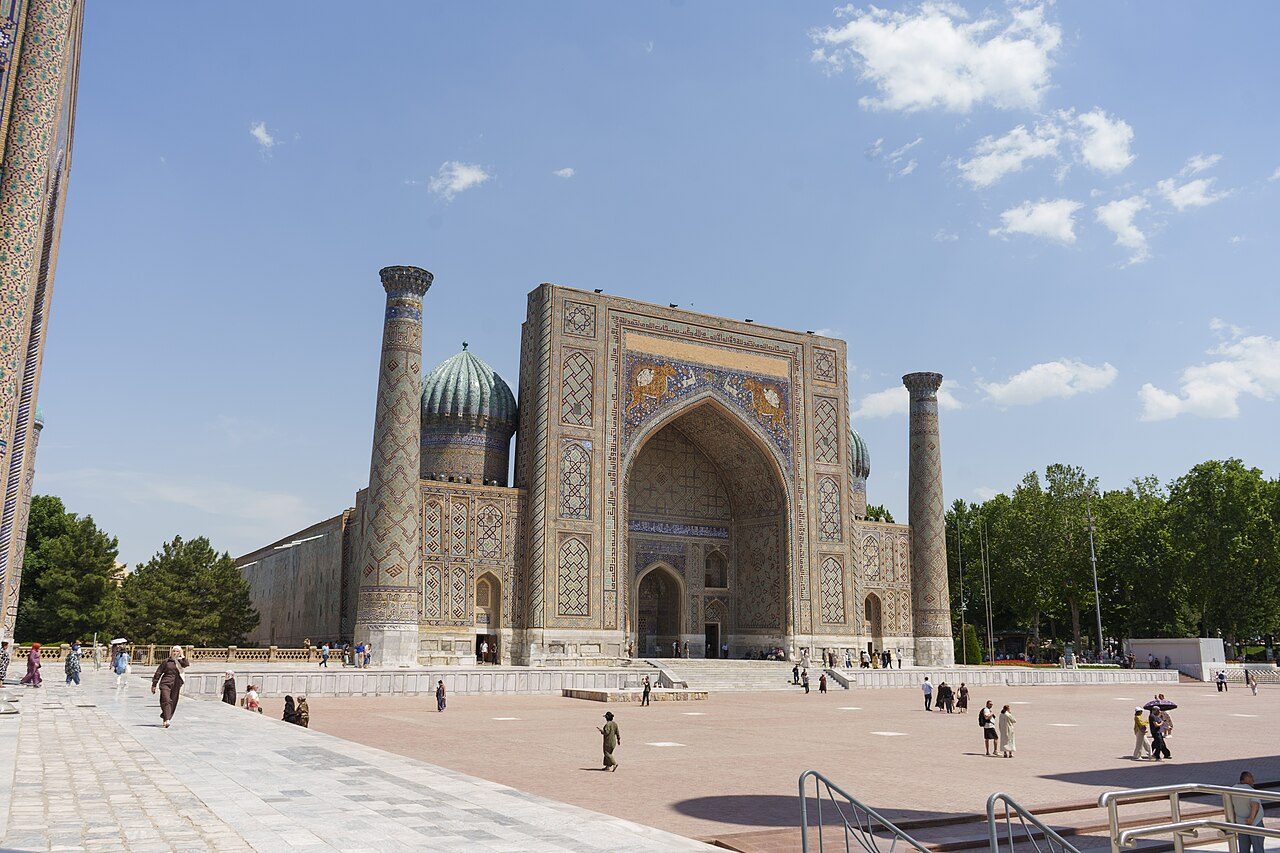
This practical guide provides essential advice for first-time visitors planning a journey through Uzbekistan. Discover core Silk Road cities, transportation logistics, lodging options, and key cultural tips.
Uzbekistan is one of Central Asia's best-known Silk Road destinations, renowned for turquoise-domed mosques, ancient mud-brick citadels, and bustling open-air bazaars. First-time visitors can easily travel along the classic oasis route connecting Tashkent, Samarkand, Bukhara, and Khiva using fast rail links and domestic connections. With straightforward entry rules, welcoming hospitality, and rich cultural heritage, traveling across Uzbekistan is rewarding and accessible.
Key Cities on the Silk Road Route
Tashkent functions as the country's capital and primary international gateway. Extensively reconstructed following a massive earthquake in 1966, the metropolis pairs broad Soviet-designed boulevards with authentic local trade centers. Travelers can admire decorative chandeliers and mosaics in the underground Tashkent Metro before heading above ground to sample dry fruits and flatbread at Chorsu Bazaar.
Samarkand is world-famous as the fourteenth-century capital of the Timurid Empire. The city served as an intellectual and artistic hub where artisans from across Asia gathered to build monumental complexes. Its azure-tiled courtyards and soaring portals remain the visual trademark of the Silk Road.
Bukhara preserves an extraordinarily cohesive medieval atmosphere across its historic center. Unlike sprawling modern capitals, this UNESCO-listed desert oasis allows visitors to wander between ancient madrasahs, domed trade markets, and quiet teahouses entirely on foot.
Khiva sits further west near the Turkmenistan border as an intact walled city. Stepping through its gates transports travelers into a living desert outpost defined by earthen ramparts and towering carved minarets.
Architectural Highlights Across Uzbekistan
Magnificent Islamic architecture stands as the primary draw for travelers exploring the region. In Samarkand, Registan Square anchors the historic core with three massive madrasahs framing an open stone plaza. A short ride away, the hillside necropolis of Shah-i-Zinda presents a dense avenue of mausoleums covered in intricate blue majolica tiles and carved terra cotta. Visitors should also see the Gur-e-Amir Mausoleum, the final resting place of Amir Timur, and the monumental Bibi-Khanym Mosque.
In Bukhara, the towering Po-i-Kalyan Complex defines the city's architectural identity, anchored by a twelfth-century brick minaret that, according to local tradition, was spared during the Mongol conquest. Nearby, the earthen ramparts of the Ark Fortress rise above the city streets, having served as a sovereign citadel for centuries. Visitors frequently unwind at Lyabi-Hauz, a historic square centered on a reflective stone reservoir lined with historic trees, or visit the ninth-century Ismail Samani Mausoleum to admire masterwork pre-Mongol brick masonry.
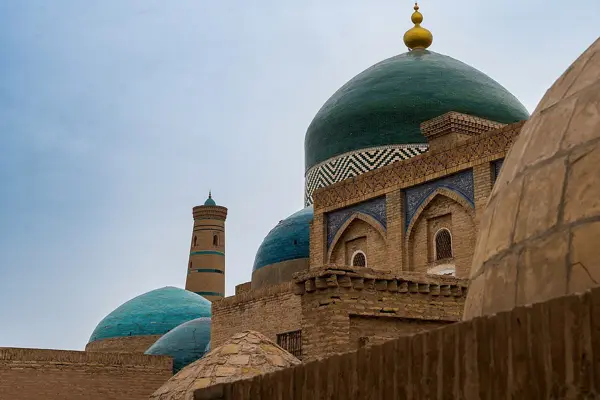
Khiva's fortified inner precinct, Itchan Kala, contains dozens of protected historic monuments within compact clay ramparts. The stocky, unfinished Kalta Minor Minaret commands attention with its glazed cyan tiles. Inside the fortress walls, the hypostyle Juma Mosque features over two hundred hand-carved wooden columns supporting its flat roof, while the Pahlavon Mahmud Mausoleum displays beautiful tilework around the tomb of the city's patron saint.
Travelers with longer itineraries can explore regional treasures beyond the classic trio. To the south, Shakhrisabz holds the colossal ruined entrance arch of the Ak-Saray Palace. Far to the northwest in Karakalpakstan, Nukus is home to the renowned Savitsky Museum, which holds a remarkable collection of Soviet-era avant-garde art.
How to Get Around the Country
Traveling between Uzbekistan's major urban centers is efficient thanks to the modern Afrosiyob high-speed train. This express service connects Tashkent, Samarkand, and Bukhara in just a few comfortable hours. Because passenger demand is high throughout the travel season, rail tickets should be reserved several weeks in advance.
Reaching Khiva requires slightly more planning. Trains run to Khiva's railway station from Bukhara (a long daytime ride) and from Tashkent (usually an overnight sleeper); check current timetables before you plan. Alternatively, domestic flights operate regularly from Tashkent to Urgench, located a short taxi drive from Khiva's old town.
For remote sights and scenic detours, hiring private transport is the most practical solution. A private vehicle allows you to cross the Kyzylkum Desert conveniently or organize mountain excursions into the Chimgan Mountains. You can check Tour & Car for private drivers in Uzbekistan for city-to-city transfers and day tours as local partners join.
Accommodation and Trip Costs
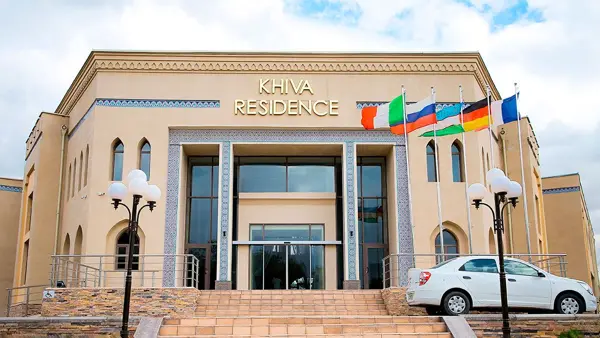
Lodging across Uzbekistan covers a wide spectrum, including restored madrasahs, family-run guesthouses with open courtyards, and contemporary international hotels. You can browse current stays on Tour & Car. Booking accommodation within the historic districts of Bukhara or Khiva allows easy access to main sights without requiring city transit.
Daily expenses for dining and sightseeing remain very reasonable. Traditional teahouses and neighborhood eateries serve hearty staples such as mutton plov, lagman noodle soup, and fresh clay-oven somsa.
Cash remains widely used across the country. While larger hotels and upscale restaurants in Tashkent and Samarkand accept international cards, small shops, bazaars, and rural drivers rely on Uzbek Som. ATMs dispensing local currency and US dollars operate throughout major cities.
Best Time to Plan Your Visit
Uzbekistan experiences an arid continental climate with distinct seasons. The best travel windows are spring (April to May) and autumn (September to early November). These periods deliver pleasant temperatures, sunny skies, and comfortable walking weather across desert oases.
Summer months (June through August) bring extreme heat, with daytime temperatures regularly climbing over 40 degrees Celsius. Sightseeing during summer requires an early morning routine to avoid the harsh midday sun.
Winter (December through February) brings crisp temperatures and occasional snowfall over historical monuments. While days are shorter, winter travelers benefit from quiet courtyards and empty historical complexes without tourist crowds.
Recommended 10-Day Itinerary
This classic 10-day route covers the primary historical and cultural sights for first-time visitors:
- Days 1-2: Tashkent. Arrive in the capital, tour the decorative underground metro, explore Independence Square, and wander through Chorsu Bazaar.
- Days 3-4: Samarkand. Ride the morning high-speed train to Samarkand to explore Registan Square, Shah-i-Zinda, and the Bibi-Khanym Mosque.
- Days 5-6: Bukhara. Travel by rail to Bukhara to discover the Po-i-Kalyan Complex, the Ark Fortress, and the Chor Minor gatehouse.
- Days 7-8: Khiva. Journey by train or private car across the Kyzylkum Desert to Khiva, spending two days inside the walled sanctuary of Itchan Kala.
- Day 9: Urgench to Tashkent. Catch a short domestic flight from Urgench to Tashkent for an evening performance at the Alisher Navoi Opera and Ballet Theatre.
- Day 10: Departure. Shop for dried spices and ceramics before heading to the international airport for your homeward flight.
Essential Travel Tips for First-Timers
- Respect local customs: Dress modestly when visiting mosques and active shrines. Both men and women should ensure shoulders and knees are covered, and women should keep a light scarf handy for religious interiors.
- Save your registration slips: Every hotel and licensed guesthouse provides a stamped registration slip upon check-in. Keep these slips together with your passport, as border officials may inspect them at airport departure control.
- Secure mobile data: Purchasing a local tourist SIM card at Tashkent International Airport provides reliable connectivity for navigation apps and translation tools throughout your journey.
- Carry clean banknotes: If exchanging foreign currency at local banks, ensure that all foreign paper bills are crisp, uncreased, and free of marks or tears.
With thoughtful route preparation and transport booked in advance, your first journey across the monuments of Uzbekistan can be smooth and memorable.
Plan It With Local Experts
A local guide brings the stories behind Registan, Bukhara's trading domes and Itchan Kala to life, and a private driver makes desert crossings and day trips easy.
- Find local guides: Guides in Uzbekistan
- Book a private driver: Drivers in Uzbekistan
- Find a place to stay: Stays
Are you a guide, driver, agency or guesthouse in Uzbekistan? Join Tour & Car for free and help present your country to travelers.