
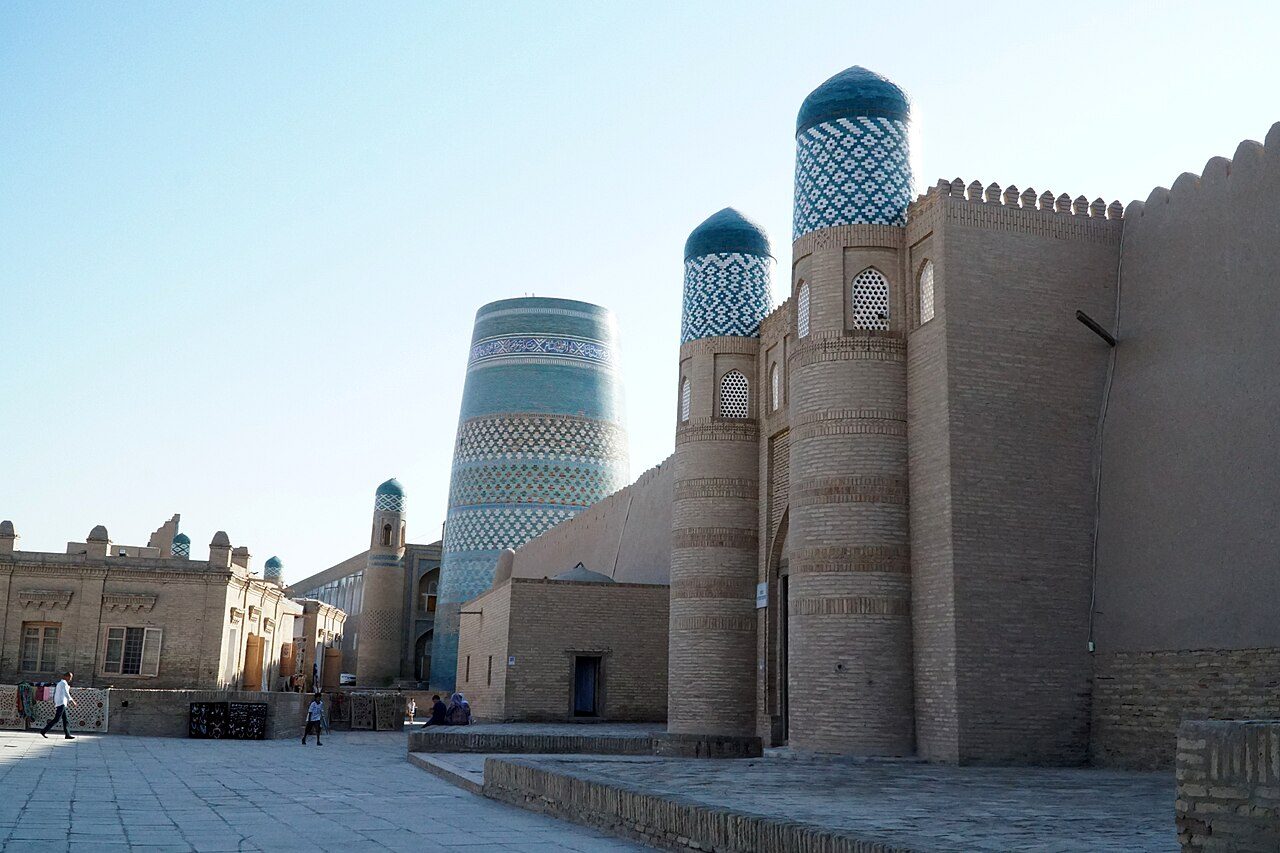
Kalta Minor Minaret
Commissioned in 1851 by Muhammad Amin Khan, this colossal structure was conceived to be the Islamic world’s grandest beacon—a minaret so soaring that watchmen atop its gallery could reportedly survey the caravan routes all the way to Bukhara. That ambition collapsed in 1855 when the Khan was slain in battle against the Turkmen Yamud, halting construction abruptly at twenty-nine meters instead of its planned seventy. What remains of this unfinished titan is a massive, barrel-shaped cylinder spanning over fourteen meters at its base, earning its lasting moniker *Kalta Minor*—the "Short Minaret." Standing beneath its sheer, curving flank inside the walled fortress of Itchan Kala, travelers encounter Central Asia’s most hypnotic display of glazed majolica. Unlike Khiva's other minarets, which leave vast bands of raw clay brick exposed, Kalta Minor is sheathed entirely in vibrant glazed ceramics. Broad horizontal bands of chevrons, diamond lattices, and kufic motifs unfurl in saturated shades of turquoise, lapis, emerald, and ivory. In the harsh Khorezm sun, the vitreous surface gleams like polished gemstone against the surrounding ochre mudbrick madrasahs. Gazing upward at the jagged, open rim silhouetted against the open desert sky, visitors feel the striking juxtaposition of imperial audacity and immediate, permanent interruption.
More in Khiva
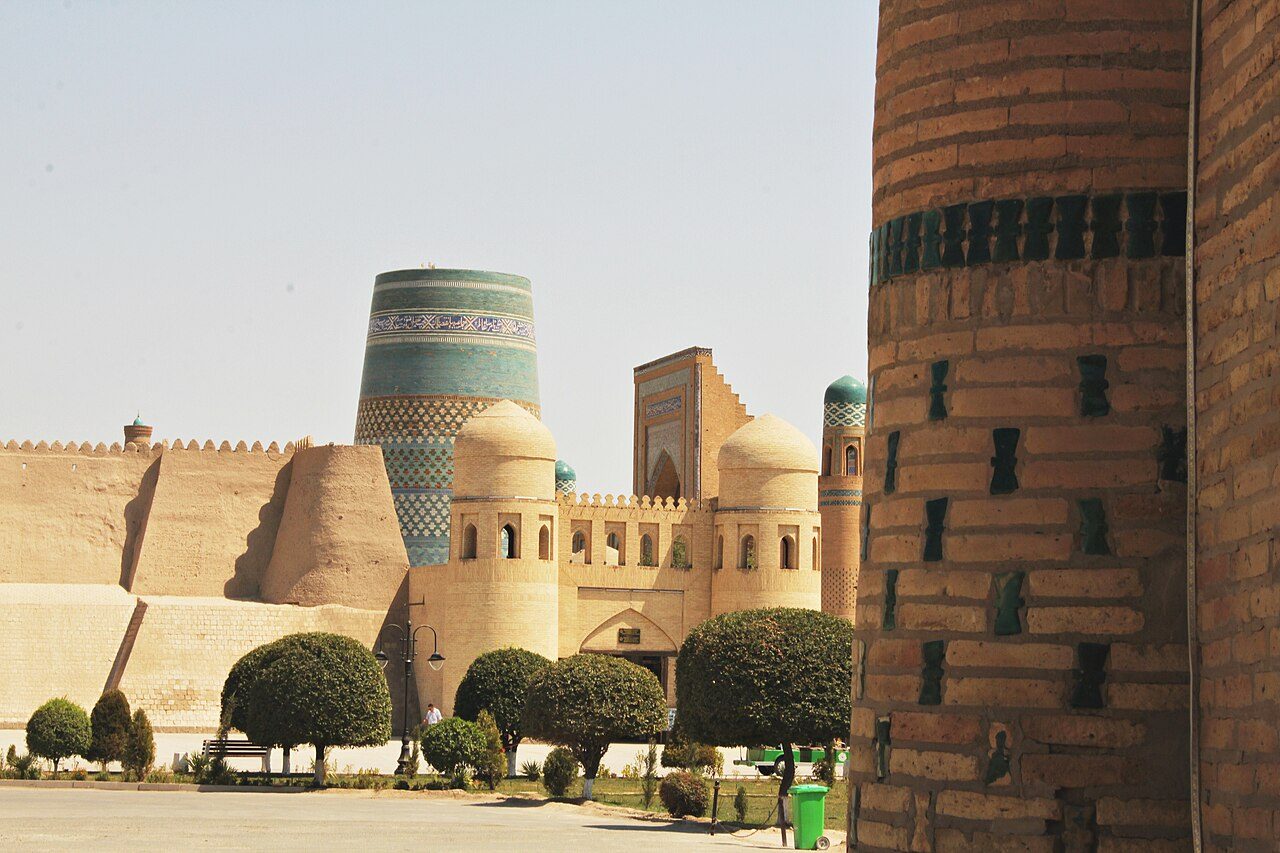
Photo credits (3)
- Adam Harangozó, CC BY-SA 4.0, via Wikimedia Commons
- Iaa2023, CC BY-SA 4.0, via Wikimedia Commons
- Nassima Chahboun, CC BY-SA 4.0, via Wikimedia Commons