
Khiva
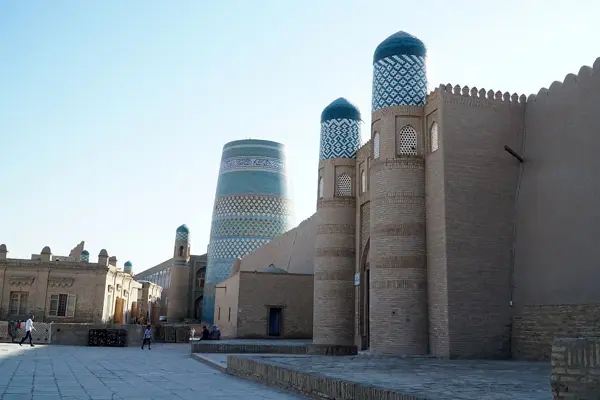
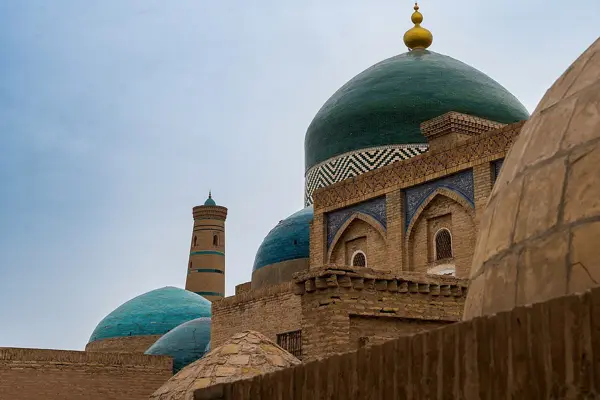
Rising from the edge of the Karakum and Kyzylkum deserts south of the Amu Darya River, Khiva anchors the ancient Khorezm oasis. Enclosed by massive, crenellated mud-brick walls, the inner citadel of Itchan Kala feels remarkably intact. Footsteps echo along dusty brick lanes flanked by clay ramparts, where desert wind hums through carved wooden gates and shadows stretch long across glazed turquoise tiles. Khiva became the capital of an independent khanate in the early sixteenth century, growing prosperous as a Silk Road trading post until the Russian conquest of 1873. Inside the west gate stands the Kalta Minor minaret, begun in 1851 and left unfinished at twenty-nine meters, wrapped entirely in vivid green and lapis majolica. Nearby, the tenth-century Juma Mosque encloses a quiet, dim hypostyle hall supported by 218 hand-carved elm pillars. Further east, the nineteenth-century Tash Khauli Palace showcases labyrinthine royal courtyards covered in intricate ceramic friezes. At the eastern gate bazaar, artisans sell hand-knotted wool rugs and carved wood beside cafes dishing out shivit oshi, a Khivan plate of dill-infused green noodles topped with beef and yogurt stew. Celebrations in town still feature the centuries-old, fast-paced rhythms of the Khorezm Lazgi dance. The compact citadel is pedestrian-only and simple to explore on foot. Plan your visit for October or April to bypass harsh desert extremes, and wander the alleys at sunrise before day-tour groups arrive.
Read more
What to see in Khiva
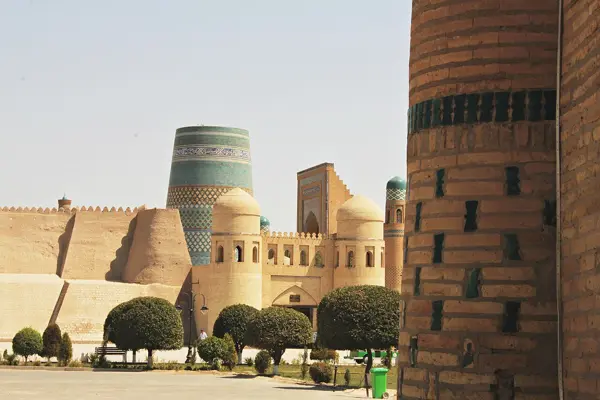
Stays in Khiva
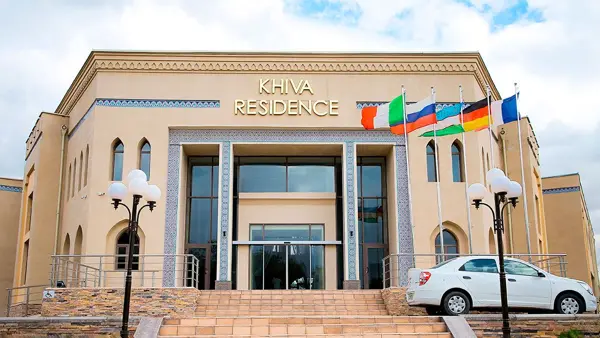
Travel guides for Khiva
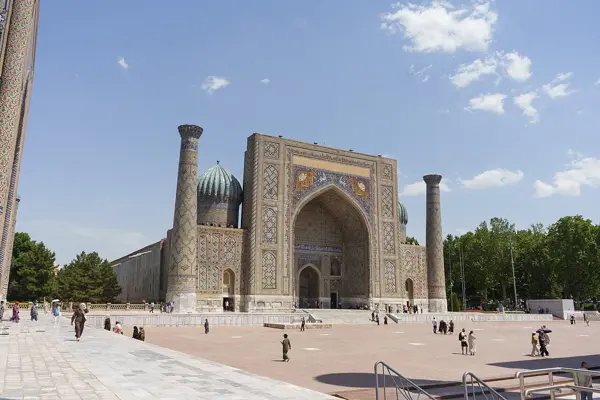
Photo credits (3)
- Adam Harangozó, CC BY-SA 4.0, via Wikimedia Commons
- Iaa2023, CC BY-SA 4.0, via Wikimedia Commons
- Nassima Chahboun, CC BY-SA 4.0, via Wikimedia Commons