
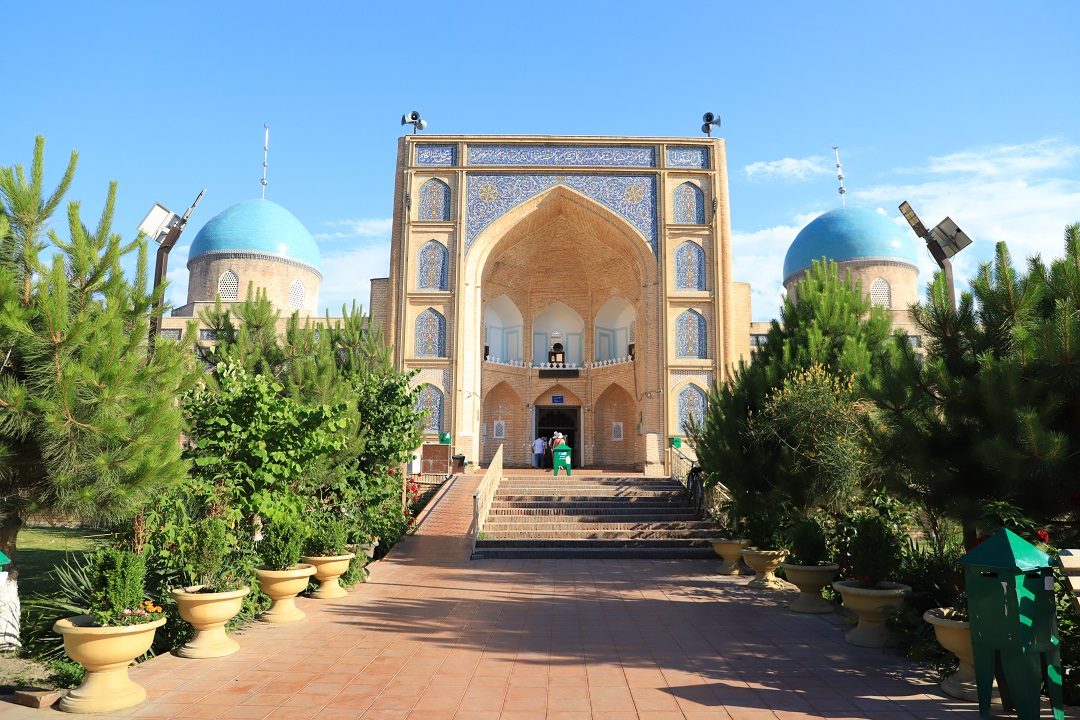
 New added
Juma Mosque
Unlike the soaring turquoise domes typical of Timurid architecture, Khiva’s Juma Mosque adheres to an archaic hypostyle design reminiscent of early Arabian prayer halls. Reconstructed between 1788 and 1789 by the Khivan dignitary Abdurrahman Mehtar atop foundations mentioned by tenth-century Arab geographer al-Maqdisi, the single-story structure dispenses with grand arches and cavernous vaults. Instead, its low, flat beamed roof rests upon an astonishing forest of 218 intricately carved wooden columns. Sourced from various eras across Khorezm’s history, around two dozen of these salvaged elm pillars are ancient relics dating to the tenth and eleventh centuries, their worn surfaces still bearing archaic Kufic calligraphy and deep floral relief. Stepping inside from the blinding desert glare of the Itchan Kala, visitors cross into a cloistered, shadowy world insulated by thick earthen walls. Two ceiling lightwells pierce the gloom, casting dramatic shafts of sunlight that illuminate sunken courtyards where rainwater once pooled to refresh the air. Wandering the labyrinthine colonnade, the sensory shift is immediate: the heat gives way to cool, quiet stillness perfumed by the faint, dry scent of ancient timber. Each column stands as a unique individual, resting on carved stone or cast-bronze bases, inviting you to trace centuries of evolving Islamic ornamental art etched into the dark, petrified grain.
More in Khiva
Photo credits (3)
- Adam Harangozó, CC BY-SA 4.0, via Wikimedia Commons
- Iaa2023, CC BY-SA 4.0, via Wikimedia Commons
- Nassima Chahboun, CC BY-SA 4.0, via Wikimedia Commons