
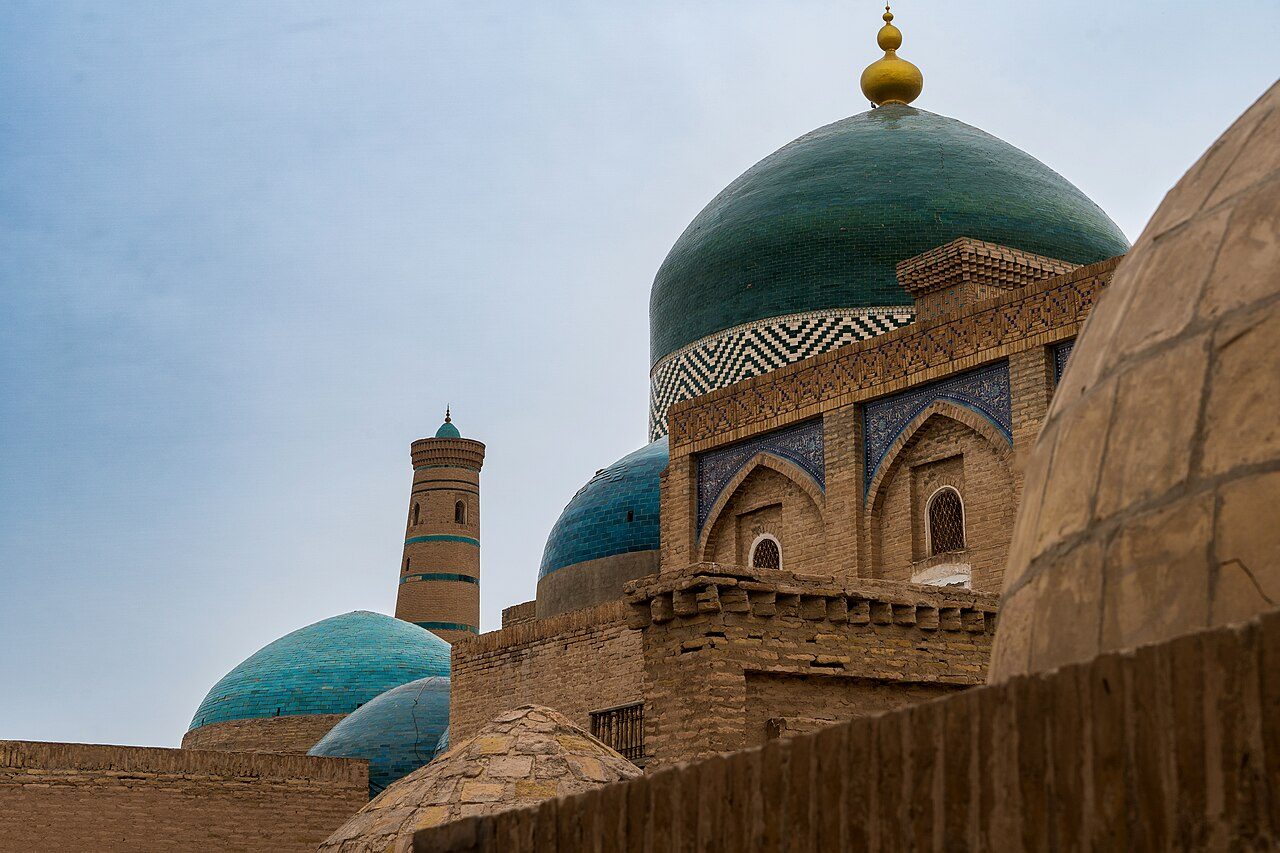
Pahlavon Mahmud Mausoleum
Crowned by Khiva’s largest turquoise dome, the Mausoleum of Pahlavon Mahmud honors the 14th-century poet, philosopher, and undefeated wrestler who became the desert city’s patron saint. Though Mahmud was buried here in 1326, the sanctuary assumed its imperial splendor in 1810 under Muhammad Rahim Khan I, who expanded the humble tomb into a monumental necropolis for the ruling Kungrad dynasty. Moving through the intricately carved elm doors, visitors trade the dusty, sunbaked clay of the walled Itchan Kala for a cool, vaulted sanctum saturated in cobalt, turquoise, and sea-green faience. The interior reveals one of Central Asia’s most breathtaking displays of glazed majolica, where Persian poetic inscriptions and floral arabesques carpet every square inch from floor to cupola. In the dim, vaulted chamber, Mahmud’s tiled sarcophagus rests behind an ornate iron grille, surrounded by the carved marble crypts of Khiva's khans. The sanctuary carries an intimate spiritual weight; travelers encounter local pilgrims whispering Quranic prayers, their cupped hands catching blessings beneath the ethereal, blue-dappled light filtering through pierced stucco screens.
More in Khiva
Photo credits (3)
- Iaa2023, CC BY-SA 4.0, via Wikimedia Commons
- Adam Harangozó, CC BY-SA 4.0, via Wikimedia Commons
- Nassima Chahboun, CC BY-SA 4.0, via Wikimedia Commons