
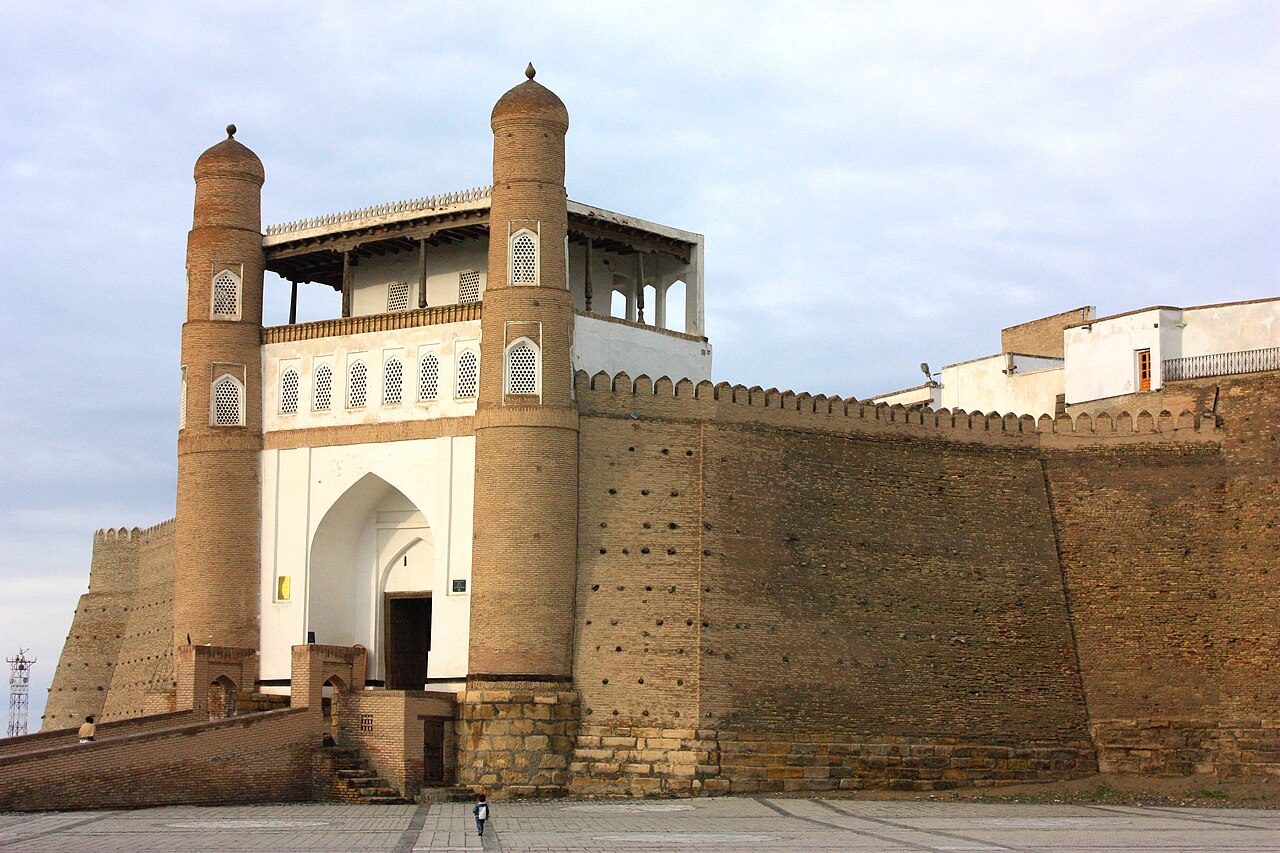
Ark Fortress
Rising abruptly from the desert dust like an earthen acropolis, this fifth-century citadel served for millennia as a fortified city-within-a-city for the absolute rulers of the Bukhara Emirate. Its twenty-meter-high, sand-colored ramparts belly outward in dramatic mud-brick curves, anchored by two tapering cylindrical towers framing a massive eighteenth-century gatehouse. Beyond these immense, undulating walls lies a turbulent past steeped in Silk Road and Great Game intrigue. Within these grounds, British officers Charles Stoddart and Arthur Conolly were condemned to the infamous subterranean "Bug Pit" before their public beheading in 1842, and here, in 1920, Red Army artillery under Mikhail Frunze bombarded the fortress, leaving nearly eighty percent of the royal precinct in ruins. Ascending the dark, cobbled incline of the *dalan*—a covered entry ramp once flanked by damp guardhouses and cells—travelers emerge onto an elevated, sun-drenched plateau. What survives of the royal compound includes the open-air Coronation Court, paved in white marble and shaded by carved wooden *iwan* columns with intricate muqarnas capitals, where emirs once received foreign emissaries beneath painted ceilings. Stepping into the seventeenth-century Juma Mosque reveals vibrant floral plasterwork and deep recessed niches that temper the Central Asian glare. Leaning against the weathered, sun-baked parapets at the fortress’s western rim, one is met with a panoramic vista over the dusty expanse of the Registan and the soaring turquoise cap of the Kalyan Minaret.
More in Bukhara
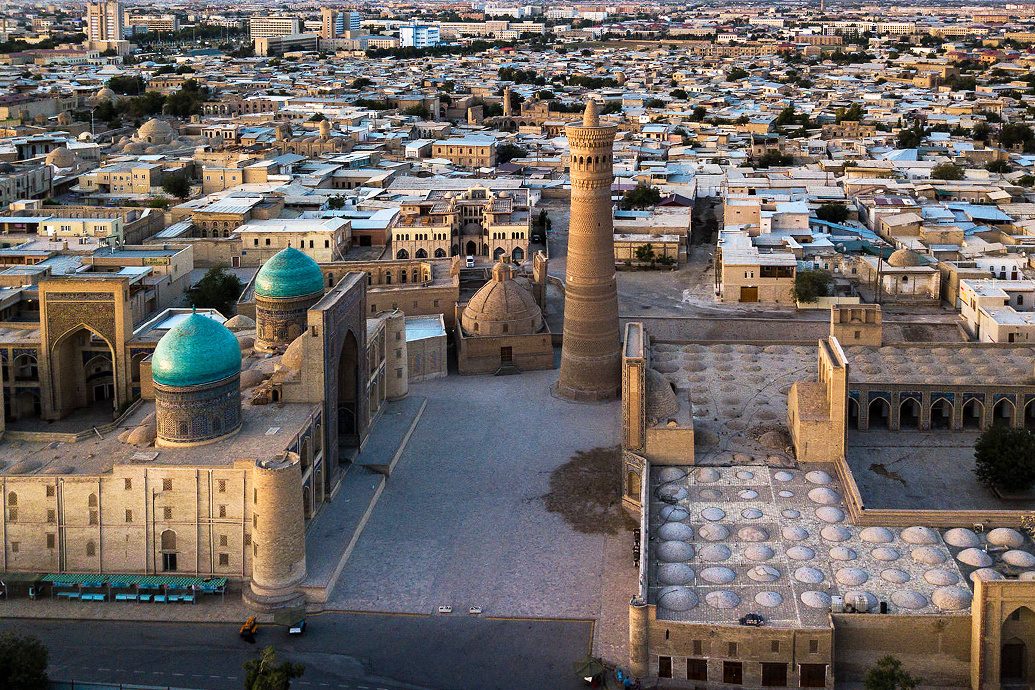
Photo credits (6)
- RK, CC BY-SA 4.0, via Wikimedia Commons
- Patrickringgenberg, CC BY-SA 3.0, via Wikimedia Commons
- Hylgeriak / Wikipedia, CC BY-SA 3.0, via Wikimedia Commons
- NatalieChunina, CC BY-SA 4.0, via Wikimedia Commons
- ElenaLitera, CC BY-SA 4.0, via Wikimedia Commons
- Официальный веб-сайт Агентства культурного наследия Республики Узбекистан, CC BY 4.0, via Wikimedia Commons