
 New added
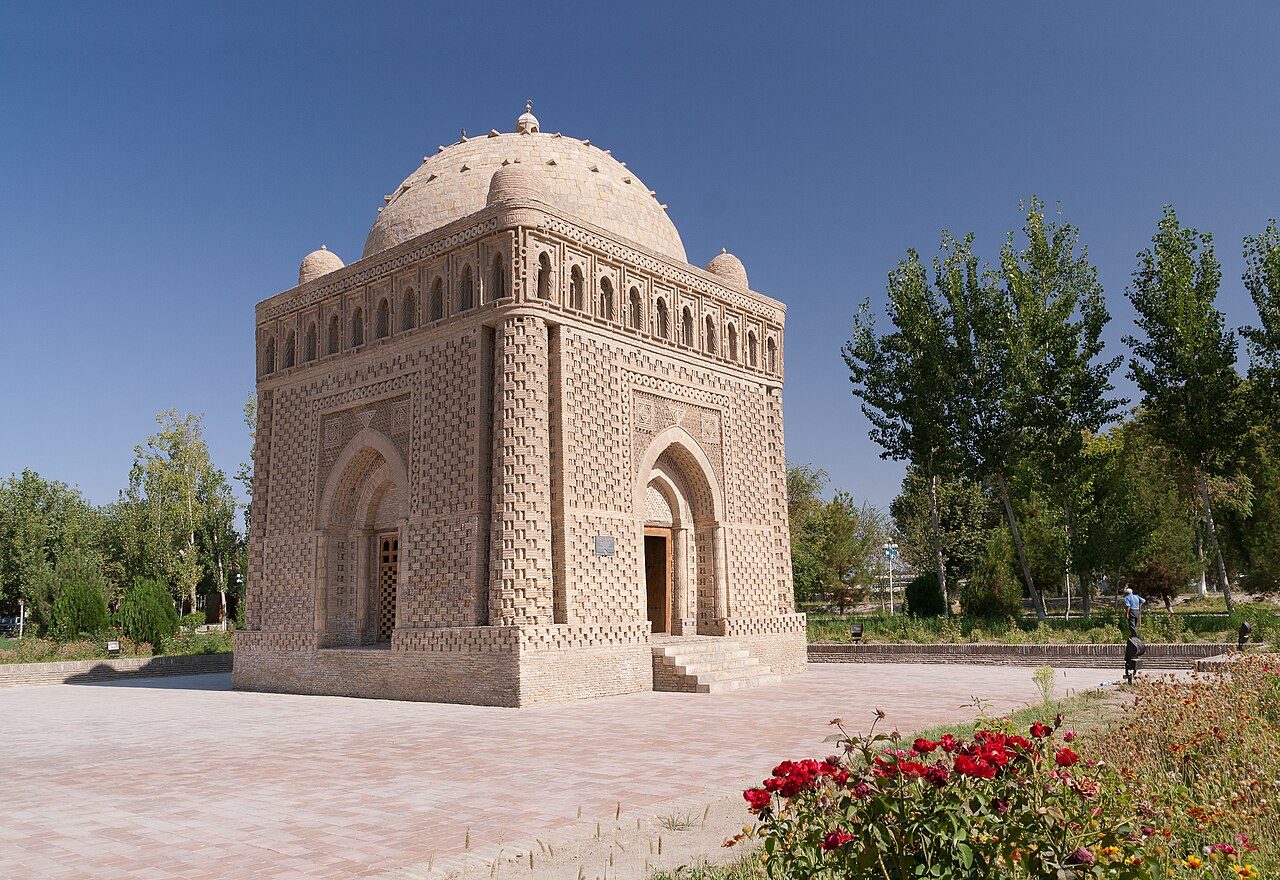
Ismail Samani Mausoleum
Completed around 905 CE during the reign of Ismail Samani, this funerary masterpiece stands as the definitive monument of the Samanid Renaissance and the oldest surviving Islamic tomb in Central Asia. It evaded destruction during Genghis Khan’s 1220 invasion entirely by chance, swallowed and safeguarded beneath centuries of alluvial silt and cemetery mud until its rediscovery in 1934. Structurally, the building bridges Zoroastrian cosmological symbolism with emerging Islamic geometry, translating the ancient concept of a terrestrial cube crowned by a celestial hemispherical dome into baked terracotta masonry without relying on colored tilework. Up close, the monochromatic buff brickwork defies the rigidity of stone, arranged into intricate basket-weave reliefs, rosettes, and concentric patterns that mimic woven textiles. Visitors encounter four identical facades pierced by arched portals, topped by a delicate upper gallery of forty miniature arched openings that cast dappled light and channel desert breezes into the single interior chamber. Standing inside beneath the pioneering corner squinches that support the dome, travelers experience a profound, monastic stillness. As the Bukhara sun tracks across the sky, shifting shadows animate the tactile reliefs, transmuting the earthen walls from pale biscuit at midday into a glowing, lace-like tapestry of deep amber by dusk.
More in Bukhara
Photo credits (6)
- Hylgeriak / Wikipedia, CC BY-SA 3.0, via Wikimedia Commons
- RK, CC BY-SA 4.0, via Wikimedia Commons
- Patrickringgenberg, CC BY-SA 3.0, via Wikimedia Commons
- NatalieChunina, CC BY-SA 4.0, via Wikimedia Commons
- ElenaLitera, CC BY-SA 4.0, via Wikimedia Commons
- Официальный веб-сайт Агентства культурного наследия Республики Узбекистан, CC BY 4.0, via Wikimedia Commons