
Bukhara
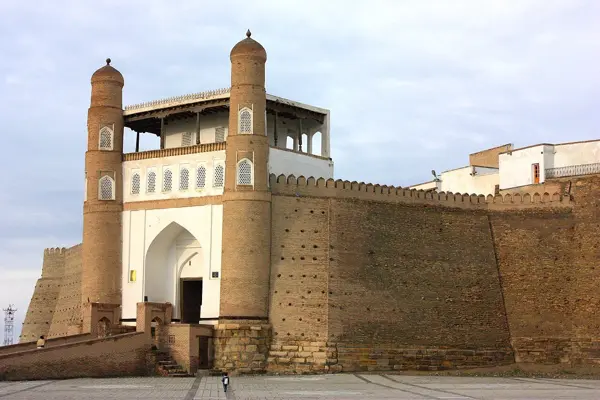
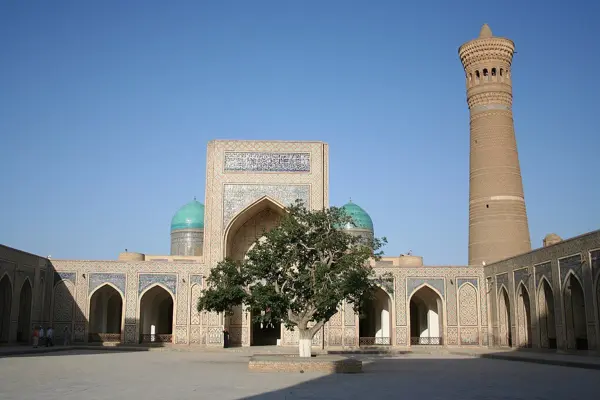
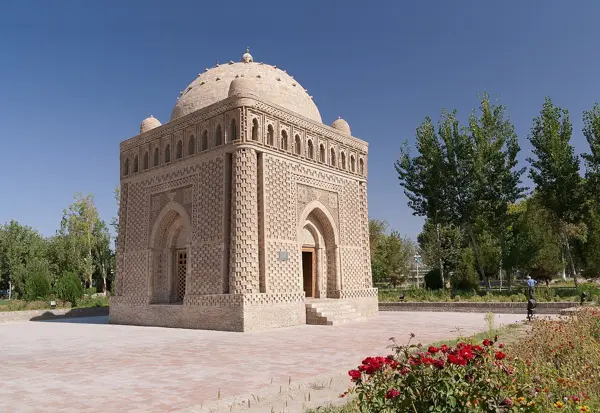
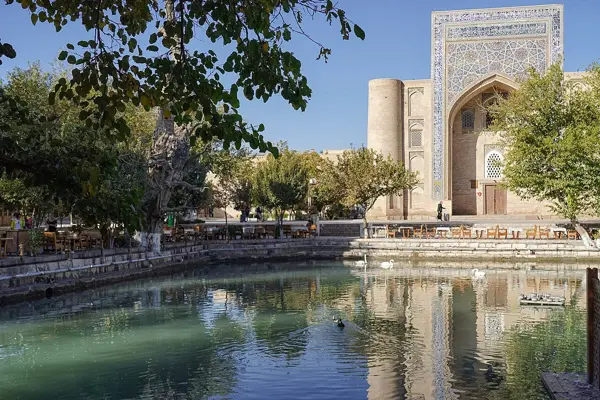
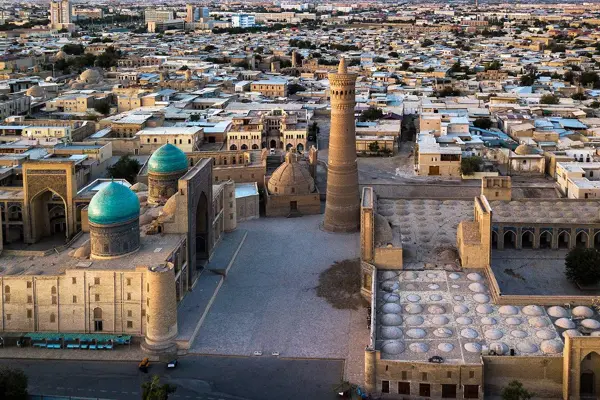
Bukhara rises out of the desert plains of the Zeravshan River oasis in southwestern Uzbekistan, where centuries of caravan trade shaped a vast network of baked-brick architecture. Walking through the historical core feels unhurried and intimate, as narrow alleys wind between high mudbrick walls, quiet residential courtyards, and broad plazas. The atmosphere carries the dry scent of desert dust, woven wool, and cumin, punctuated by the sudden blue brilliance of glazed tilework against pale clay. Inhabited for over two millennia, Bukhara flourished as an intellectual capital of the Islamic world before Genghis Khan besieged the city in 1220. He spared the towering Kalyan Minaret, completed in 1127, whose decorative brick bands still rise forty-five meters above the central square. To the northwest looms the Ark, a massive fifth-century fortress that served as the fortified residence of Bukhara’s emirs. Walking distance away stands the tenth-century Samanid Mausoleum, renowned for its intricate basket-weave masonry, and the sixteenth-century Lyabi-Khauz ensemble, arranged around a central reservoir shaded by centuries-old mulberry trees. Daily life still flows beneath sixteenth-century domed bazaars like Toqi Zargaron, where artisans hammer brass platters and sharpen Suzani embroidery scissors. In courtyard teahouses, locals gather over green tea and regional plov, distinctive for its layered cooking method using sweet yellow carrots, raisins, and beef. Spring welcomes the annual Silk and Spices Festival, when folk musicians and craftsmen parade through the lanes. The old town is compact and best explored entirely on foot; visit during April, May, September, or October, taking advantage of the early morning and late afternoon light when the desert heat breaks.
Read more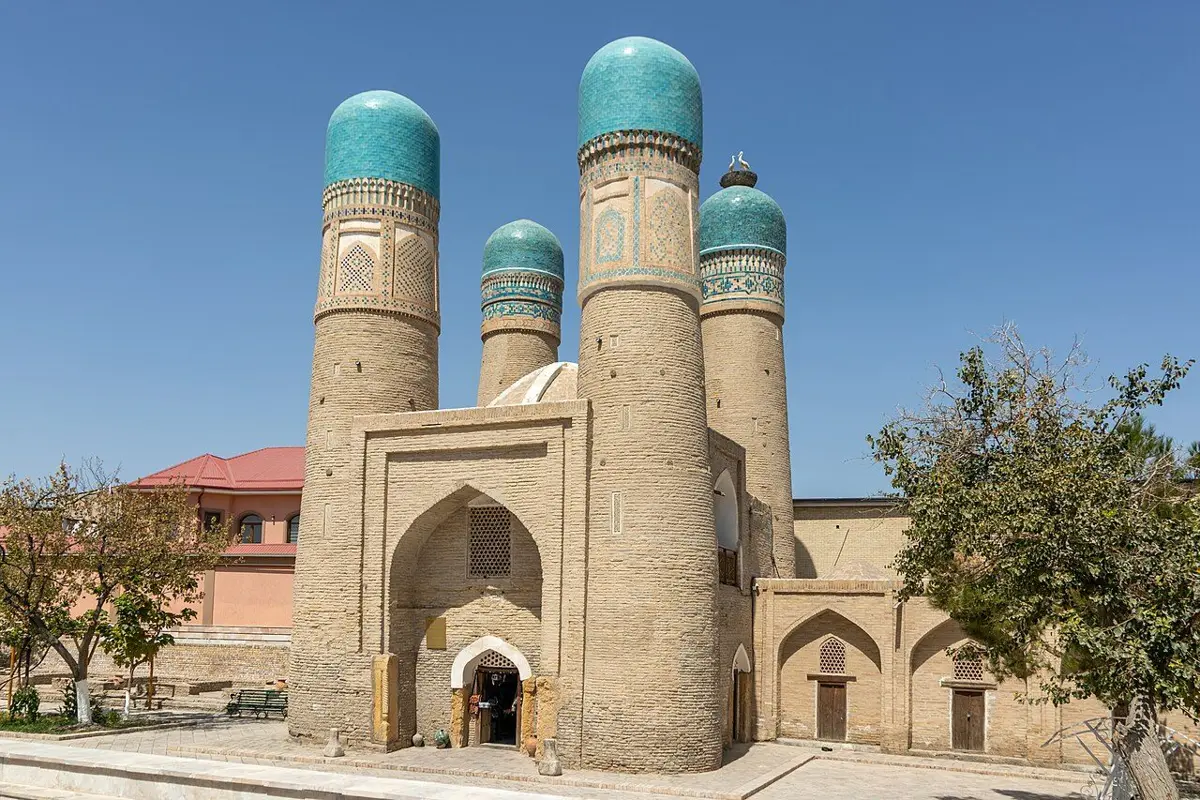
What to see in Bukhara
Travel guides for Bukhara
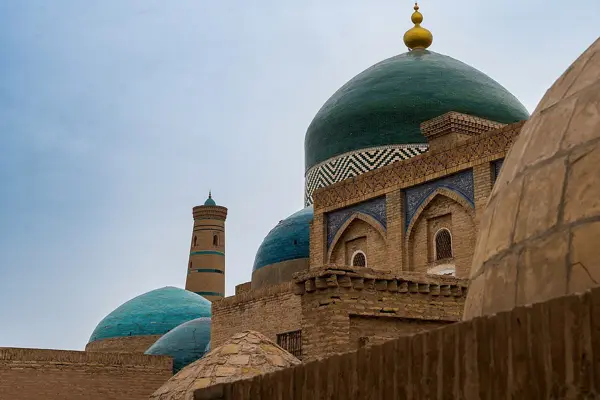
Photo credits (6)
- ElenaLitera, CC BY-SA 4.0, via Wikimedia Commons
- RK, CC BY-SA 4.0, via Wikimedia Commons
- Patrickringgenberg, CC BY-SA 3.0, via Wikimedia Commons
- Hylgeriak / Wikipedia, CC BY-SA 3.0, via Wikimedia Commons
- NatalieChunina, CC BY-SA 4.0, via Wikimedia Commons
- Официальный веб-сайт Агентства культурного наследия Республики Узбекистан, CC BY 4.0, via Wikimedia Commons