
Po-i-Kalyan Complex
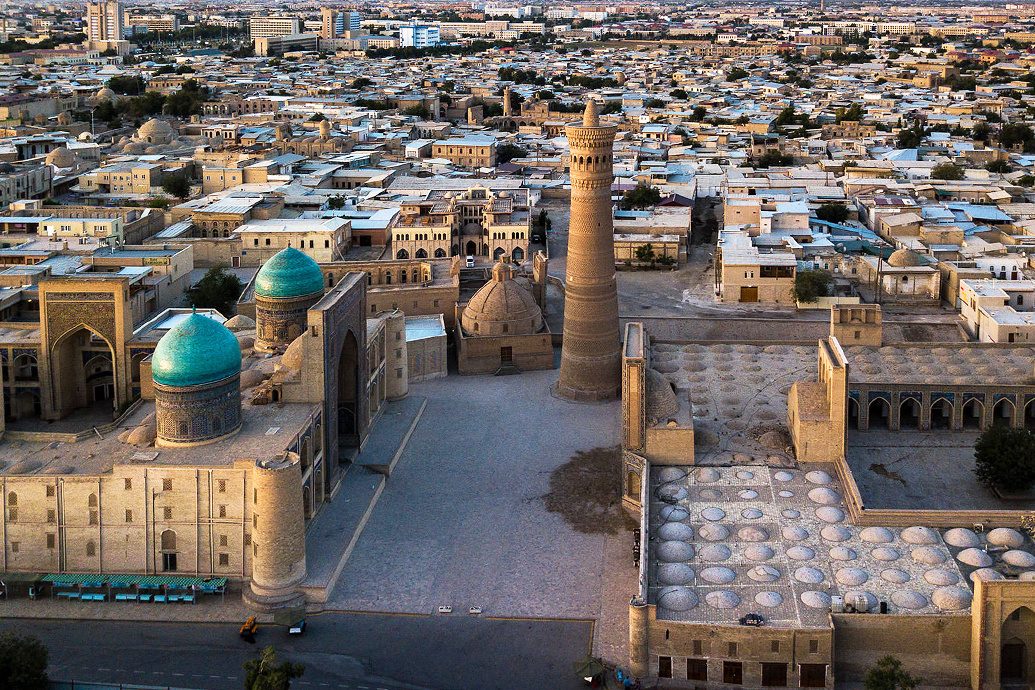
Anchoring Bukhara’s old quarter, the Po-i-Kalyan complex revolves around the monumental Kalyan Minaret, an engineering marvel erected in 1127 by the Karakhanid ruler Mohammad Arslan Khan. So striking was this 45.6-meter baked-brick beacon that even Genghis Khan spared it from obliteration during the Mongol sack of 1220. Fourteen distinct friezes encircle the tapering pillar, each rendered in unglazed terracotta relief that shifts from dusty sand to deep amber beneath the Central Asian sun, showcasing early Islamic geometric mastery without a single scrap of colored tile. Across the stone-paved central court, the raw earth tones give way to dazzling lapis and turquoise tilework in the grand dialogue between the Kalyan Mosque and the Mir-i-Arab Madrasah. Completed in the 1530s under the Shaybanid dynasty, the active madrasah crowns the skyline with twin cerulean ribbed domes and soaring mosaic-clad pishtaqs. Visitors stepping into the mosque’s interior discover an immense open courtyard enclosed by 288 brick vaults resting on 208 carved stone pillars. Standing at the plaza's center, one feels dwarfed by the sheer theatricality of Silk Road sacred architecture, where the cool breeze moving through vaulted arcades carries the faint resonance of five centuries of scholarly devotion.
More in Bukhara
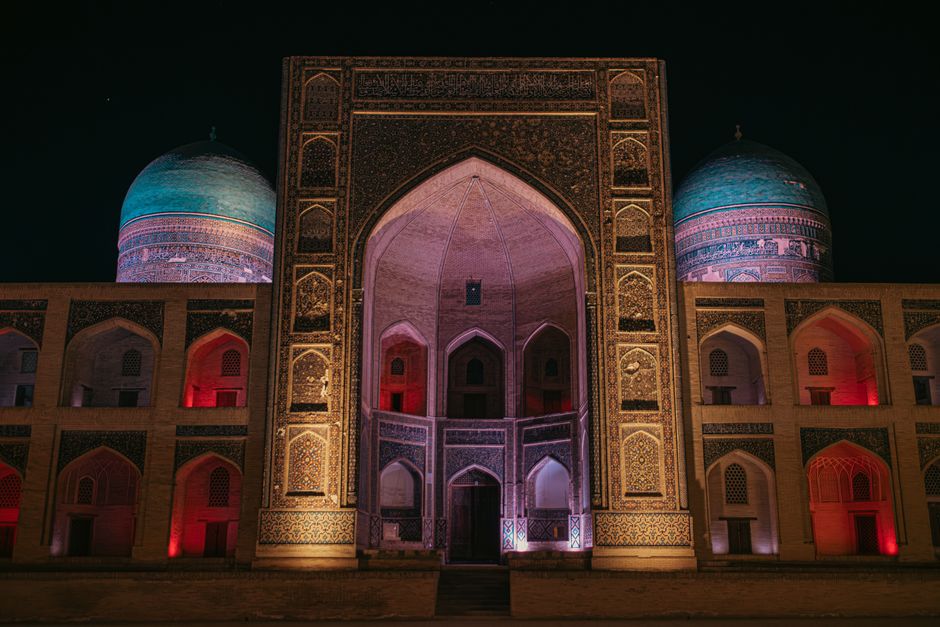
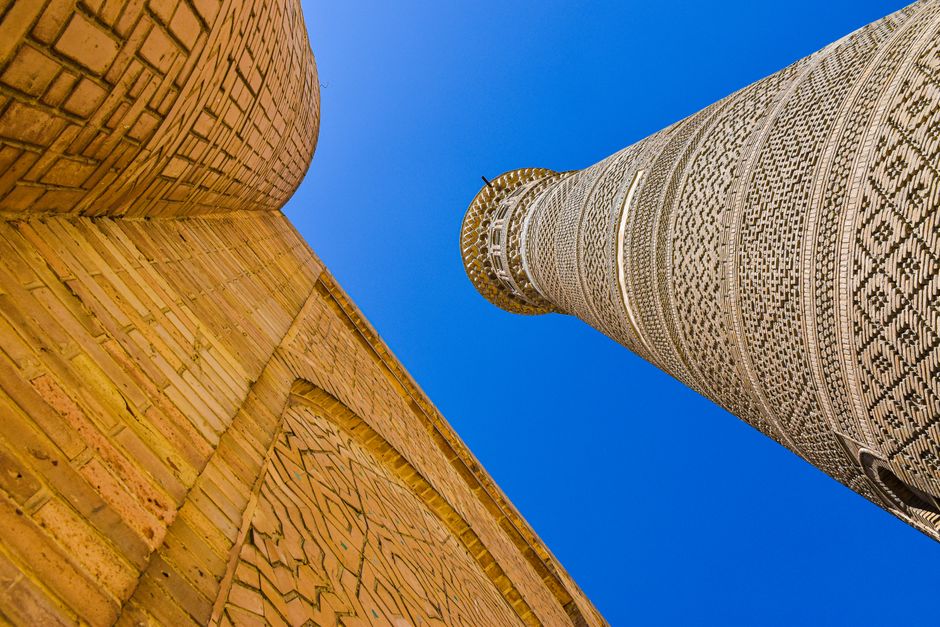
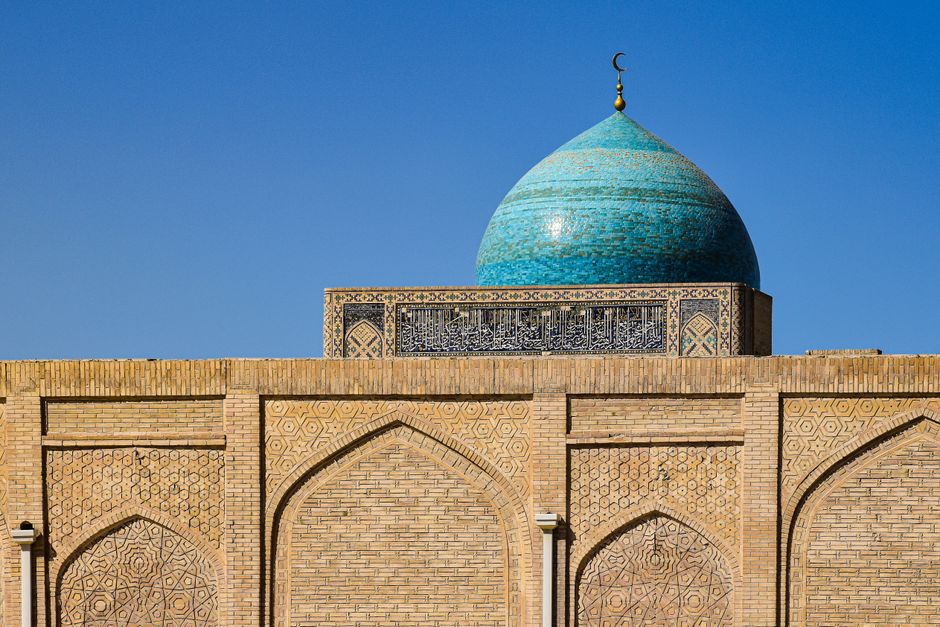
Photo credits (1)
- Официальный веб-сайт Агентства культурного наследия Республики Узбекистан, CC BY 4.0, via Wikimedia Commons