
Tashkent Metro
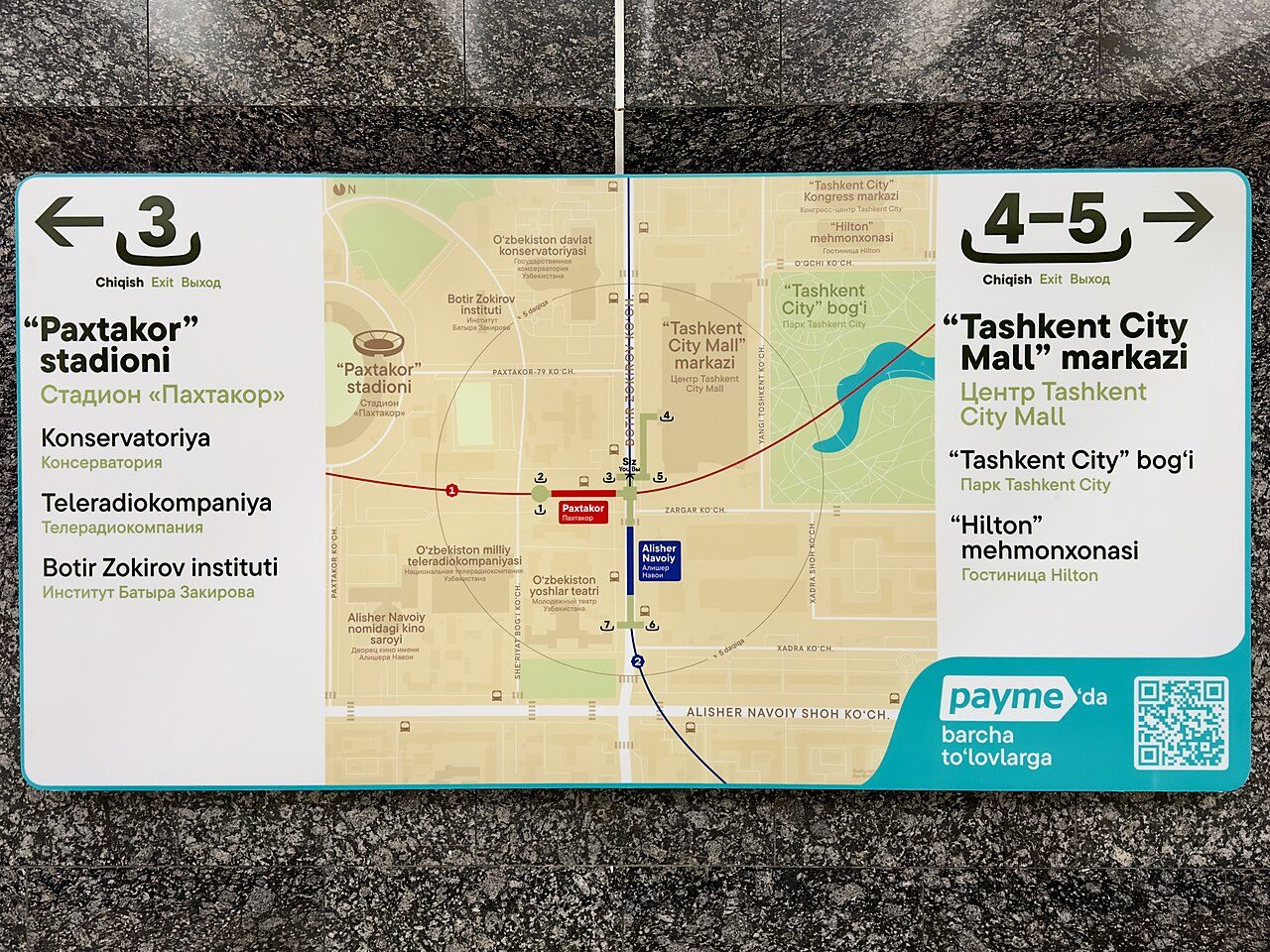
Inaugurated in 1977 as Central Asia’s first underground transit system, the Tashkent Metro arose during the massive Soviet reconstruction that followed the city’s cataclysmic 1966 earthquake. Engineered to double as nuclear blast shelters, each subterranean station was conceived as an architectural showcase blending Soviet monumentalism with traditional Uzbek decorative craft. Deep beneath the surface, platforms unfold beneath soaring vaulted ceilings clad in local marble, pink granite, and intricate *ganch* plasterwork. At Kosmonavtlar station, the walls shimmer with ceramic panels that shift through a gradient from deep navy to atmospheric sapphire, punctuated by floating bas-relief medallions honoring cosmonauts Yuri Gagarin and Valentina Tereshkova beneath glowing disc chandeliers. Riding the network feels like traversing an underground anthology of Silk Road lore and twentieth-century ambition. Travelers step off rumbling Russian train cars into the quiet, cool air of Alisher Navoi station, where mosque-inspired ribbed cupolas, turquoise majolica, and delicate floral reliefs celebrate the fifteenth-century Timurid poet. Strictly barred from civilian photography until security classifications were lifted in 2018, these once-secret concourses now reveal their details freely to the public eye. Commuters move beneath the massive, candelabra-style bronze fixtures of Mustaqillik Maydoni and the surreal, glowing ceramic domes of Bodomzor, encountering an everyday transit corridor preserved as monumental public art.
More in Tashkent
Photo credits (3)
- Прикли, CC BY 4.0, via Wikimedia Commons
- Visola Tangirova, CC0, via Wikimedia Commons
- Man77, CC BY-SA 3.0, via Wikimedia Commons