Discover how to plan your trip to Tajikistan, with ideal durations for the Fann Mountains, Silk Road cities, and the Pamir Highway. Find route suggestions and essential travel tips to help you map your journey.
To travel across Tajikistan, plan for at least 7 days for the western valleys and Silk Road cities, or 10 to 14 days if you intend to travel the Pamir Highway. A one-week journey allows you to explore cultural heritage sites, scenic mountain passes, and turquoise alpine waters. Travelers with two weeks or more can add the remote high-altitude plateaus and border valleys of the eastern Pamirs.
How Many Days Do You Need in Tajikistan?
The ideal length of your trip depends primarily on whether your route includes the high Pamirs or focuses on the lower valleys and cultural centers in the west and north.
- 5 to 7 Days: Best for a focused journey through western Tajikistan. You can explore the capital city, relax along alpine lakes, and walk through ancient archaeological sites.
- 10 to 12 Days: A classic timeframe for crossing the Pamir Highway in one direction with appropriate time to acclimatize to high elevations.
- 14 to 21 Days: The ultimate duration. This allows you to combine the northern cities of the Fergana Valley, the Fann Mountains, and a complete traverse along the southern river border and eastern plateau.
Where to Go in Tajikistan
Tajikistan divides naturally into distinct geographical regions, each offering different landscapes, elevations, and historical traditions.
Western Tajikistan and the Fann Mountains
Western Tajikistan is easily reached from the capital and offers turquoise alpine lakes set beneath towering limestone peaks. Here you will find Iskanderkul Lake, named after Alexander the Great, situated at an elevation of 2,195 meters. Further west sits Penjikent, a historic center famous for Ancient Penjikent, an excavated fifth-century Sogdian city that once stood as an influential Silk Road trading hub.
Northern Tajikistan and the Fergana Valley
Heading north across the mountain passes brings you into the agricultural Fergana basin. Istaravshan preserves ancient artisan quarters, mosques, and traditional craft workshops. Continuing north leads to Khujand, one of Central Asia's oldest cities, positioned on the Syr Darya river with a reconstructed fortress and active bazaars.
The Pamir Highway and Wakhan Corridor
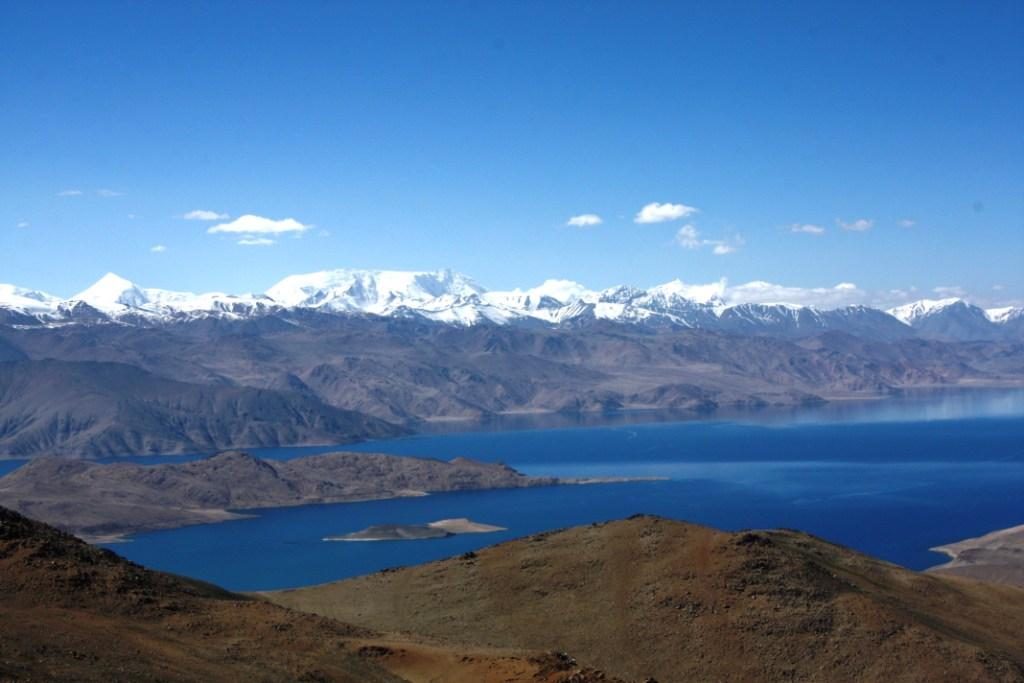
The Gorno-Badakhshan Autonomous Region (GBAO) covers the eastern half of the country. Travel starts along deep river gorges into Khorog, the regional administrative center. From there, roads follow the Panj River south into Ishkashim, where you can bathe in the mineral-rich waters of Garm-Chashma Hot Springs. Further east, the valley climbs to the arid plateau of Murghab and the vast expanse of Karakul Lake, an endorheic basin formed inside an ancient meteorite impact crater near the village of Karakul.
7-Day Sample Itinerary: Lakes and Silk Road Heritage
This classic one-week route highlights western Tajikistan without demanding extreme high-altitude travel.
- Day 1: Arrival in Dushanbe. Spend your first day in Dushanbe visiting central monuments, national museums, and wide tree-lined boulevards.
- Day 2: Dushanbe to Iskanderkul Lake. Drive north through the Varzob Gorge and the Anzob Tunnel to reach Iskanderkul Lake. Walk along the lakeshore and visit the nearby waterfall.
- Day 3: Iskanderkul to Penjikent. Descend along the Zeravshan River valley into Penjikent. Spend the afternoon walking among the excavated ruins of Ancient Penjikent.
- Day 4: Penjikent to Istaravshan. Cross through mountain passes into Istaravshan to visit old town madrasas and local blacksmith workshops.
- Day 5: Istaravshan to Khujand. Take a short drive to Khujand. Tour the historical citadel, regional history museum, and bustling central market.
- Day 6: Khujand to Dushanbe. Make the scenic mountain drive back south to the capital.
- Day 7: Dushanbe. Explore local craft bazaars and relax in city parks before your departure flight.
12 to 14-Day Sample Itinerary: The Pamir Highway
This overland route takes you along the border with Afghanistan and across high mountain plateaus.
- Days 1–2: Dushanbe to Kalai-Khumb and Khorog. Leave the capital and trace the rushing Panj River. Arrive in Khorog to acclimatize and visit the high-altitude botanical garden.
- Days 3–4: Khorog to Ishkashim and the Wakhan Valley. Drive south to Ishkashim. Take time to soak in the therapeutic waters of Garm-Chashma Hot Springs and observe views across the river into northern Afghanistan.
- Days 5–6: Wakhan to Alichur. Travel past historic hillside ruins and petroglyphs, climbing through dramatic passes toward the high plateau around Alichur.
- Days 7–8: Alichur to Murghab. Continue across the wind-scoured lunar landscape to Murghab, a high-altitude settlement surrounded by broad mountain ranges.
- Days 9–10: Murghab to Karakul Lake. Ascend past Ak-Baital Pass to reach Karakul. Walk along the shores of Karakul Lake, taking in views of glaciated peaks.
- Days 11–14: Return or Border Crossing. Either continue north toward the border or take the northern loop road back toward Dushanbe to complete your circuit.
How to Get Around Tajikistan
Public transit between distant mountain valleys relies primarily on shared four-wheel-drive vehicles. Fixed-route buses operate only within major urban areas like Dushanbe and Khujand. For travel along the Pamir Highway and mountain passes, hiring a private driver on Tour & Car provides the necessary vehicle reliability, luggage space, and flexibility to pause at trailheads and viewpoints.
Best Time to Visit Tajikistan
The most practical window for high-altitude trekking and road trips across the Pamir Highway runs from June through September. During these summer months, mountain passes are generally free of heavy snow and high pastures are active. For exploring lower-elevation cultural hubs like Dushanbe, Penjikent, and Khujand, spring (April to May) and autumn (September to October) bring pleasant daytime temperatures.
Late autumn also brings cultural gatherings to the capital. In late 2026, visitors in Dushanbe can observe events such as the National Flag Day Celebrations in late November or the Dushanbe World Judo Masters in December.
Practical Tips for Your Tajikistan Itinerary
- GBAO Permit: Traveling anywhere in the Pamir region requires a special GBAO permit in addition to your standard visa. Ensure this permit is arranged before entering the region.
- Altitude Management: Towns on the eastern plateau sit above 3,500 meters. Increase elevation gradually and drink plenty of water to minimize altitude sickness.
- Cash Economy: Card payment terminals are rare outside major hotels in Dushanbe and Khujand. Carry sufficient cash in Tajik Somoni for homestays, meals, and driver services in remote regions.
- Connectivity: Mobile coverage is stable in northern and western towns, but drops significantly across remote stretches of the eastern mountains. Download offline maps in advance.