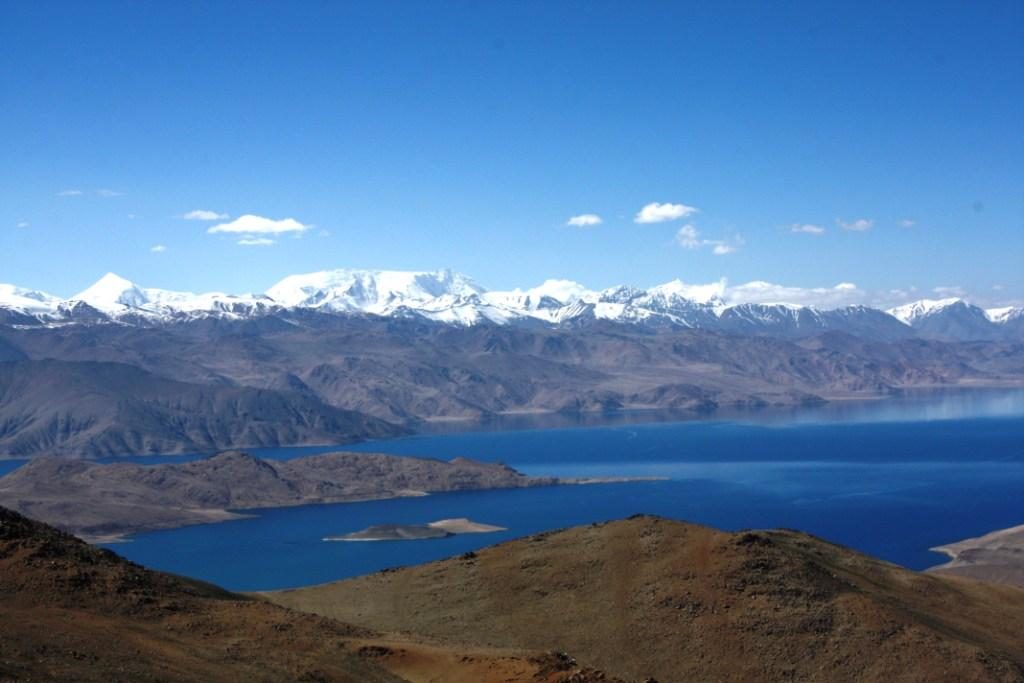
Karakul
Set at 3,900 meters across the high Pamir plateau of eastern Tajikistan, Karakul sits on the windswept shore of an endorheic lake created by a meteorite impact roughly twenty-five million years ago. Walking the unpaved tracks between the low, whitewashed mud-brick houses reveals a stark, quiet frontier settlement. The air is thin and bone-dry, with the quiet interrupted only by the gale coming off the water and the occasional bleat of livestock. Jagged, snow-dusted ridges rim the horizon, framing a saline lake that shifts from turquoise to inky slate beneath shifting cloud cover. Formally confirmed as an impact crater via satellite imagery in 1987, the basin features distinctive natural and historic markers. The lake itself divides into two unequal bodies of water separated by a rugged peninsula, where bar-headed geese nest during early summer. Along the northern fringe of the settlement stand weathering mud-brick corrals and the rusted metal skeletons of Soviet-era border posts once used to monitor the frontier with China. Just beyond the village perimeter, rough tracks trace the shoreline to ancient stone cairns and burial mounds scattered across the barren gravel plains. The community consists primarily of ethnic Kyrgyz pastoralists who open their homes to travelers crossing the M41 Pamir Highway. Meals center on high-altitude sustenance, featuring slow-cooked yak meat, fried flatbread, and hot bowls of tea cut with rich yak butter. Life moves around herding seasons and the repair of felt yurts. The practical window for visiting runs from mid-June to September, when sub-zero blizzards relent; navigating the rocky terrain requires a high-clearance four-wheel-drive vehicle and careful pacing to adjust to the elevation.
Read more