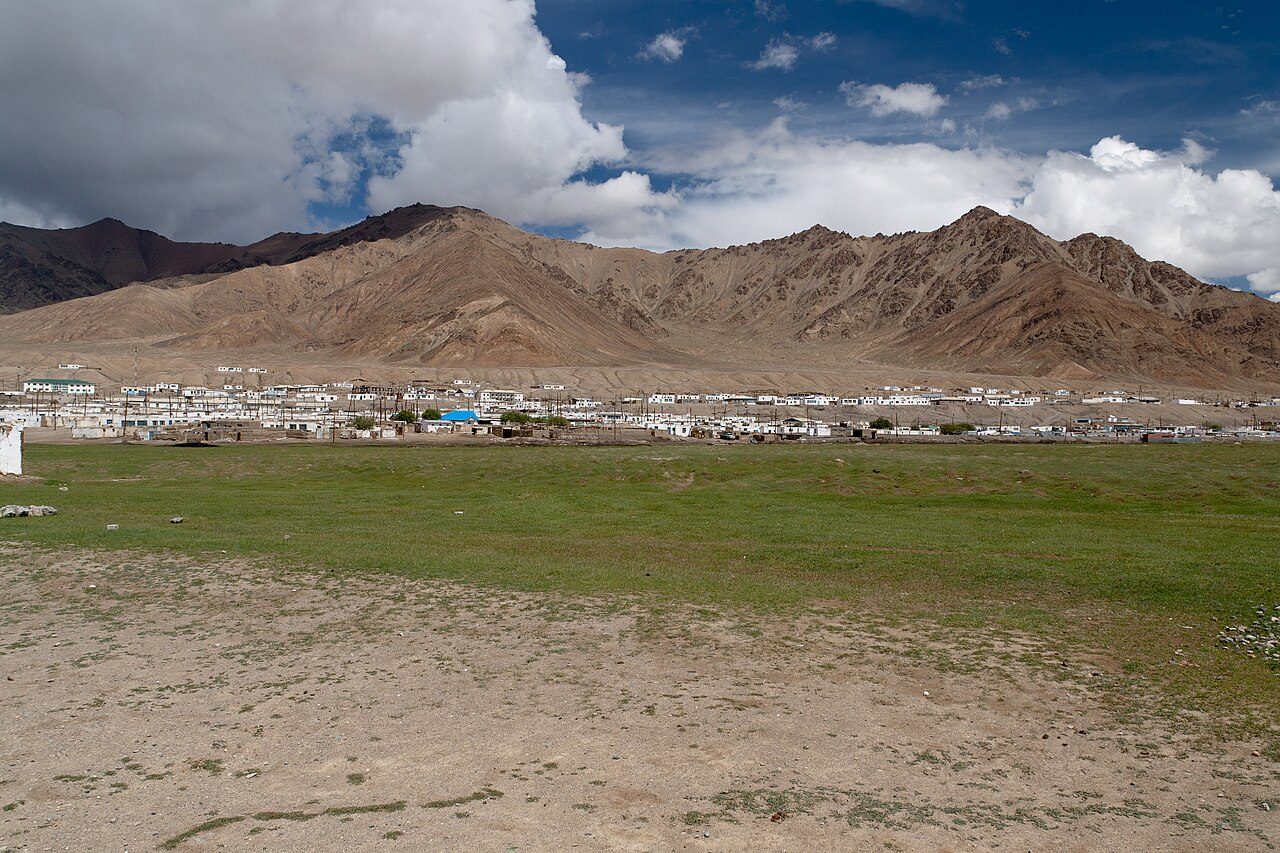
Murghab
Perched at over 3,600 meters in the eastern Pamirs of Tajikistan, Murghab sits along the silt-laden Murghab River amid an arid, high-altitude plateau. Walking its wide gravel avenues feels stark and quiet. Raw winds sweep down from barren scree slopes, flapping the heavy coats of passersby beneath a sharp, cobalt sky. Whitewashed adobe houses line unpaved lanes where domestic yaks graze on sparse scrub and the surrounding mountains loom like giant heaps of pale gravel. Established in 1893 as Pamirsky Post, an imperial Russian military outpost during the Great Game, the settlement still carries the atmosphere of an isolated border station. Near the center, a silver-painted statue of Vladimir Lenin stands resolute on a high plinth, an enduring relic of the Soviet era. Downhill, the bazaar operates out of double-stacked shipping containers hauled across the nearby Kulma Pass from China, their metal doors opening to reveal warm socks, coal stoves, and tools. Above the river plain sits the modern silver-domed mosque, while the Yak House center showcases felt carpets and woolen goods made by highland artisans. The town is predominantly ethnic Kyrgyz, and daily life revolves around pastoral livestock. Local cafes serve plates of mutton-heavy lagman, dried rounds of kurut cheese, and hot yak milk tea to fend off the chill. If you visit in late summer, the At Chabysh horse festival gathers riders across the region for traditional equestrian games. Plan your visit between June and September to avoid sub-zero freezes, move slowly to acclimate to the thin air, and explore the town entirely on foot.
Read more