Ishkashim
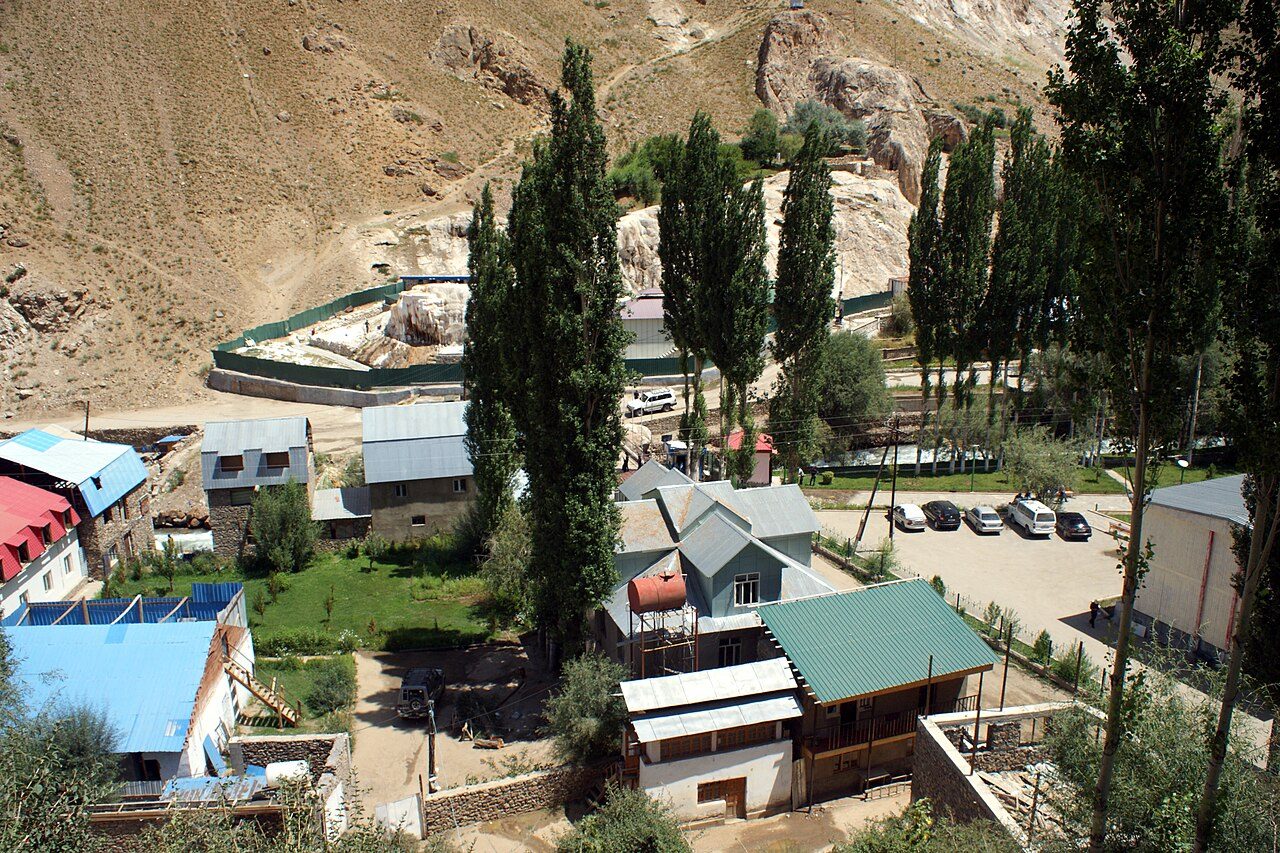
Ishkashim sits at the southwestern gateway to the Tajik Wakhan Corridor, where the Panj River separates the Pamir range from the towering Hindu Kush along the Afghan frontier. Dust scuffs underfoot along wide avenues lined with irrigation canals, poplars, and apricot orchards. Walking through town reveals a quiet borderland rhythm, punctuated by children walking home from school, cattle ambling between stone enclosures, and the constant rush of glacial runoff. Historically a strategic Silk Road outpost, the territory preserves defensive strongholds spanning millennia. Fifteen kilometers east in Namadgut, the fourth-century BCE mud-brick citadel of Kah-Kaha overlooks the river crossing from a rocky bluff. Further down the valley, travelers reach the thermal cascades of Garm Chashma and the stone parapets of twelfth-century Yamchun Fortress. Within Ishkashim itself, local homes follow traditional Pamiri architecture, featuring five symbolic pillars and tiered wooden skylights that blend Ismaili Islamic customs with ancient Zoroastrian heritage. Mornings start around the modest bazaar with flatbread, curd cheese, and dried mulberries, while homestays serve bowls of hot shir chai, a local tea brewed with milk, butter, and salt. A cross-border market traditionally operates on a neutral island in the Panj, drawing Afghan traders across the bridge with carpets, spices, and copper goods. The ideal time to visit is from June through September when mountain roads remain clear; arrange your transport by shared four-wheel-drive vehicle from Khorog, and ensure your regional GBAO permit is in order before arrival.
Read more