
Samarkand
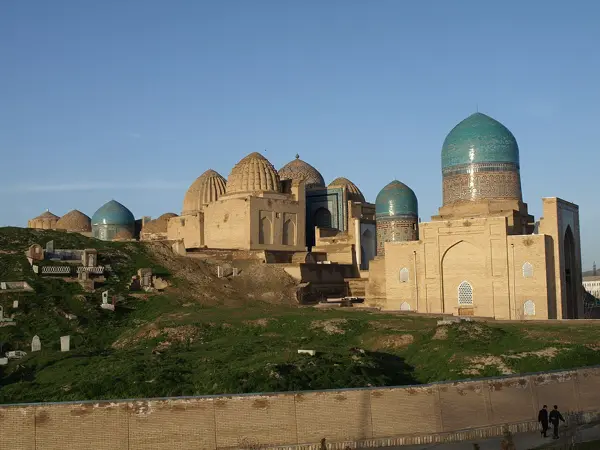
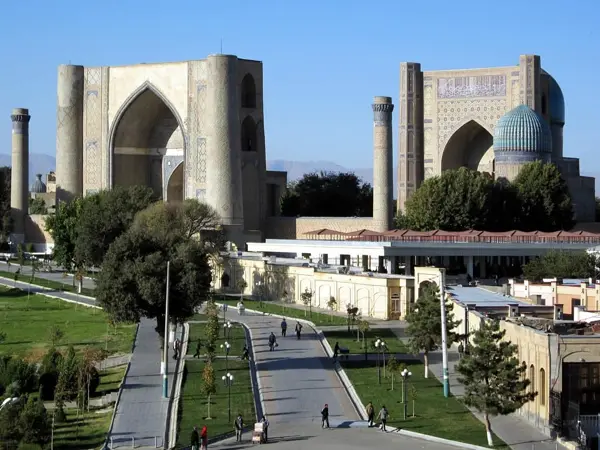
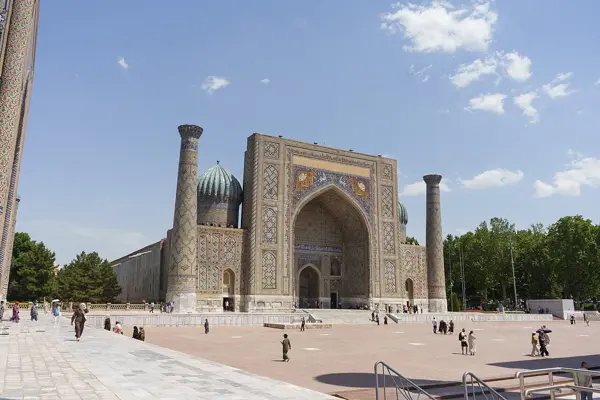
Settled in the fertile Zeravshan River valley with the Zarafshan mountains on the southern horizon, Samarkand unfolds as a contrast of scales. Leafy, modern avenues give way to the mud-brick walls of centuries-old mahallas, where residential alleys suddenly spill out onto towering expanses of turquoise-tiled domes. Timur declared Samarkand the capital of his empire in 1370, initiating an era of monumental construction. At the center stands the Registan, framed by three massive madrasahs with intricate majolica facades. A short walk away, Gur-e-Amir holds Timur’s jade tomb beneath a ribbed azure dome, while the Shah-i Zinda necropolis forms a narrow, ascending corridor of iridescent tilework. Near the bazaar, the immense arched portal of Bibi-Khanym Mosque still reflects the grand ambitions of fourteenth-century craftsmen. Life gathers at Siab Bazaar, where vendors sell mountains of dried apricots and heavy, glossy Samarkand flatbread, which local custom insists on breaking by hand rather than cutting with a knife. Nearby teahouses serve the regional plov, cooked in unmixed layers of yellow carrots, beef, and chickpeas. The best seasons to visit are April to May and September to October, when mild temperatures make walking pleasant. Taxis booked through ride-hailing apps cost very little and remain the most efficient way to navigate between distant quarters.
Read more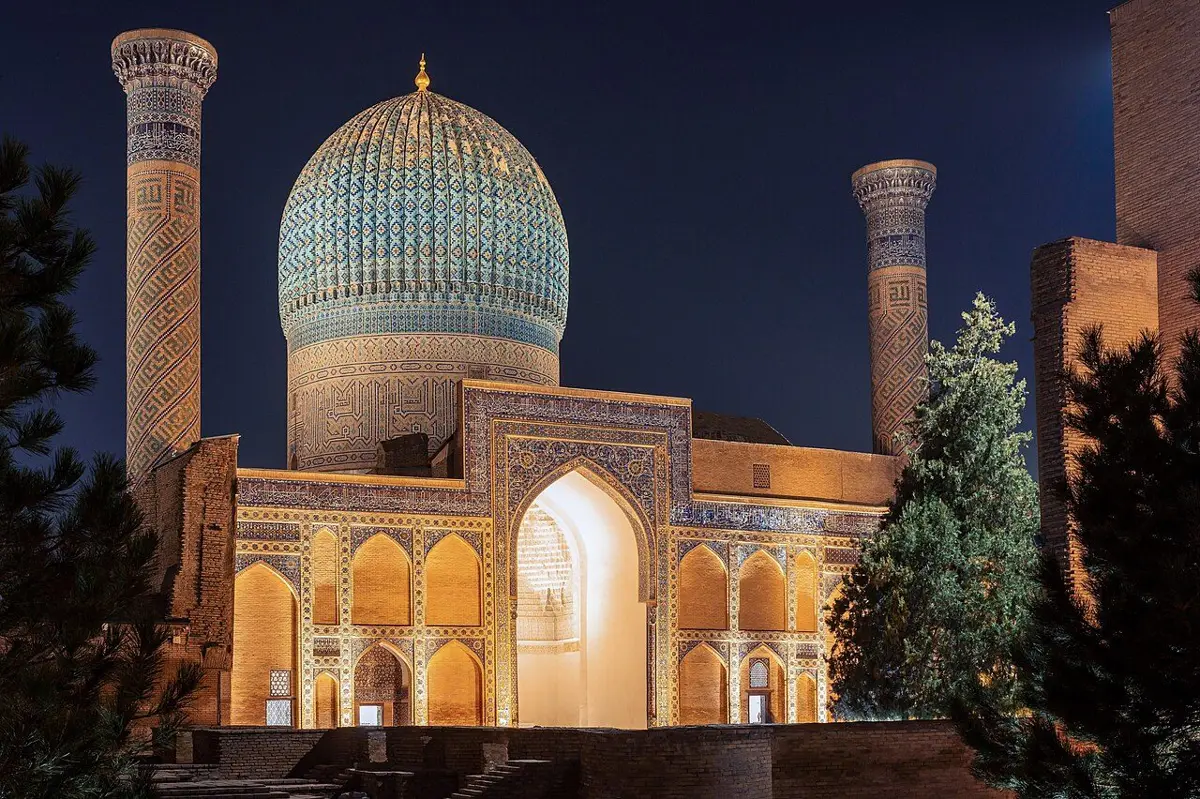
What to see in Samarkand
Travel guides for Samarkand
Photo credits (5)
- Arina Pan, CC BY-SA 4.0, via Wikimedia Commons
- Vaurien, CC BY-SA 3.0 de, via Wikimedia Commons
- David Stanley from Nanaimo, Canada, CC BY 2.0, via Wikimedia Commons
- Koshkinhome, CC BY-SA 4.0, via Wikimedia Commons
- Bobyrr, CC BY-SA 4.0, via Wikimedia Commons