
Shiraz
Shiraz rests in a high valley flanked by the rugged ridges of the Zagros Mountains in southwestern Iran. Walking through its central quarters, the air in spring carries the sweet scent of bitter orange blossoms drifting over high adobe garden walls. The rhythm here is notably gentle: residents linger beneath towering cypress trees, water channels murmur alongside tiled pavements, and the afternoon quiet invites unhurried exploration through centuries-old residential lanes. When Karim Khan Zand established Shiraz as his capital in 1766, he shaped the city with grand civic projects, including the vaulted brick corridors of the Vakil Bazaar and the fortified citadel of Arg-e Karim Khan. A short walk south leads to the late nineteenth-century Nasir al-Mulk Mosque, where morning sunlight streams through stained glass to cast shifting geometric colors across woven Persian carpets. Across the dry bed of the seasonal Khoshk River, travelers gather at the Tomb of Hafez, paying tribute to the fourteenth-century lyric poet whose verses Iranians still recite beside his marble tombstone at dusk. Daily life thrives in the spice-laden alleys of the market, where vendors scoop fresh lime juice and rosewater over faloodeh Shirazi, a crisp noodle dessert made from starch. At sundown, families assemble in park pavilions to read Hafez for personal guidance, sustaining a centuries-old literary custom. The ideal months to visit are April and May, when temperatures remain mild and citrus groves are in full bloom. You can easily navigate the central historic quarter on foot, relying on local ride-hailing taxis for outer landmarks like Eram Garden.
Read more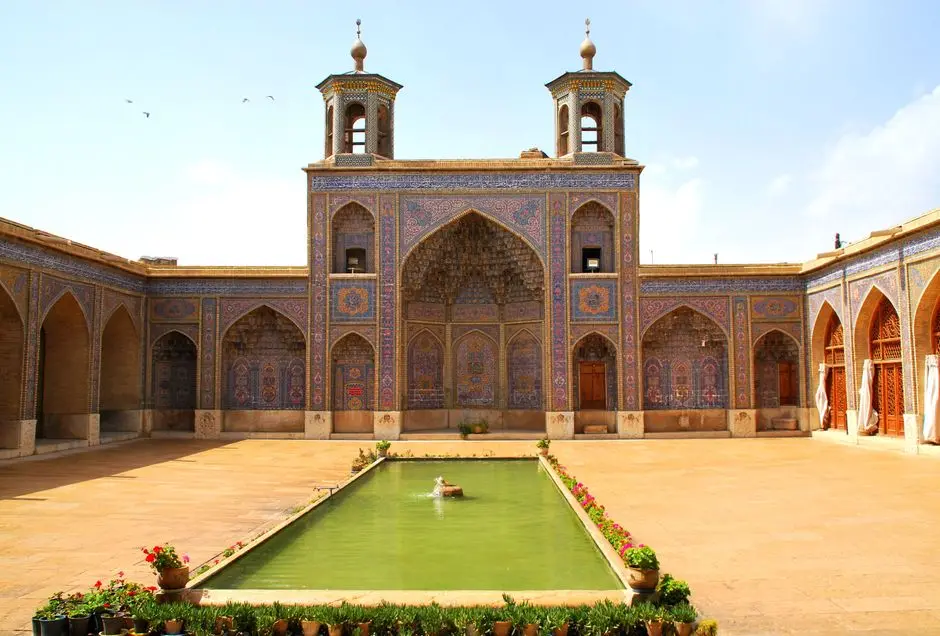
What to see in Shiraz
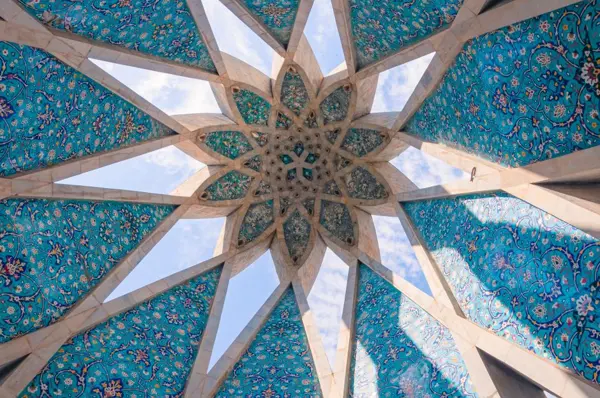
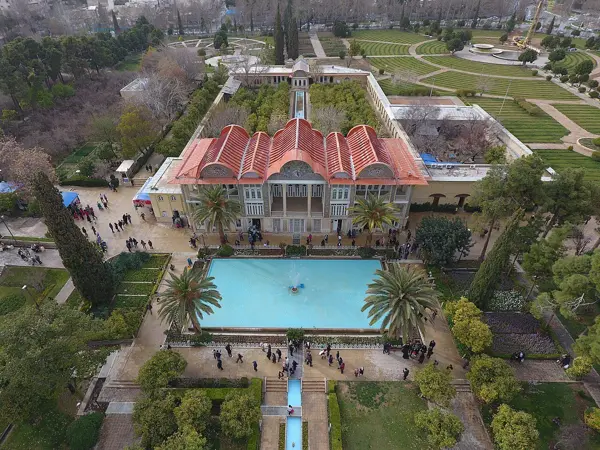
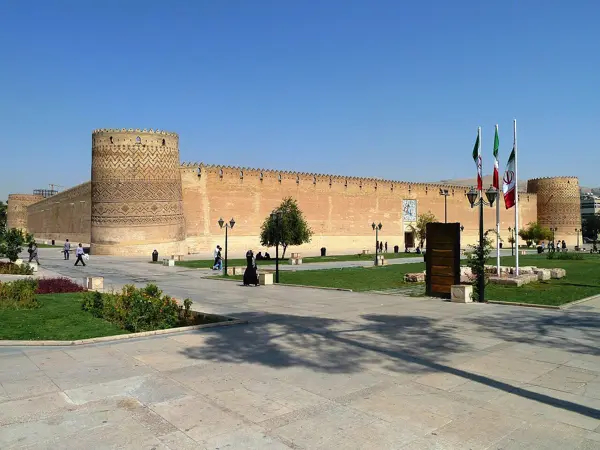
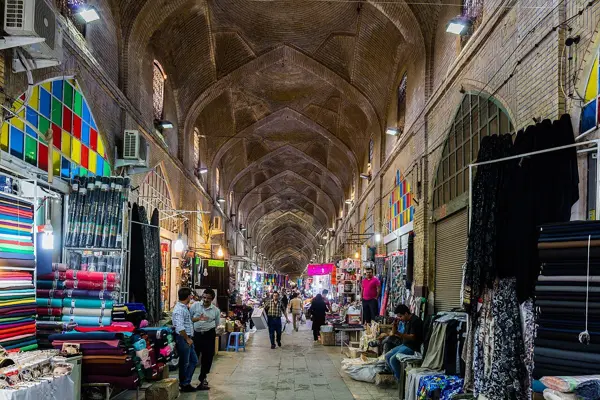
Photo credits (5)
- Stefan Krasowski from New York, NY, USA, CC BY 2.0, via Wikimedia Commons
- Soheil Callage, CC BY-SA 4.0, via Wikimedia Commons
- Siamak.ess, CC BY-SA 4.0, via Wikimedia Commons
- User:Hardscarf, CC BY-SA 3.0, via Wikimedia Commons
- Diego Delso, CC BY-SA 4.0, via Wikimedia Commons