
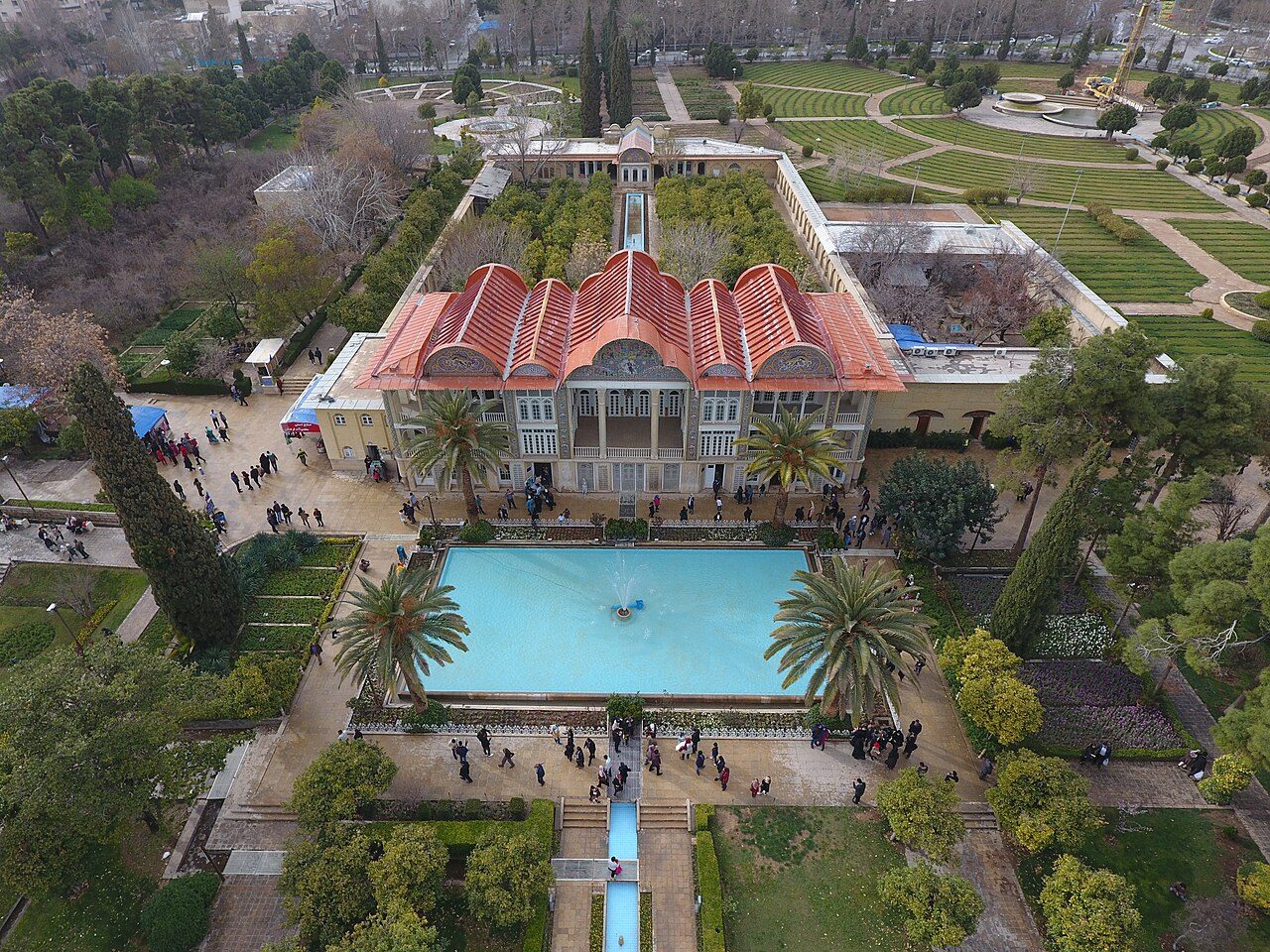
Eram Garden
Centuries of botanical lore culminate within the walled sanctuary of Shiraz’s Eram Garden, an epitome of the classical *chahar bagh* (fourfold garden) layout inscribed on UNESCO’s World Heritage list. While legendary roots stretch back to the Seljuk period, the estate reached its architectural pinnacle in the late 19th century under Qajar nobleman Nasir al-Mulk and architect Haji Mohammad Hasan Memar. Blending Safavid proportions with Zand-era decorative motifs, the compound was envisioned as a terrestrial mirror of the Quranic paradise (*Iram*) from which it takes its name, long serving as an aristocratic retreat for the powerful Qashqai tribal khans. Walking the central axis, visitors are drawn through alleys of bitter orange blossoms toward the garden’s botanical crown: majestic, centuries-old *Sarv-e Naz* cypresses, including a towering specimen soaring thirty-five meters overhead. The gentle murmur of water flowing through stone rills leads directly to a sprawling rectangular pool fronting the three-story central pavilion. Here, the gaze meets a dramatic semicircular pediment adorned with polychrome tiles depicting epic scenes from Ferdowsi’s *Shahnameh*, including the exploits of the hero Rostam. Standing before the colonnaded *talār* (veranda), framed by two monolithic stone pillars and shaded by painted wooden ceilings, one experiences a profound respite from the southern Iranian sun, enveloped by cool mountain breezes and the lingering fragrance of sweet myrtle.
More in Shiraz
Photo credits (4)
- Siamak.ess, CC BY-SA 4.0, via Wikimedia Commons
- Stefan Krasowski from New York, NY, USA, CC BY 2.0, via Wikimedia Commons
- Soheil Callage, CC BY-SA 4.0, via Wikimedia Commons
- User:Hardscarf, CC BY-SA 3.0, via Wikimedia Commons