
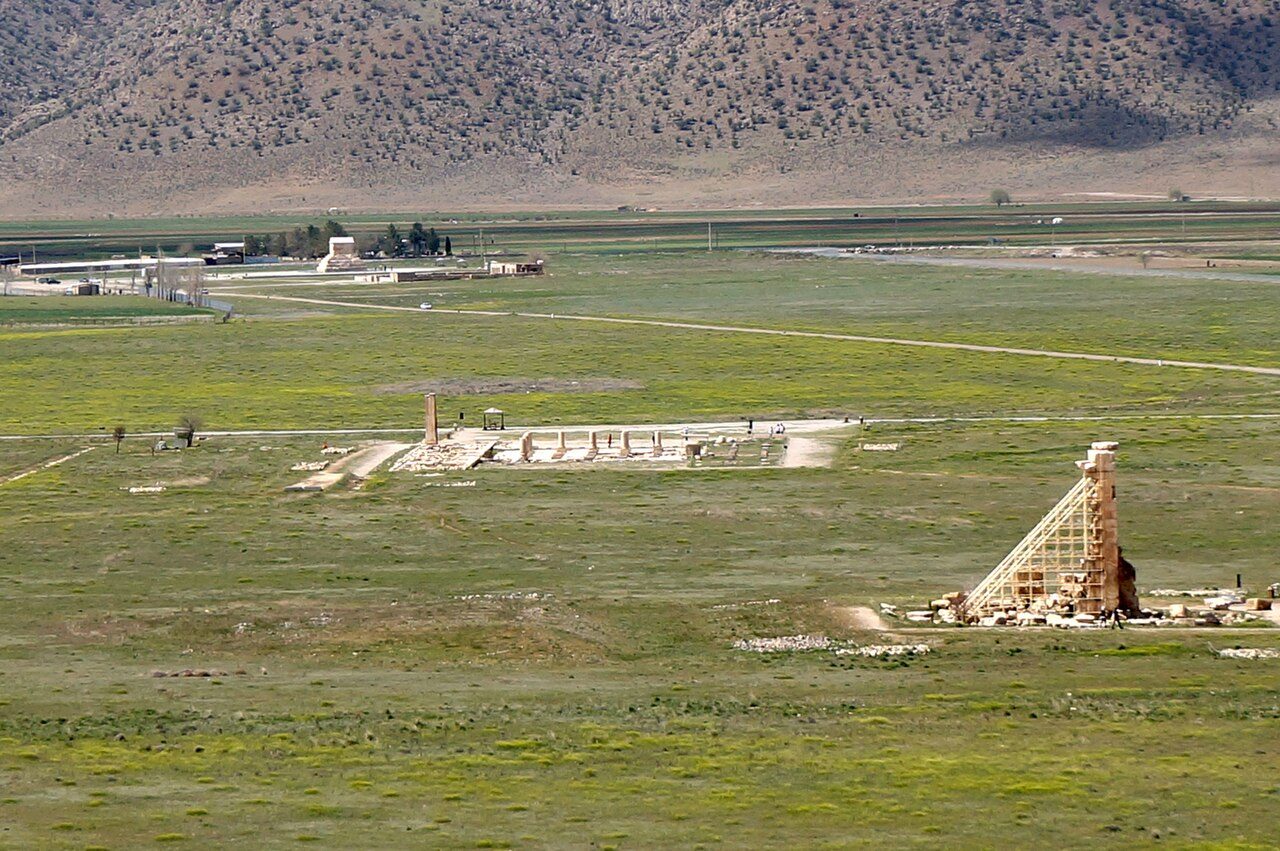
Pasargadae
Rising starkly against the arid expanse of the Dasht-e Morghab plain north of Shiraz, Pasargadae marks the first dynastic capital of the Achaemenid Empire, founded by Cyrus the Great around 546 BCE. The site’s defining monument is Cyrus’s austere mausoleum, completed shortly after his death in 530 BCE. Built from colossal blocks of white Zagros limestone joined by lead-and-iron swallowtail clamps rather than mortar, the structure features a six-tiered stepped plinth culminating in a pitched-roof burial chamber. Its proportions fuse Ionian and Lydian craftsmanship with Mesopotamian ziggurat terracing, standing as a testament to Cyrus's synthesis of the cultures he unified. Scattered across the scrubland, the surrounding palatial ruins reveal the earliest archeological traces of the *Chahar Bagh*, the geometric Persian fourfold garden defined by excavated limestone water channels. Visitors walking between the remnants of Palace P and the Audience Hall encounter fallen basalt column bases and the famous bas-relief of a crowned, four-winged guardian spirit inscribed with Old Persian, Elamite, and Babylonian cuneiform. Standing before the monumental stone bastion of Tall-e Takht while dry desert winds sweep across the plateau, one experiences an overwhelming stillness—a rare chance to trace the architectural genesis of the ancient world's largest empire in near solitude.
More in Shiraz
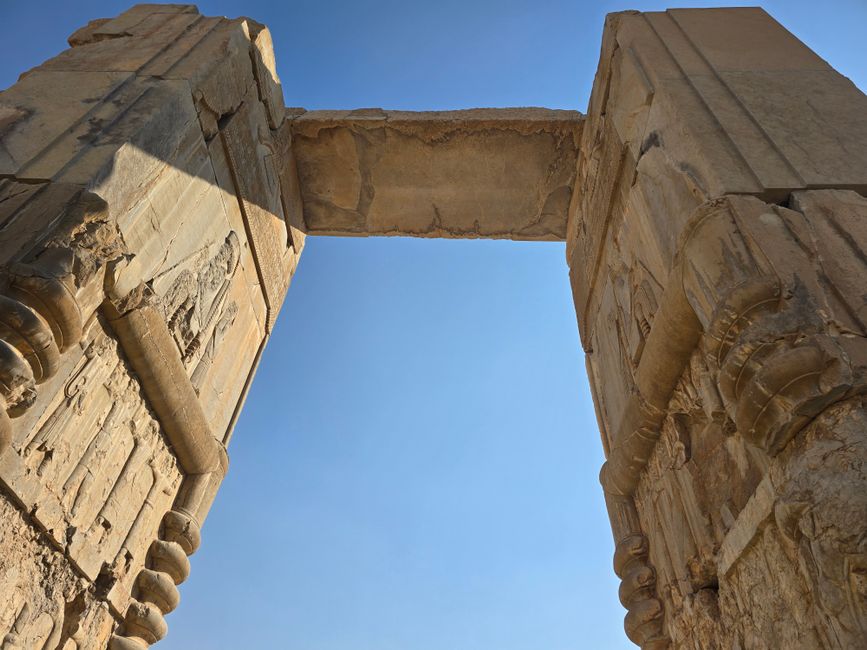
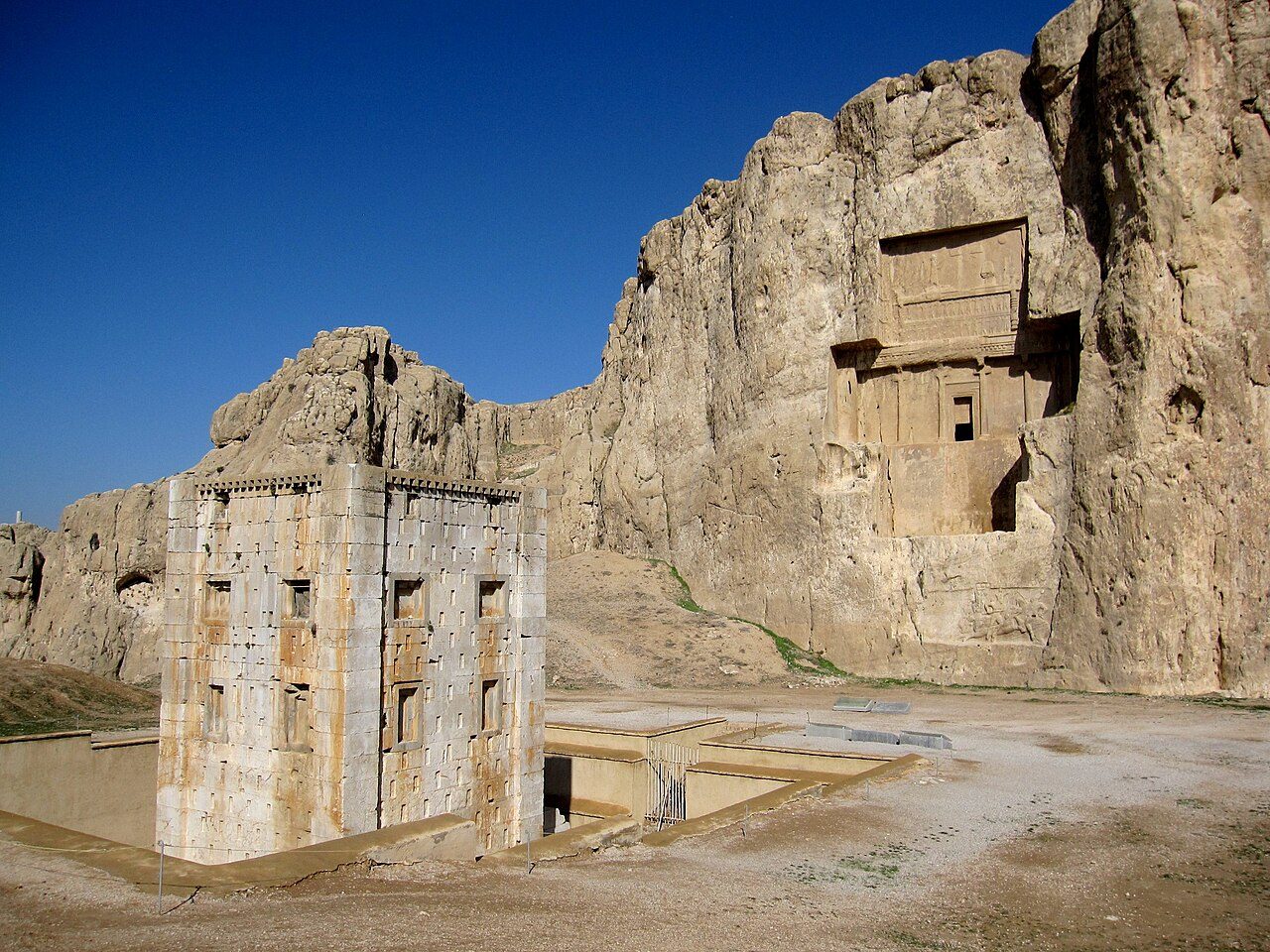
Photo credits (4)
- Soheil Callage, CC BY-SA 4.0, via Wikimedia Commons
- Stefan Krasowski from New York, NY, USA, CC BY 2.0, via Wikimedia Commons
- Siamak.ess, CC BY-SA 4.0, via Wikimedia Commons
- User:Hardscarf, CC BY-SA 3.0, via Wikimedia Commons