
Vakil Bazaar
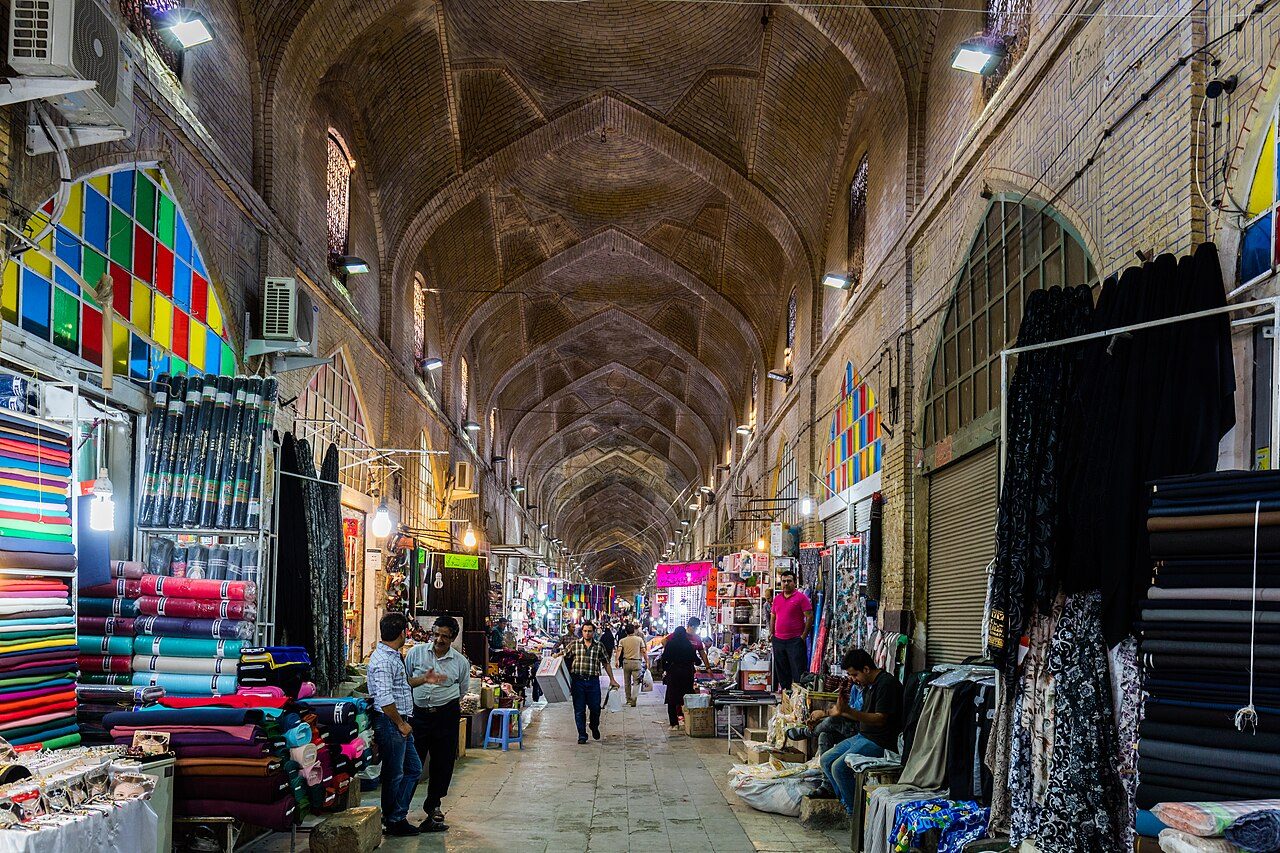
Commissioned in the 1760s by Karim Khan Zand as the mercantile core of his imperial capital, Vakil Bazaar exemplifies the vaulted brickwork of 18th-century Zand urban architecture. Master builders engineered the marketplace around wide, cross-shaped intersections (*chahar souq*), erecting towering barrel vaults from pale yellow brick to foster natural convection and repel the harsh southern Iranian sun. High above the passageways, geometric oculi puncture the vaulted ceilings, casting sharp cylinders of dust-mote daylight onto worn limestone floors. These architectural conduits continuously channel desert drafts through the labyrinthine aisles, moderating the interior climate without modern intervention. Walking through the corridors, travelers plunge into an atmosphere saturated with the aromas of ground sumac, mountain mint, saffron threads, and tart dried limes heaped in burlap sacks. The relentless, rhythmic pinging of coppersmiths' hammers echoes from side alcoves, harmonizing with the rustle of nomadic Qashqai kilims and Gabbeh rugs unrolled in deep crimson and indigo patterns before discerning buyers. Toward the southern terminus, the vaulted corridor transitions into the open-air courtyard of Saray-e Moshir, where two tiers of carved wooden storefronts and intricate floral tilework encircle an octagonal pool shaded by fragrant bitter-orange trees.
More in Shiraz
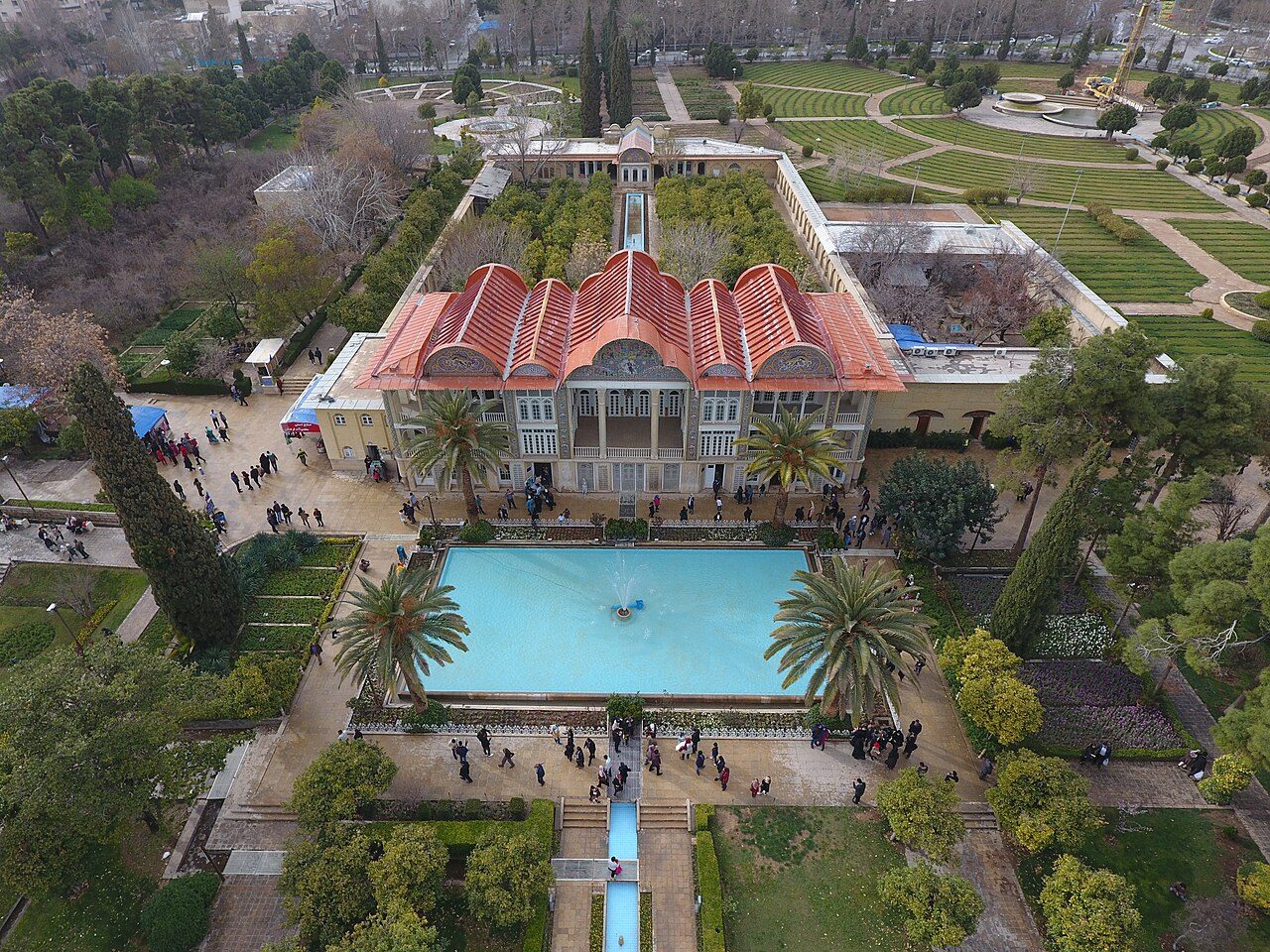
Photo credits (4)
- Diego Delso, CC BY-SA 4.0, via Wikimedia Commons
- Stefan Krasowski from New York, NY, USA, CC BY 2.0, via Wikimedia Commons
- Soheil Callage, CC BY-SA 4.0, via Wikimedia Commons
- Siamak.ess, CC BY-SA 4.0, via Wikimedia Commons