Planning a trip to Turkmenistan requires balancing urban architecture, remote archaeological landmarks, and desert scenery. This guide details how many days you need and the top places to include on your route.
To experience the primary highlights of Turkmenistan comfortably, plan an itinerary of 7 to 10 days. A one-week journey allows you to explore the white-marble capital of Ashgabat, the ancient Silk Road ruins near Mary, and the northern heritage monuments near Dashoguz, while 10 days adds the dramatic western desert landscapes toward the Caspian Sea.
Nearly eighty percent of the nation is covered by the Karakum Desert, framed by the Kopet Dag mountains in the south and the Caspian Sea to the west. Because distances between major oases are vast, organizing an efficient route with dedicated transport is essential for making the most of your time.
How Many Days Do You Need in Turkmenistan?
If you have 5 to 7 days, focus on the central spine of the country. This time frame lets you spend two days taking in the monuments of Ashgabat, followed by an overland journey or domestic transit to Mary to tour Ancient Merv, before heading north toward Dashoguz.
With 8 to 10 days, you can complete a comprehensive loop. You can explore the northern archaeological sites of Konye-Urgench, cross the desert plains, and travel west toward Turkmenbashi on the Caspian coast to witness sweeping geological formations before returning to the capital.
For travelers crossing Central Asia overland on regional transit routes, a compressed 3 to 4 days can cover Ashgabat and one primary historical oasis, though travel days will feel brisk.
Where to Go: Essential Stops Across Turkmenistan
Ashgabat: The Marble Capital
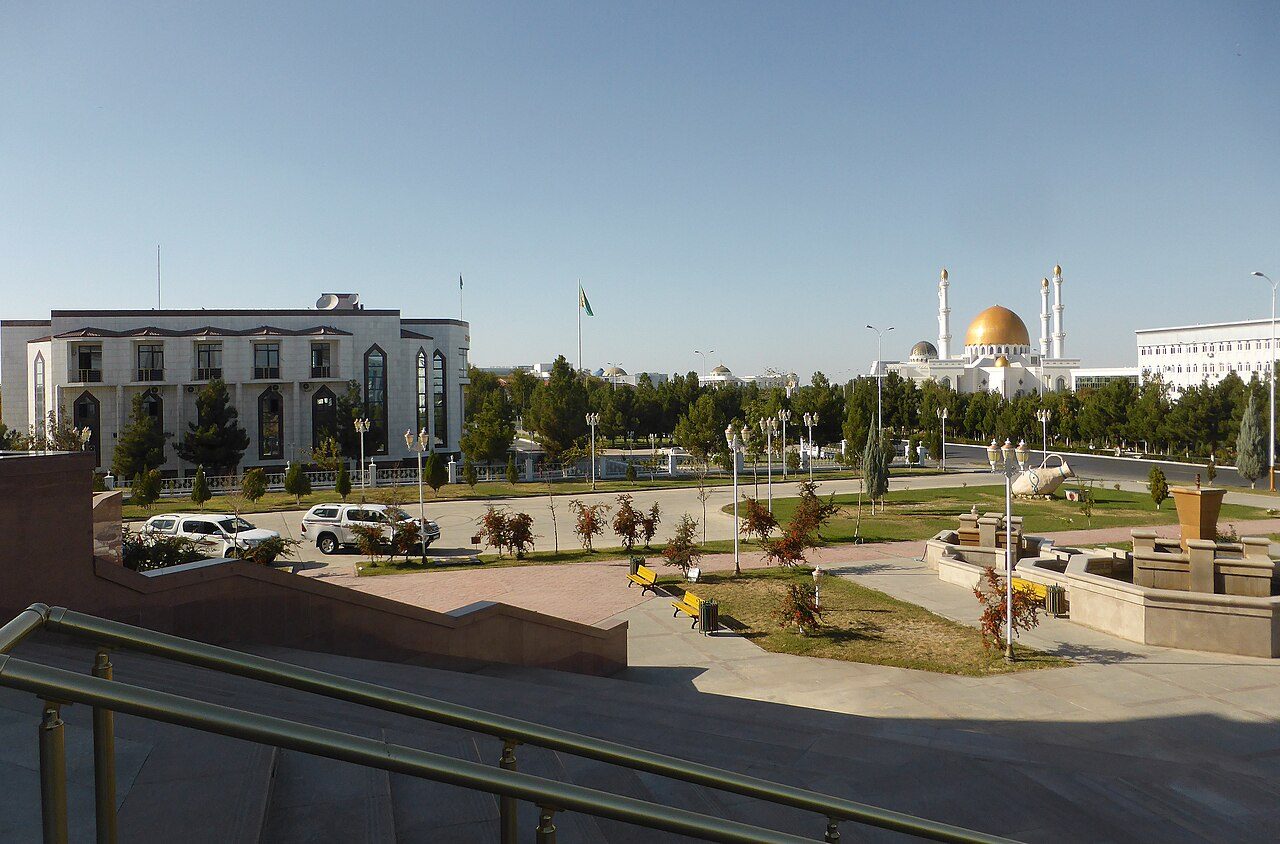
Turkmenistan's capital holds world records for its concentration of white-marble architecture and grand monuments. Start your exploration at The Arch of Neutrality, built to celebrate international recognition of the nation's permanent neutrality. Continue across the city to view The Wedding Palace, also known as Bagt Kosgi, an expansive geometric structure crowned by a massive disc featuring a map of the nation.
Ashgabat also serves as a center for religious and ancient history. Visit the Ertugrul Gazi Mosque, built in honor of shared Turkic heritage with grand domes and pencil minarets. Just outside the modern city boundaries, explore the ruins of Old Nisa Fortress. Founded in the third century BCE by King Mithridates I, Old Nisa served as a ceremonial royal redoubt of the Parthian Empire at the foot of the Kopet Dag range.
Mary and Ancient Merv
Located east of Ashgabat in a fertile river delta, Mary serves as the staging ground for Ancient Merv, one of the greatest urban centers along the historical Silk Road. The site features multiple walled cities built side by side across centuries.
Inside the archaeological park, visit the Erk-Kala Fortress Ruins, an enormous circular earthen fortress engineered under the Persian Achaemenid Empire in the sixth century BCE. Nearby stands the Sultan Sanjar Mausoleum, an imposing twelfth-century brick monument that represents the architectural heights of the Great Seljuk Empire.
Dashoguz and Konye-Urgench
In the northern desert near the border, Dashoguz provides access to the medieval remnants of Konye-Urgench, once the capital of the Khwarazmian state. The area showcases pioneering Islamic brickwork and dome construction.
Key structures include the Kutlug Timur Minaret, an ancient 60-meter terracotta tower dating to the 1320s under the Golden Horde. A short distance away sits the Mausoleum of Turabek Khanum, recognized for its intricate interior mosaic dome depicting an astronomical calendar.
Turkmenbashi and the Western Steppe
Situated along the Caspian Sea, Turkmenbashi opens the route to the remote natural landscapes of the Balkan region. East of the city lies Yangykala Canyon, where eroded cliffs of pink, yellow, and chalk-white stone carve through the desert steppe. These formations are the geological remains of the ancient Paratethys Sea, which dried up millions of years ago.
Sample 8-Day Turkmenistan Itinerary
This classic loop links the capital, ancient oasis cities, and northern monuments:
- Day 1: Arrive in Ashgabat. Tour central boulevards, public parks, and The Arch of Neutrality.
- Day 2: Visit Old Nisa Fortress in the morning. Afternoon stop at The Wedding Palace and the Ertugrul Gazi Mosque.
- Day 3: Travel from Ashgabat east across the Karakum Desert to Mary.
- Day 4: Full day exploring Ancient Merv, including the Erk-Kala Fortress Ruins and the Sultan Sanjar Mausoleum.
- Day 5: Travel north to Dashoguz.
- Day 6: Explore the historic monuments of Konye-Urgench, including the Kutlug Timur Minaret and the Mausoleum of Turabek Khanum.
- Day 7: Return to Ashgabat. Browse local artisan markets and prepare for departure.
- Day 8: Departure from Ashgabat.
If you have 10 days, insert two days after Ashgabat to journey west to Turkmenbashi and take a 4x4 excursion out to Yangykala Canyon before continuing along your route.
How to Get Around Turkmenistan
Covering large expanses of the Karakum Desert requires careful route logistics. The main urban centers of Ashgabat, Mary, Dashoguz, and Turkmenbashi are linked by domestic flights and rail routes. Trains offer an affordable way to observe the desert landscape, though travel times are lengthy.
For regional sightseeing and excursions outside cities, private drivers and guided transport are standard. Exploring sites like Old Nisa, Merv, or Yangykala requires vehicles capable of navigating desert tracks or peripheral highways. You can book trusted local guides and private drivers directly on Tour & Car to handle city transfers and multi-day desert trips seamlessly.
Best Time to Visit
Turkmenistan experiences extreme continental desert weather. Summers are intensely hot, with temperatures across the Karakum frequently exceeding comfortable sightseeing levels from June through August. Winters can be bitterly cold and windy across the open steppe.
The optimal seasons for travel are spring (April to May) and autumn (September to October). During these months, daytime temperatures remain moderate, making walking tours through expansive archaeological sites like Merv and Old Nisa enjoyable.
If your travels coincide with national observances, note that International Neutrality Day takes place on December 12, followed by New Year's Day celebrations on January 1. National festivities during these dates bring formal ceremonies and decorative lighting throughout Ashgabat.
Practical Travel Tips for Turkmenistan
- Entry regulations: Most foreign travelers require a visa and a letter of invitation approved by migration authorities before arrival. Check standard entry protocols well in advance.
- Cash and payments: International credit and debit cards have very limited acceptance outside major international hotels in Ashgabat. Bring sufficient cash in major foreign currencies to exchange upon arrival.
- Photography rules: While monument photography is generally permitted, avoid photographing military checkpoints, government administration buildings, police personnel, and airport security infrastructure.
- Sun protection: The desert sun is intense even in spring and autumn. Carry wide-brim hats, protective clothing, and ample drinking water whenever setting out for open-air historical complexes.
- Booking services: To explore the country smoothly, search Turkmenistan on Tour & Car to arrange verified drivers, local guides, and regional transfers across all major stops.