
 New added
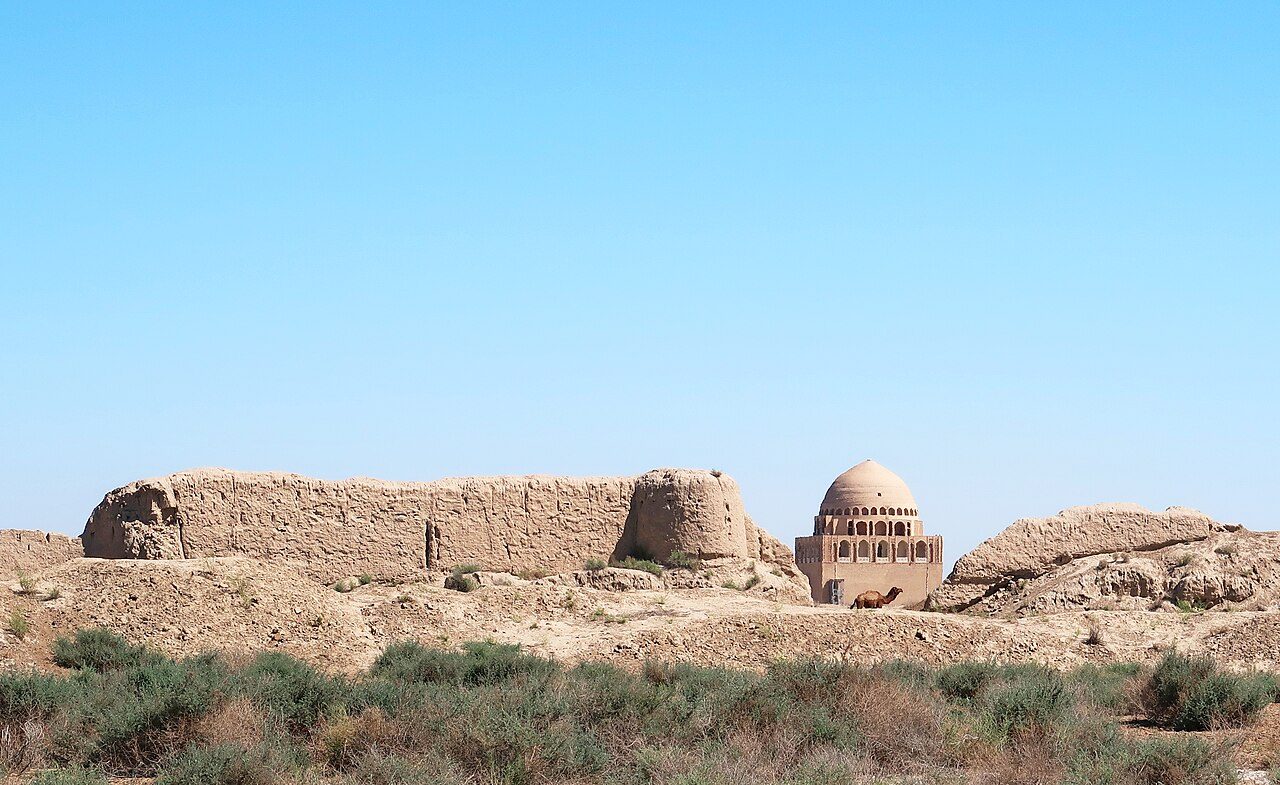
Sultan Sanjar Mausoleum
Rising like a monolithic sentinel from the wind-scoured plains of ancient Merv, the Mausoleum of Sultan Sanjar stands as the crowning architectural achievement of the Great Seljuk Empire. Commissioned around 1157 by the architect Muhammad ibn Atsiz al-Sarakhsi to entomb Ahmad Sanjar, the empire's last great ruler, the monument exemplifies the apex of medieval Islamic engineering. Its colossal baked-brick base—a sheer cube with walls six meters thick—supports an octagonal drum wrapped in an intricate arcade of pointed arches. Though the Mongol invasion of 1221 stripped the structure of its fabled outer shell of turquoise-glazed tiles, the surviving ribbed brick dome still reaches thirty-eight meters into the vast Karakum sky. Crossing the threshold into the single, cavernous chamber, travelers immediately exchange the blinding desert glare for a cool, resonant silence. Sunlight streams through elevated clerestory windows, illuminating the masterful transition from square foundation to soaring circular cupola via complex geometric squinches. Traces of blue pigment and carved stucco calligraphy linger along the upper frieze, offering glimpses of the sanctuary's original splendor. At the center of the brick floor sits a modest, modern cenotaph; Sanjar’s actual bones were hidden in an unmarked grave centuries ago to prevent their desecration. Looking up into the dizzying, exposed vault, visitors are enveloped by the haunting stillness of a Silk Road capital that once rivaled Baghdad, now concentrated entirely beneath this lone, enduring canopy.
More in Mary
Photo credits (2)
- John Pavelka from Austin, TX, USA, CC BY 2.0, via Wikimedia Commons
- octopuzz, CC BY 2.0, via Wikimedia Commons