
 New added
Erk-Kala Fortress Ruins
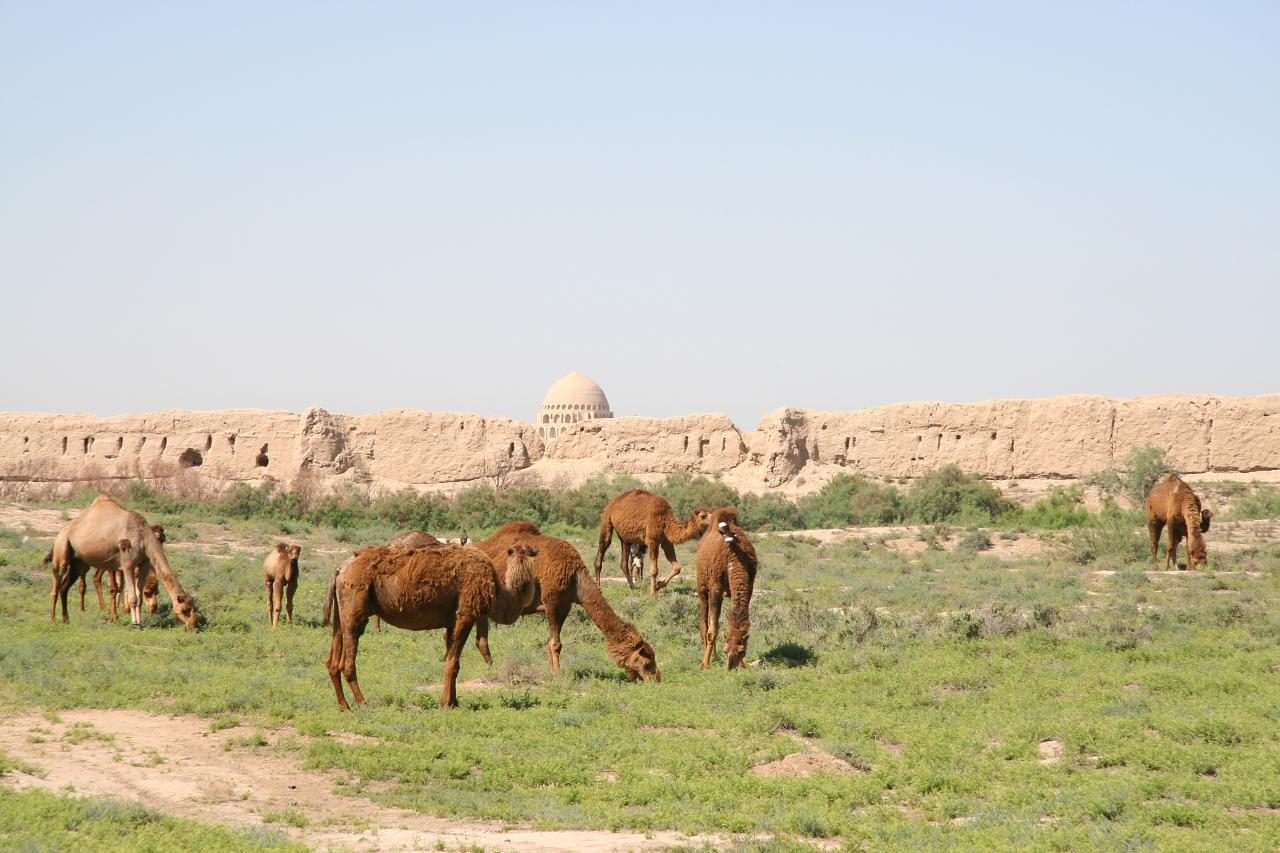
Rising like a colossal earthen crater from the arid plains of the Karakum Desert, Erk-Kala represents the foundational nucleus of ancient Merv. Engineered in the 6th century BCE under the Persian Achaemenid Empire, this circular redoubt anchored the fertile oasis of Margiana centuries before Alexander the Great and later Islamic dynasties expanded the metropolis. Enclosing roughly twenty hectares within an unbroken ring of rammed earth and weathered mudbrick, the monumental ramparts still soar nearly thirty meters high. Millennia of fierce desert winds and rare torrential rains have sculpted these defensive walls into dramatic, corrugated ridges of baked clay. Ascending the steep, sun-baked incline to the rampart's crest, travelers are struck by the sheer verticality of the inner citadel and the sweeping silence of the surrounding desert. From this elevated vantage point, the dizzying historical stratigraphy of the Silk Road reveals itself: the massive rectilinear perimeter of Hellenistic Gyaur-Kala unfolds directly to the south, while the distant silhouette of Sultan Sanjar’s 12th-century mausoleum shimmers on the horizon. Walking the rim among scattered ceramic shards embedded in the dust, visitors feel the brisk desert gale whip through deep erosion gullies, offering an intimate, visceral encounter with more than two thousand years of imperial rise and ruin.
More in Mary
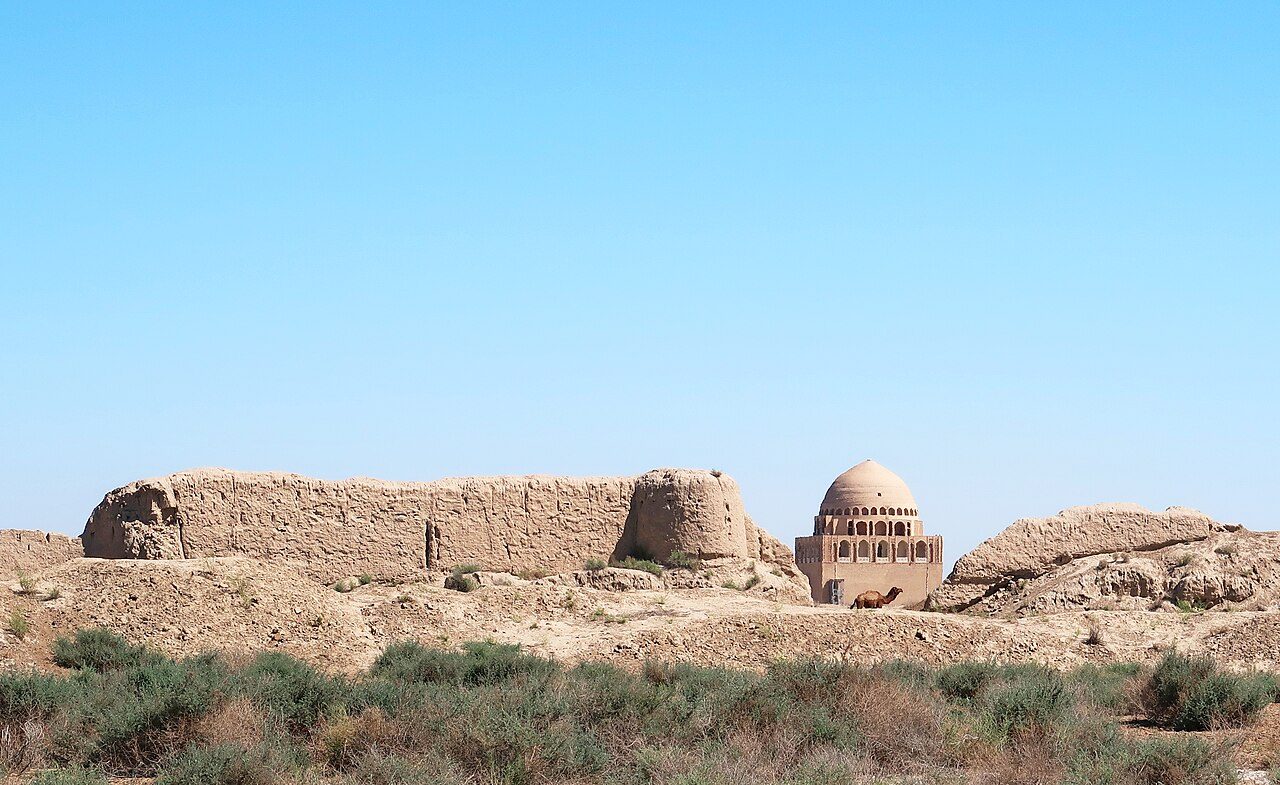
Photo credits (2)
- octopuzz, CC BY 2.0, via Wikimedia Commons
- John Pavelka from Austin, TX, USA, CC BY 2.0, via Wikimedia Commons