
 New added
Old Nisa Fortress
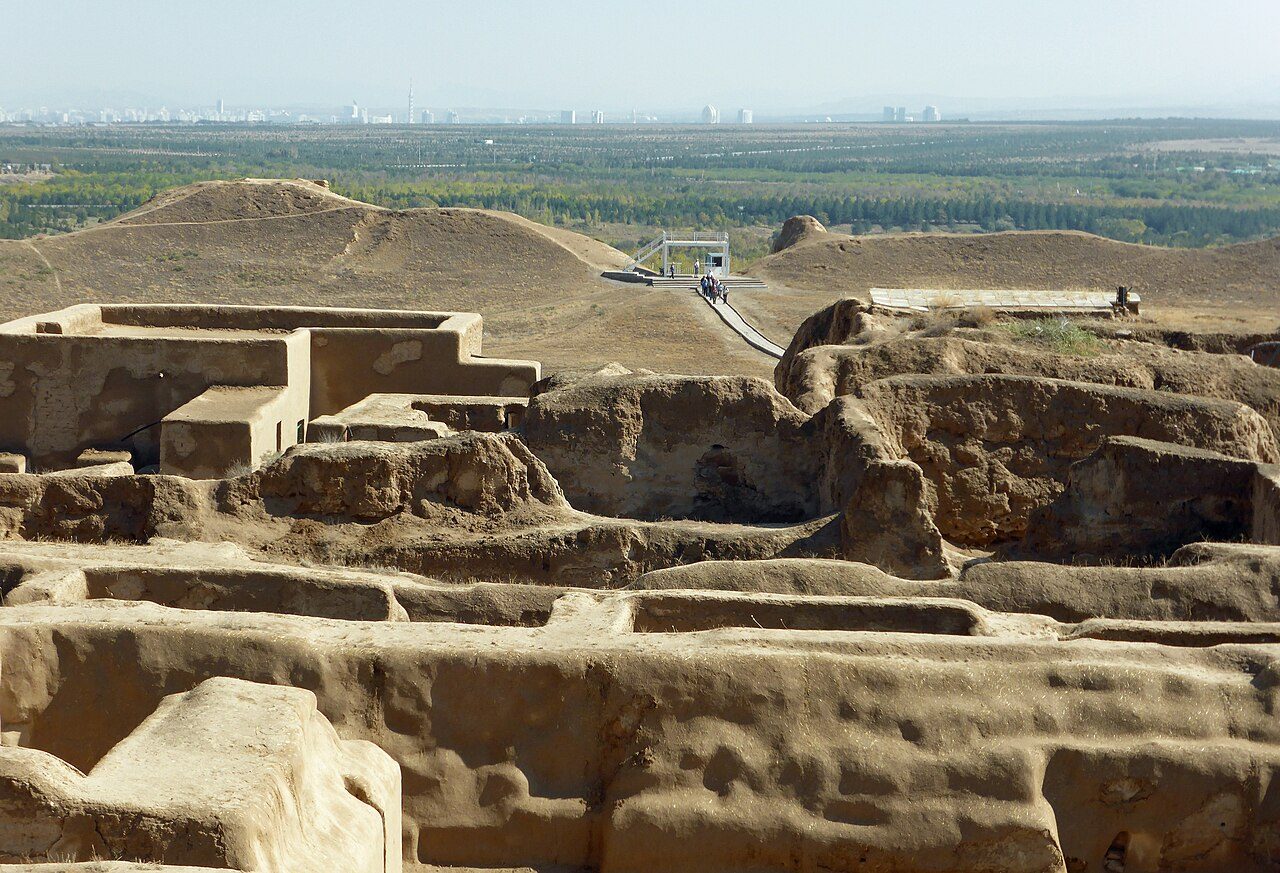
Founded in the third century BCE by King Mithridates I as the royal redoubt of Mithradatkirt, Old Nisa stood at the ceremonial core of the burgeoning Parthian Empire. At this strategic juncture beneath the jagged Kopet Dag mountains, architects merged classical Hellenistic motifs with ancient Persian traditions. What remains today is an evocative pentagonal fortress sculpted from sun-baked mudbrick, originally fortified by more than forty projecting bastions. Within its perimeter lay the palatial Square Hall, its towering ceiling once anchored by massive brick pillars, alongside subterranean royal storehouses that preserved hundreds of inscribed clay *ostraca* and exquisite ivory *rhytons* carved with mythical Greek friezes. Wandering through the archaeological zone, travelers encounter the stark majesty of eroded adobe walls that glow warm ochre beneath the Central Asian sun. A ceaseless desert wind sweeps through the excavated trenches of the "Red Hall," stirring dust across column bases that have endured over two millennia. Standing atop the earthen ramparts overlooking the green oases and distant modern towers of Ashgabat, visitors are immersed in a profound, windswept silence, face-to-face with the weathered bones of a superpower that once challenged the might of imperial Rome.
More in Ashgabat
Photo credits (4)
- Hans Birger Nilsen, CC BY-SA 2.0, via Wikimedia Commons
- Ekki3, CC BY-SA 4.0, via Wikimedia Commons
- Tinss
- Jim Fitzgerald