This practical guide provides essential advice for first-time travelers exploring Thailand, covering the best regions, temple etiquette, and seamless transit options.
For first-time visitors, an ideal journey across Thailand pairs the bustling street life and historic temples of Bangkok with the cooler northern mountains of Chiang Mai and the limestone shores of the southern peninsula. Navigating the country is remarkably accessible using domestic flights, express trains, and local drivers booked on Tour & Car. Planning a balanced 10 to 14-day route ensures you can experience royal palaces, ancient ruined capitals, and island beaches without spending your entire vacation in transit.
Best Time to Visit Thailand
Thailand experiences distinct climatic zones, but the dry months from November to February offer the mildest temperatures nationwide. During this window, lower humidity makes exploring outdoor archaeological parks and vibrant street markets far more comfortable. The central and northern regions enjoy crisp evenings, while southern coastal areas offer clear waters for boat travel.
Traveling between late November and December also coincides with celebrated cultural festivals. In northern Thailand, travelers can witness the Chiang Mai Yi Peng Lantern Festival in late November 2026. Farther south in the capital, the riverside comes alive during the Vijit Chao Phraya light installations. If your trip extends into the eastern seaboard, coastal celebrations such as the Pattaya International Fireworks Festival offer lively evening spectacles along the waterfront.
Top Destinations for First-Time Travelers
Bangkok and the Central Plains
Most international journeys begin in Bangkok, where the Chao Phraya River cuts through a skyline of modern towers and historic monasteries. The capital serves as Thailand's cultural anchor, home to sacred religious sites, bustling river ferries, and enormous weekend trading hubs like Chatuchak Market. Tucked along the Saen Saep canal, the Jim Thompson House provides an intimate look at traditional Thai teak architecture and the historic revival of Siamese silk.
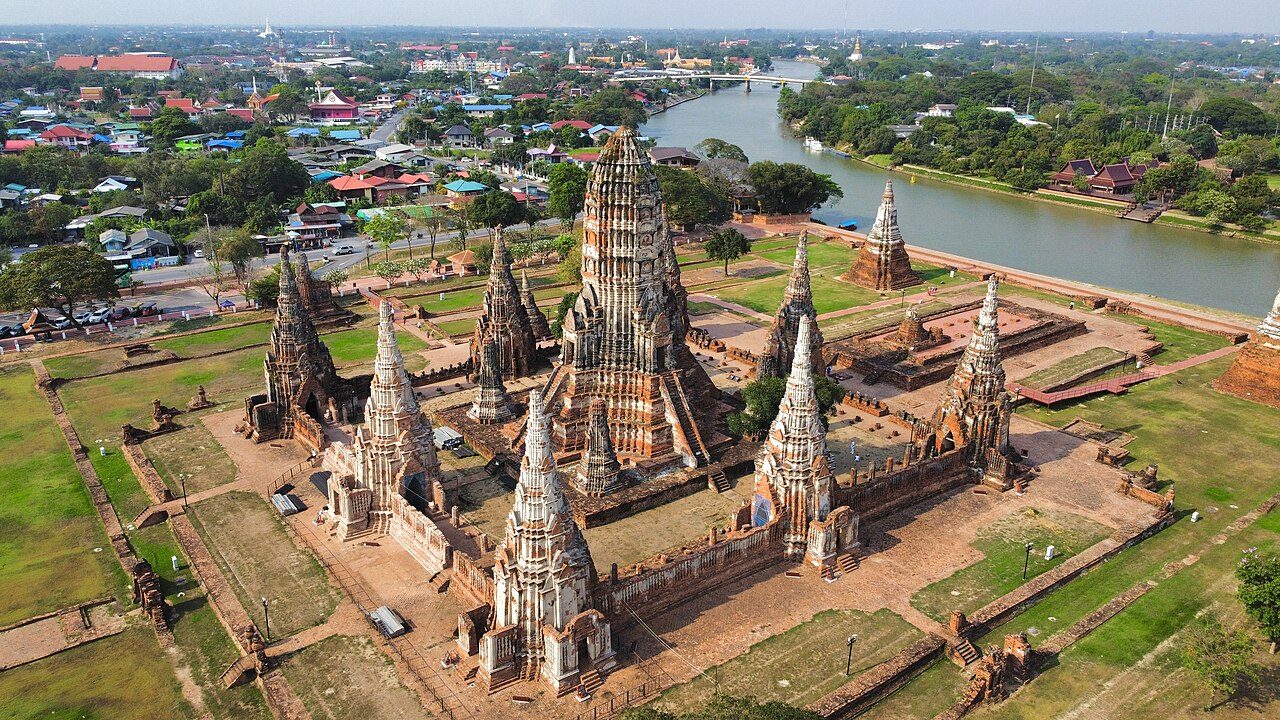
Just an hour or two north of the capital lies Ayutthaya, the former seat of the Siamese kingdom founded in 1350. Walking through Ayutthaya Historical Park reveals centuries of weathered brick stupas and headless stone Buddhas sacked during the Burmese siege of 1767. Nearby, along the riverbank, the royal retreat at Bang Pa-In Palace showcases European-influenced 19th-century royal pavilions surrounded by manicured ponds.
Chiang Mai and the Northern Valleys
Heading north into the Thanon Thong Chai mountain range brings you to Chiang Mai, the ancient heart of the Lanna kingdom. The city’s historic center is bounded by a square brick moat sheltering historic shrines like the Old City Temples. Overlooking the entire valley from its granite crest stands Doi Suthep, a revered 14th-century mountain sanctuary housing a sacred relic.
Beyond temple touring, Chiang Mai serves as the regional base for responsible wildlife encounters. Ethical programs like the local Elephant Sanctuary provide refuge for displaced Asian elephants following historical commercial logging bans. You can also explore surrounding mountain peaks, including Doi Inthanon, the highest apex in Thailand, or browse handcrafted textiles along the lively Night Bazaar.
Phuket and the Andaman Coast
Southern Thailand draws visitors with its iconic marine landscapes. On the southwest coast, Phuket offers a blend of heritage and sea excursions. In Phuket Old Town, 19th-century Sino-Portuguese shophouses reflect the riches of the historical tin-mining boom. High above the southern coastline, the colossal marble statue of Big Buddha presides over Nakkerd Hill.
Phuket is also the premier launching point for day cruises across the Andaman Sea. Day trips venture into the vertical limestone karsts of Phang Nga Bay and the famous monolith of Khao Phing Kan. To the south, the dramatic cliffs of the Phi Phi Islands showcase clear turquoise bays formed hundreds of millions of years ago.
Krabi and the Gulf of Thailand
Directly across the bay from Phuket lies Krabi, celebrated for its dramatic coastal headlands. Cut off from mainland roads by towering limestone ramparts, Railay Beach is accessible only by traditional wooden longtail boats churning through emerald waters. The area is a world-renowned hub for rock climbing and peaceful coastal walks.
If you prefer the Gulf of Thailand, Koh Samui features white sand stretches along Chaweng Beach and sacred landmarks like the causeway-linked Big Buddha Temple. From Koh Samui, boat trips reach the 42 protected islets of Ang Thong Marine Park, an archipelago once used by Gulf pirates and naval outposts.
Cultural Etiquette and Temple Norms
Theravada Buddhist devotion shapes community rhythms throughout Thailand. Daily life values harmony, patience, and mutual respect, often framed by the traditional *wai*—a prayer-like bow with hands pressed together. Returning a *wai* when greeted by service staff or elders is considered polite and welcoming.
Respect for sacred spaces is taken seriously across all provinces. When visiting Buddhist temples, modest dress is required for entry. Both men and women must wear clothing that completely covers the shoulders and extends below the knees. Loose-fitting linen trousers or modest skirts paired with light shirts are the most practical choices for the tropical climate.
How to Get Around
Navigating between major cities is efficient. Domestic flights link Bangkok to provincial airports in Chiang Mai, Phuket, and Koh Samui in under ninety minutes. For overland travel, comfortable state railway lines run north toward Chiang Mai and south toward Surat Thani, offering scenic daytime journeys through central rice fields.
For day trips, intercity transfers, and localized sightseeing, hiring a private driver on Tour & Car provides the greatest flexibility. A dedicated local driver eliminates the stress of navigating highway tolls, negotiating street fares, or coordinating public bus schedules. In smaller historical towns like Sukhothai or Kanchanaburi, booking a private car allows you to reach regional attractions, such as Erawan National Park, efficiently and on your own schedule.
Classic 10-Day Itinerary for Beginners
- Days 1–3: Bangkok. Tour the riverside landmarks along the Chao Phraya, visit historic temples, browse the stalls of Chatuchak Market, and sample street food stalls offering fresh pad thai and iced cha yen.
- Day 4: Day Trip to Ayutthaya. Book a private driver on Tour & Car to explore Ayutthaya Historical Park and the historic riverside grounds of Bang Pa-In Palace, returning to Bangkok for an evening train or flight north.
- Days 5–7: Chiang Mai. Travel north to explore Old City Temples, drive up the mountain ridge to Doi Suthep, visit a local Elephant Sanctuary, and sample northern khao soi curry.
- Days 8–10: Phuket or Krabi. Fly south to the Andaman coast. Explore Sino-Portuguese architecture in Phuket Old Town, take a longtail boat to Railay Beach, or cruise the turquoise waters of the Phi Phi Islands before departing.