
Kanchanaburi
Kanchanaburi sits two hours west of Bangkok where the Khwae Noi and Khwae Yai rivers converge into the Mae Klong, framed by limestone hills and agricultural flatlands. The town moves at an unhurried tempo, with wooden raft-houses lining the waterways and quiet residential lanes that open onto groves of banana and rain trees. Walking through the center, river breezes temper the morning sun while monks collect alms outside traditional wooden storefronts, far removed from the capital's roar. The town's modern identity remains shaped by 1942, when occupying Japanese forces used Allied prisoners of war and Asian laborers to construct the Thailand-Burma Railway. The iron Bridge on the River Kwai still carries passenger carriages across the river, while the nearby Kanchanaburi War Cemetery preserves nearly seven thousand Allied graves in quiet, immaculate symmetry. A short walk south leads to Pak Phraek, the provincial capital's oldest quarter, where century-old Sino-Portuguese shophouses stand preserved, including the wooden home of Boonpong Sirivejjabhandu, a shopkeeper who secretly smuggled medical supplies to allied captives. Evening life concentrates around the railway station night market, where vendors grill river prawns and stir-fry fiery jungle curry loaded with wild ginger and hot basil. In late November and early December, the annual River Kwai Bridge Week draws crowds with historical sound and light performances along the riverbank. The cool, dry window from November to February is the most comfortable period to visit, and renting a small scooter or bicycle provides the easiest way to navigate the flat river roads.
Read more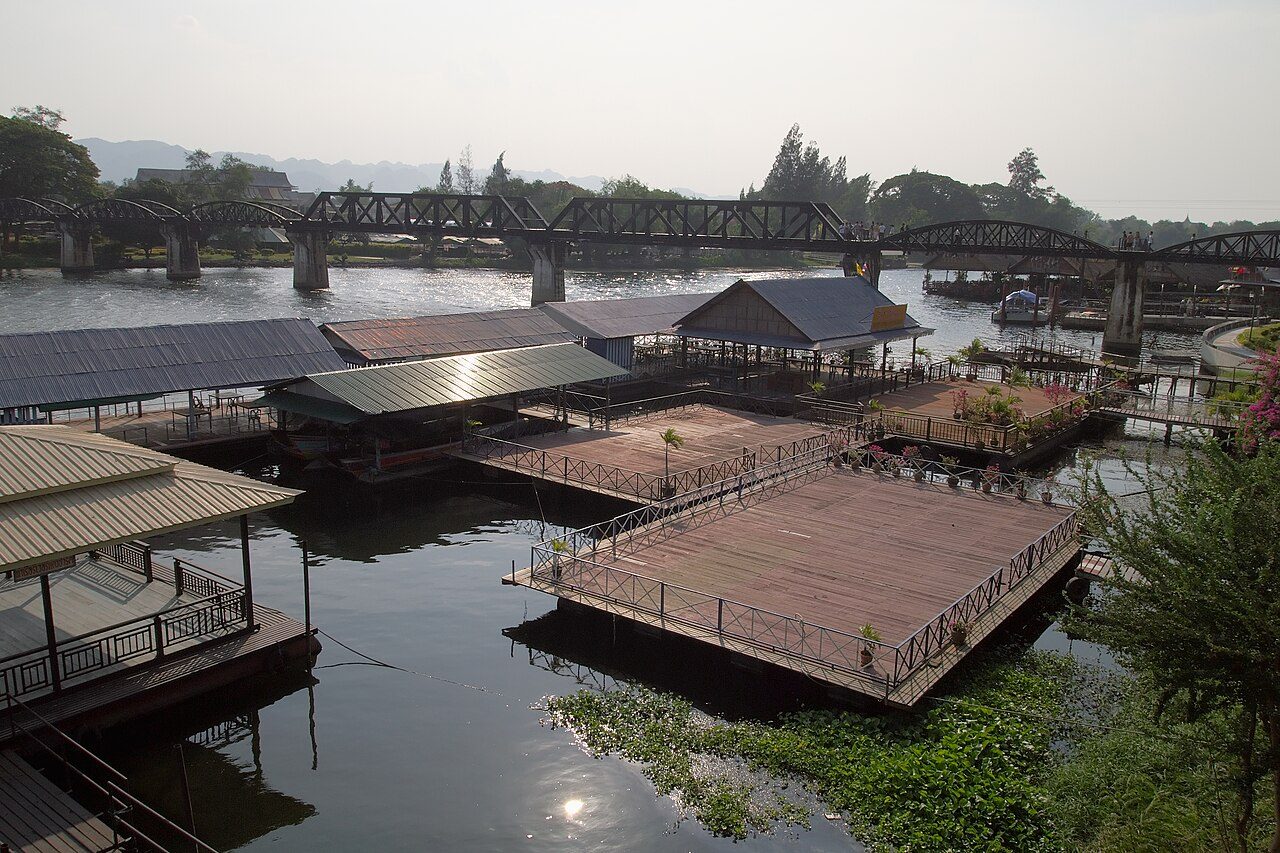
What to see in Kanchanaburi

Photo credits (2)
- Vyacheslav Argenberg, CC BY 4.0, via Wikimedia Commons
- Nina R from Africa, CC BY 2.0, via Wikimedia Commons