
Krabi
Krabi Town sits along the tidal estuary where the Krabi River empties into the Andaman Sea, framed by vertical limestone karsts and dense mangrove channels. Walking along the riverfront boardwalk, salt air mingles with smoke from satay grills, while wooden longtail boats chug past the exposed mudflats. Unlike the tourist strips further down the coast, this provincial capital retains an easygoing pace, its low-rise shophouses and fishing docks reflecting a lived-in southern harbor. Designated an administrative center under King Chulalongkorn in 1872, the settlement originally supplied elephants to regional rulers. Today, travelers can hire a boat at Chao Fah Pier to explore Khao Khanab Nam, twin karst bluffs sheltering sea caves and prehistoric artifacts. Northeast of town, Wat Tham Suea, established in 1975, requires climbing 1,237 steep steps to reach a mountaintop bell stupa. Across the river channel, the rural island of Koh Klang preserves traditional wooden boatbuilding workshops. Local life converges at Maharaj Morning Market, where vendors ladle fiery southern curries over fermented rice noodles called khanom jeen. Offshore, the indigenous Urak Lawoi community gathers biannually for the Loi Ruea festival, setting handcrafted spirit boats adrift on the tides to ward off misfortune. November through March brings the dry northeast monsoon and clear skies. The shared blue songthaew pickup trucks provide cheap transport between the town center and surrounding cliffs, while rented scooters suit exploring the inland rural lanes.
Read more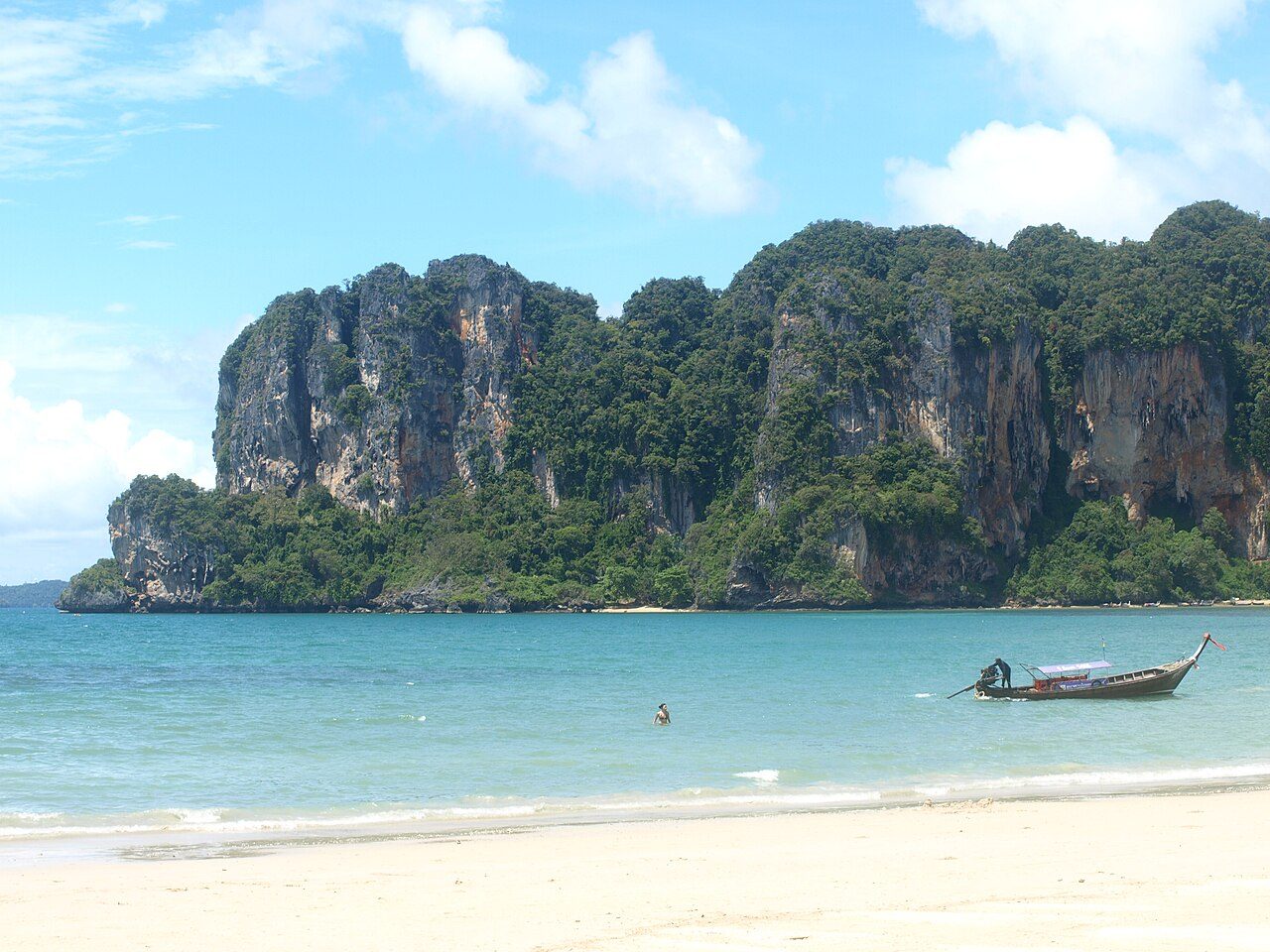
What to see in Krabi

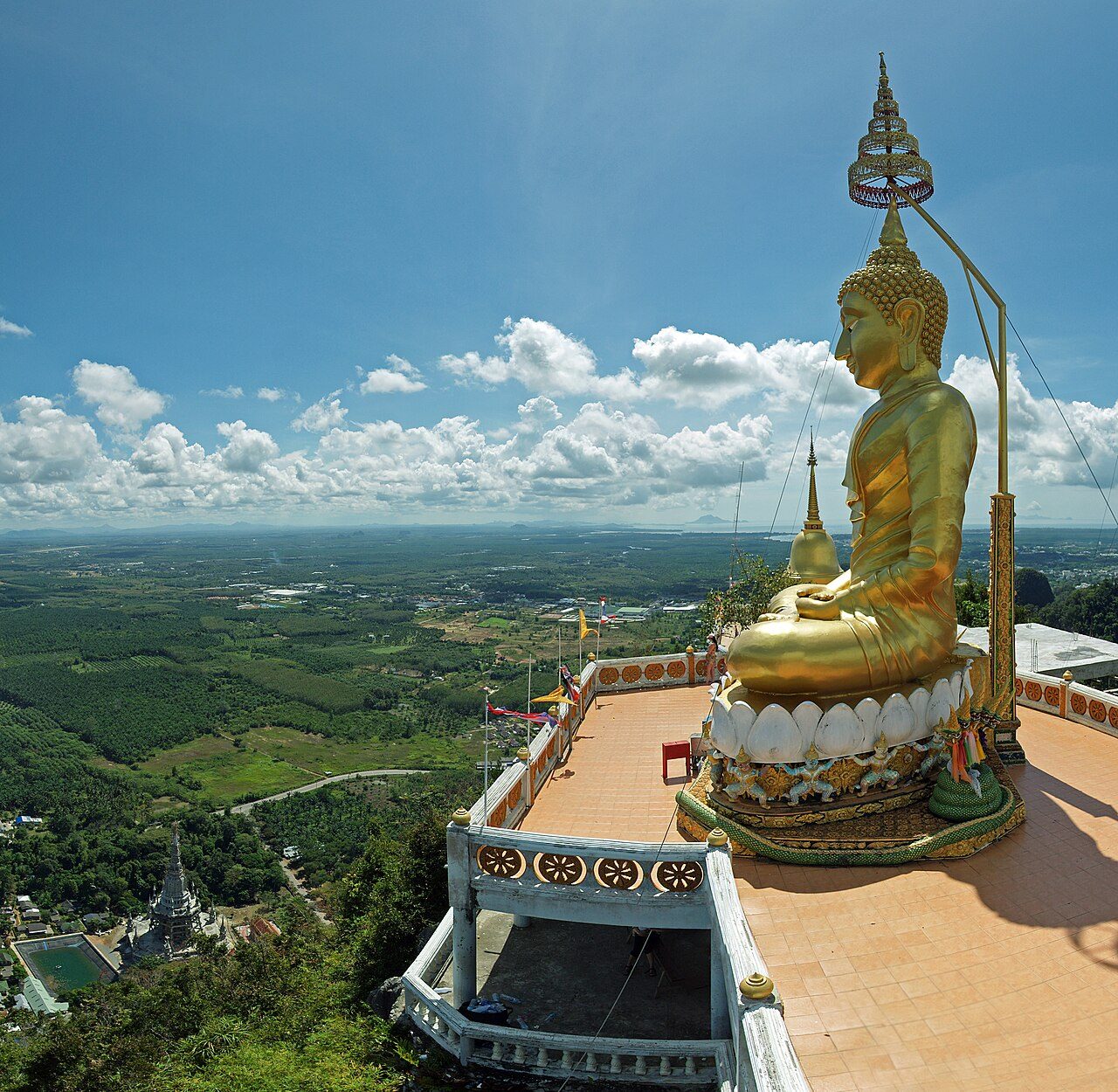
Photo credits (2)
- Wendy Harman, CC BY 2.0, via Wikimedia Commons
- kallerna, CC BY-SA 3.0, via Wikimedia Commons