Koh Samui
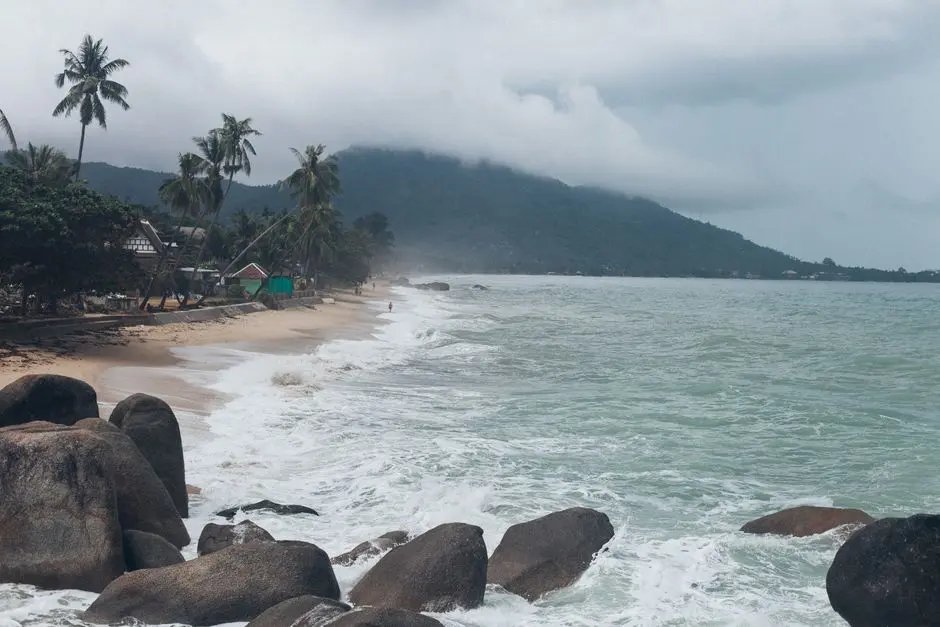
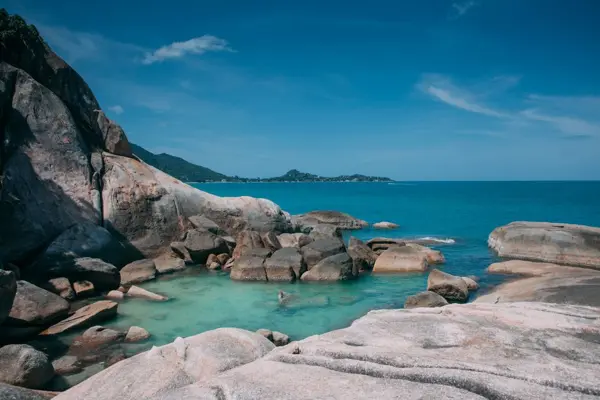
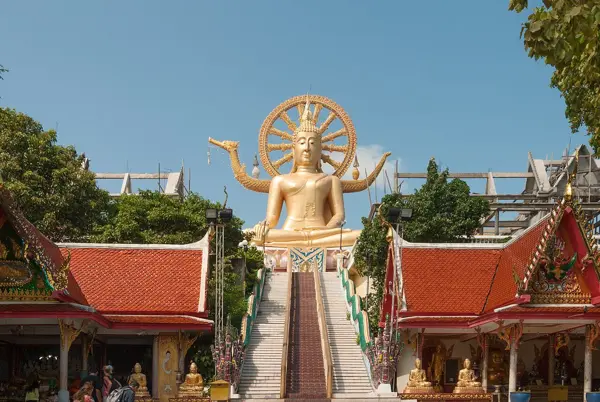
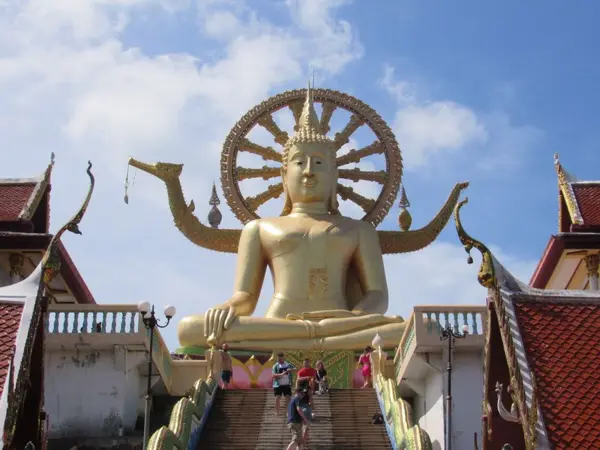
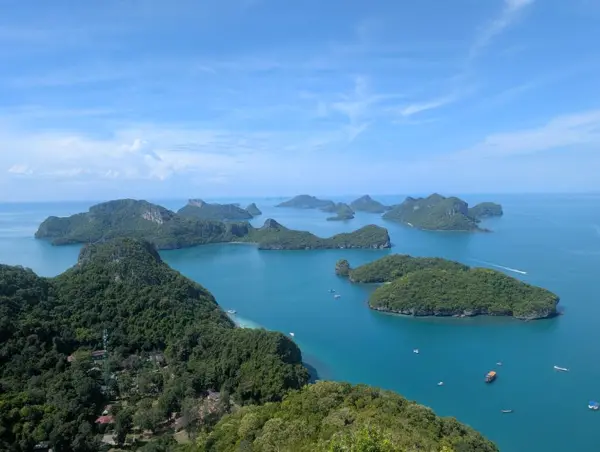
Rising from the Gulf of Thailand off the Surat Thani coast, Koh Samui wraps a jungle-covered granite mountain spine in coconut groves and pale shores. Walking the coastal fringe, the scent of salt air mingles with roasting pork and frangipani blossoms. Away from the shoreline, narrow interior roads wind past family-run rubber plantations where the drone of cicadas drowns out passing motorbikes. The island survived purely on fishing and coconut trade until the first travelers arrived on cargo boats in 1971. In Bophut, the Fisherman’s Village preserves this past through early twentieth-century wooden shophouses built by Hainanese merchants along the water. On the northeastern headland stands Wat Phra Yai, marked by a twelve-meter golden Buddha erected in 1972, while adjacent Wat Plai Laem showcases an eighteen-armed statue of Guanyin resting over a fish-filled lake. Further south at Lamai, the coastal granite formations of Hin Ta and Hin Yai jut abruptly into the surf. Local life thrives at evening markets where vendors dish out fiery southern curries rich in fresh turmeric and coconut cream. During the April Songkran festival, the island erupts into good-natured water battles along the roadside. The clearest seas and driest weather arrive between late December and March. Flagging down the red songthaews, the shared pickup trucks that circle the paved ring road, is far safer than navigating the steep interior ridges on a rental scooter.
Read more