
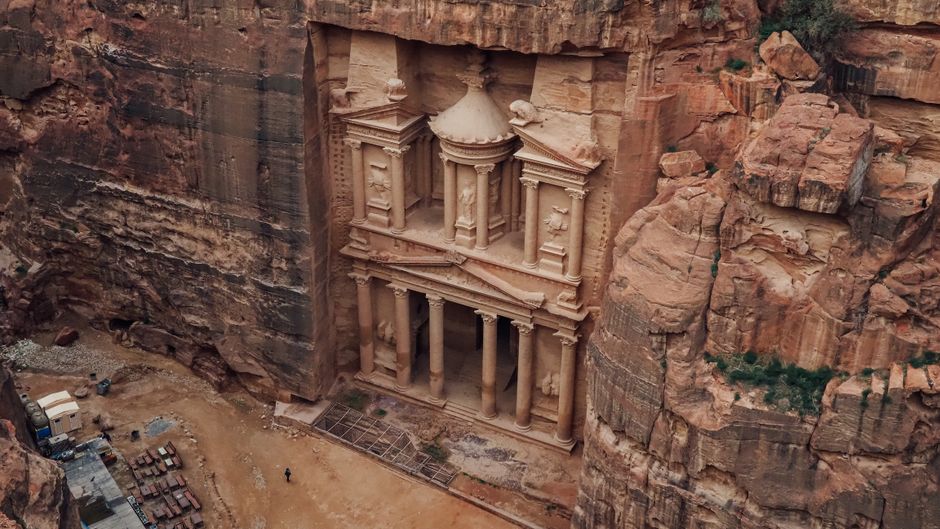
 New added
High Place of Sacrifice
Perched atop the windswept summit of Jebel Madhbah, this open-air sanctuary served as the spiritual nexus of the Nabataean Kingdom between the 1st century BCE and the 1st century CE. Here, priests conducted solemn rites to honor their supreme deities, the mountain god Dushara and the fertility goddess al-Uzza. Before reaching the holy precinct, travelers encounter two monolithic, six-meter-tall obelisks hewn directly from the bedrock to represent the divine pair. Beyond lies the leveled sandstone platform, dominated by an elevated sacrificial altar flanked by rock-cut drainage channels engineered to direct libations and sacrificial blood into a circular containment basin. Standing on this sacred precipice after ascending hundreds of ancient, chisel-marked stairs, you are enveloped by a profound stillness broken only by gusting desert winds. The exposed rock underfoot glows with the signature Petran palette—a natural marble of rose, amber, and violet bands carved smooth by millennia of sun and scouring sand. From the edge of the plateau, the sprawling canyon unfolds in a breathtaking panorama, revealing the distant, whitewashed shrine of Aaron’s Tomb crowning Jebel Haroun and the miniature colonnades of the ancient city center far below.
More in Petra
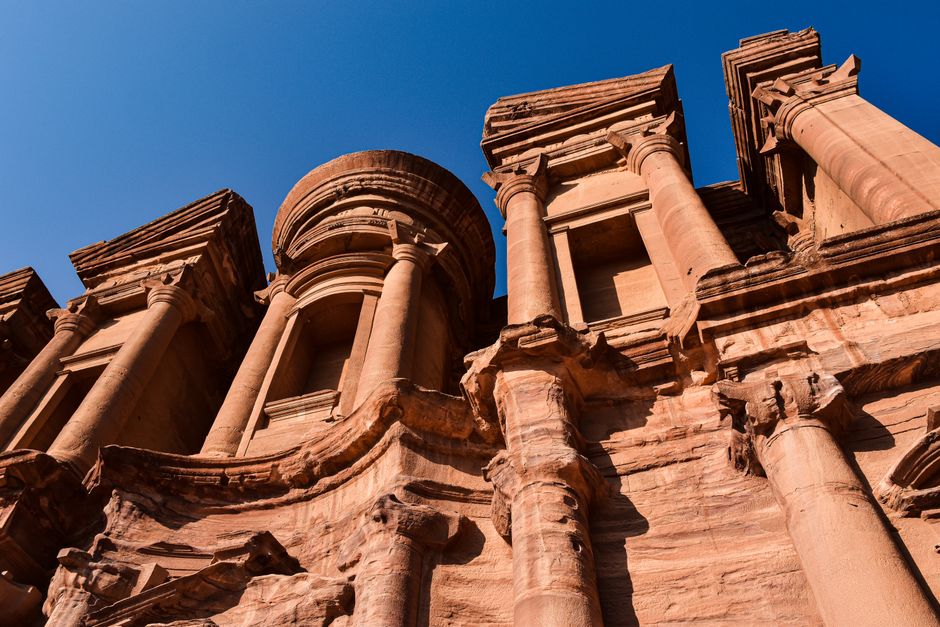
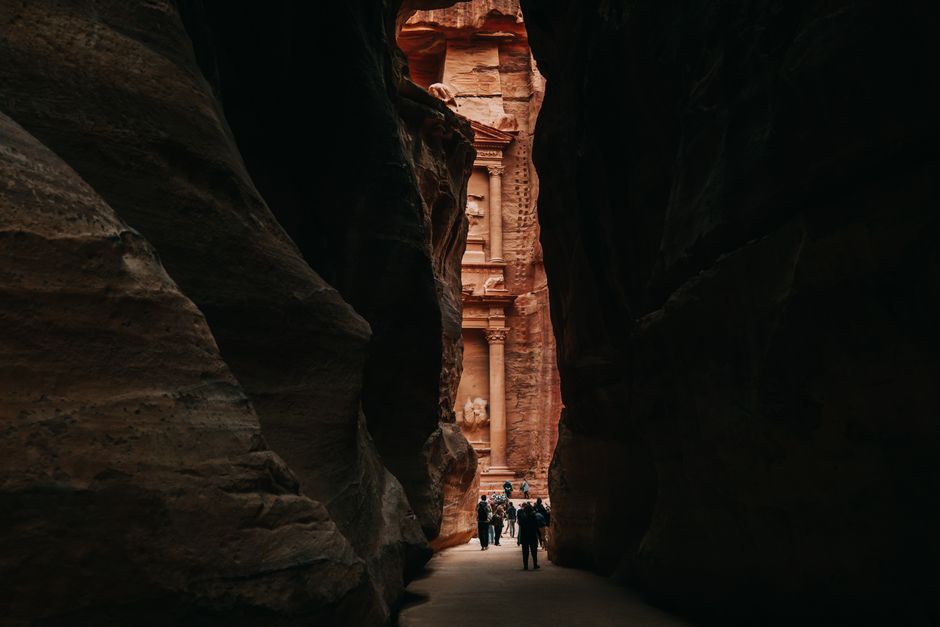
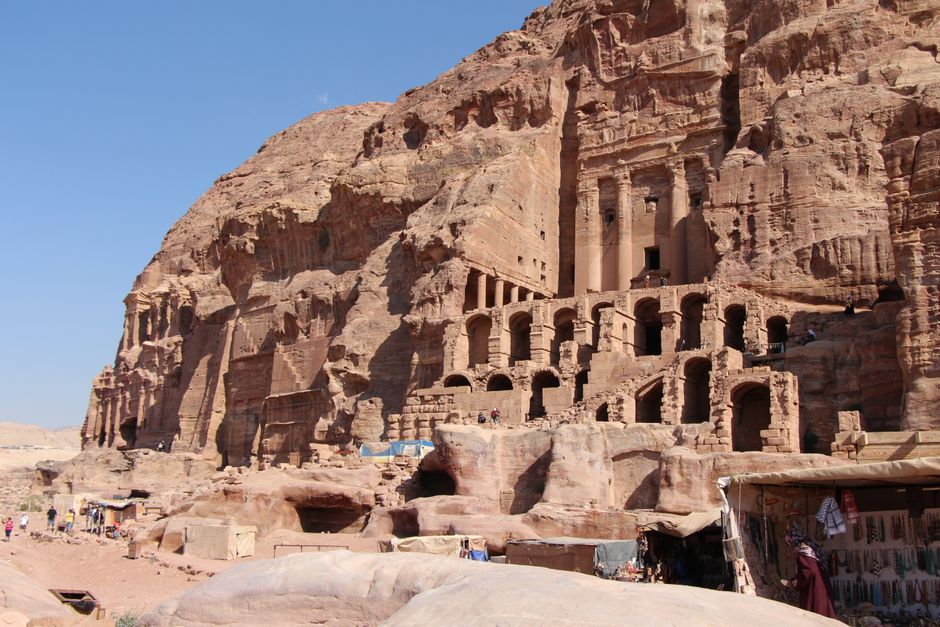
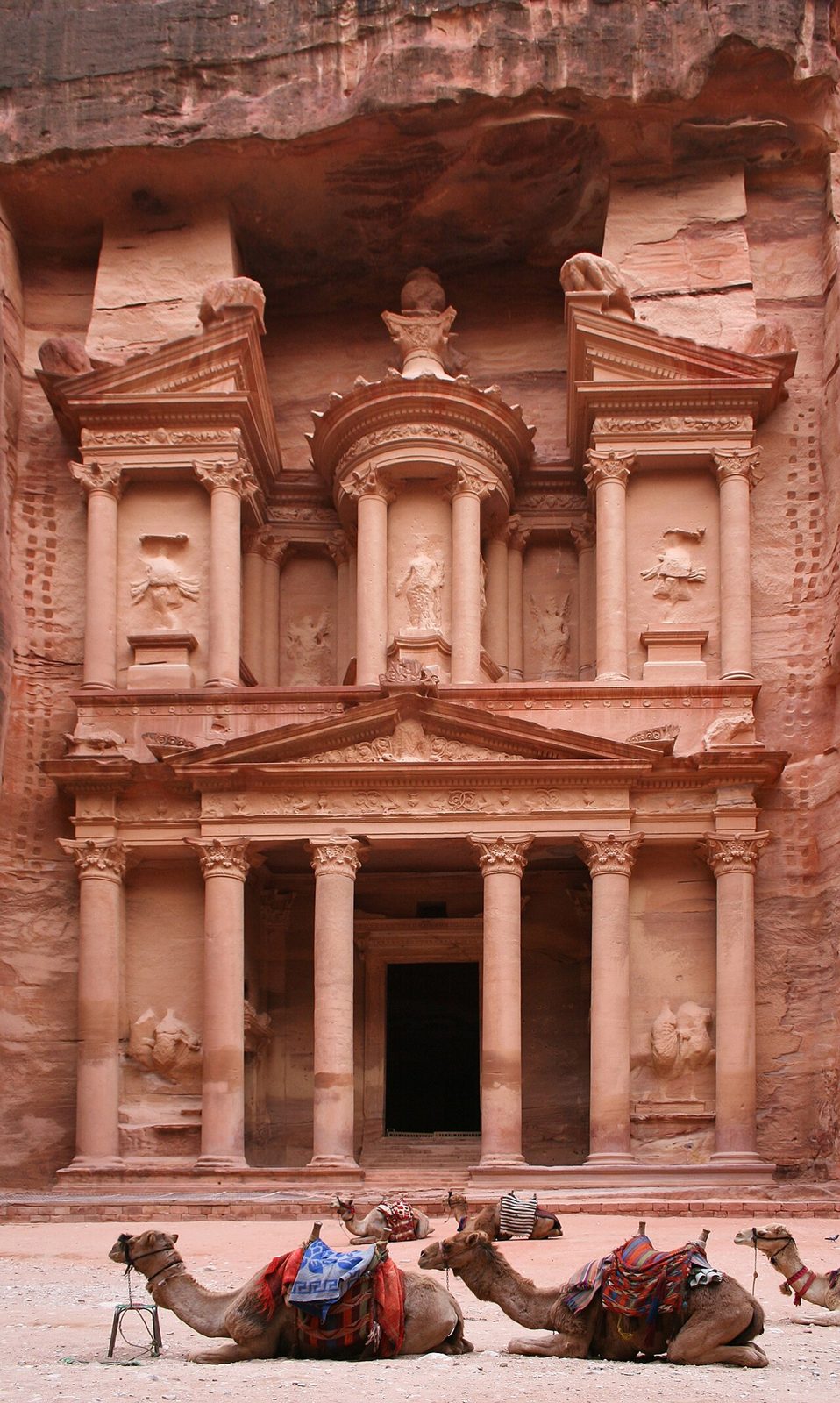
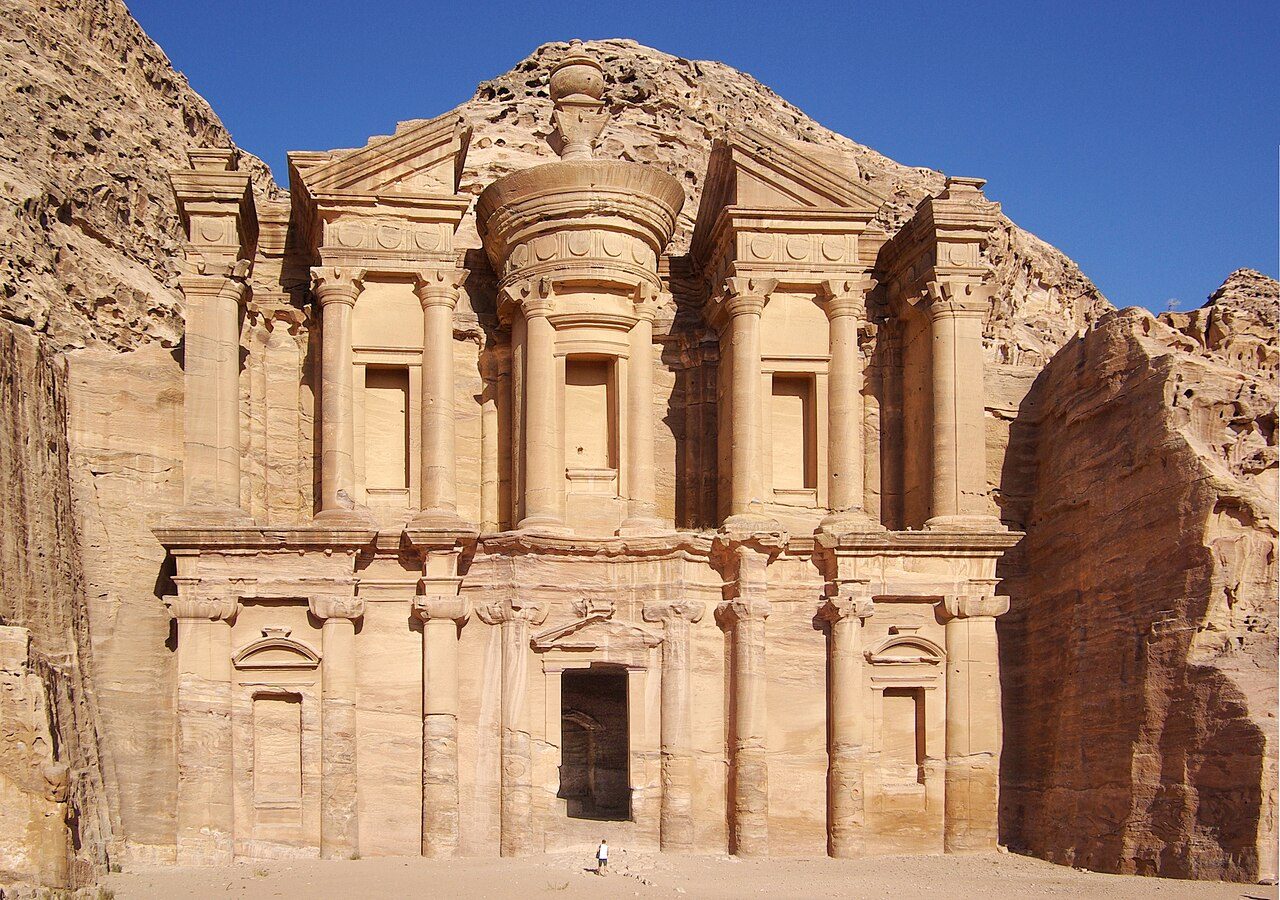
Photo credits (2)
- Al_Khazneh_Petra.jpg : Graham Racher from London, UK derivative work: MrPanyGoff, CC BY-SA 2.0, via Wikimedia Commons
- Berthold Werner, Public domain, via Wikimedia Commons