
 New added
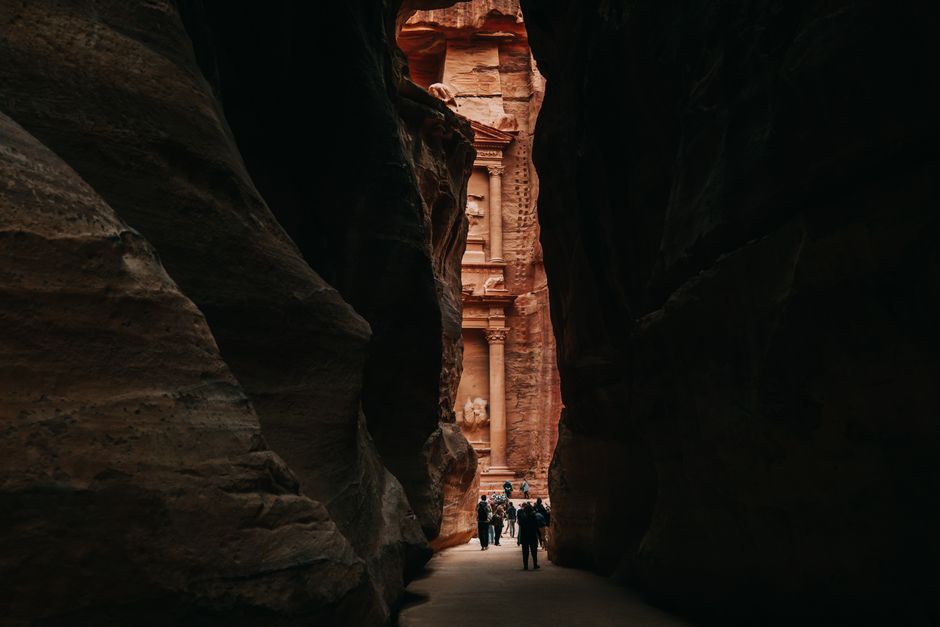
Siq Canyon
Formed by ancient tectonic fractures rather than water erosion alone, this 1.2-kilometer winding defile served as the sacred ceremonial gateway to the Nabataean capital during its height under King Aretas IV in the 1st century CE. Sandstone cliffs surge vertically up to 80 meters overhead, their surfaces rippling with natural bands of salmon pink, ochre, and deep crimson. Along the base of the gorge, ingeniously engineered rock-cut aqueducts and terracotta pipe systems illustrate the Nabataeans’ mastery over flash floods and desert survival. Weathered votive niches and faded bas-reliefs—most notably the life-sized, eroded carving of a merchant leading two camels—emerge directly from the rock face, enduring remnants of pagan rituals and silk-road commerce. Descending into the chasm, travelers leave the blistered desert sun behind, engulfed by a striking subterranean chill and the amplified resonance of footsteps echoing off undulating stone. In places, the path contracts to a mere three meters wide, snaking beneath a sliver of blue sky that is repeatedly swallowed by towering overhangs. Patches of original Roman-era hexagonal flagstones still pave the floor, polished smooth by millennia of passage. The journey culminates in one of antiquity's greatest visual spectacles: rounding the final bend, the gorge suddenly fractures, framing the sun-drenched, Corinthian-style façade of Al-Khazneh (The Treasury) glowing brilliant rose within the vertical darkness.
More in Petra
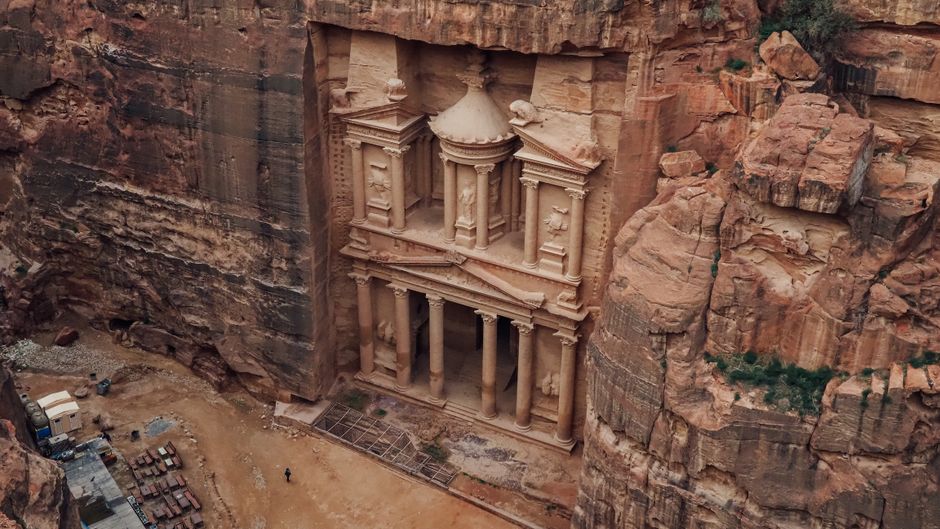
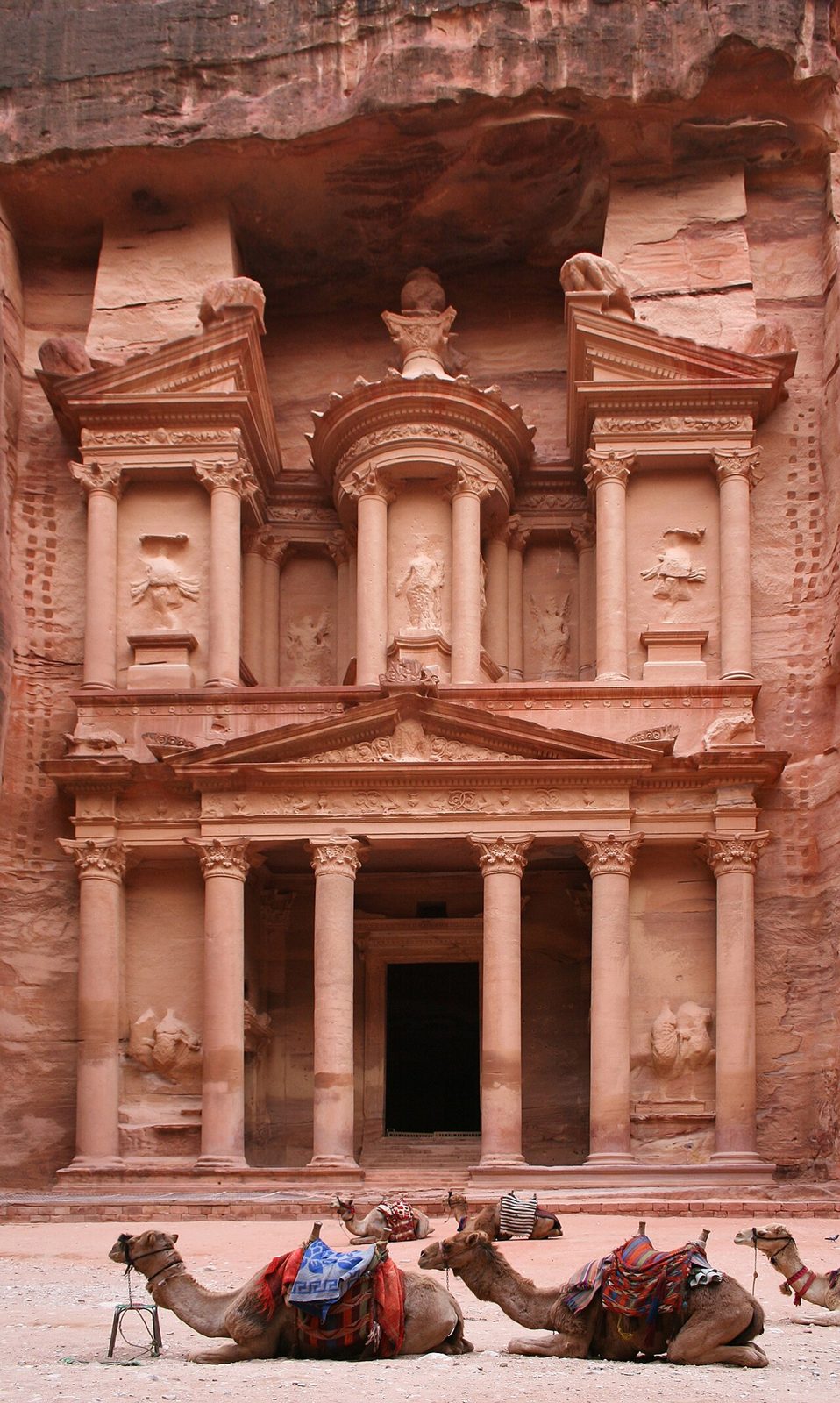
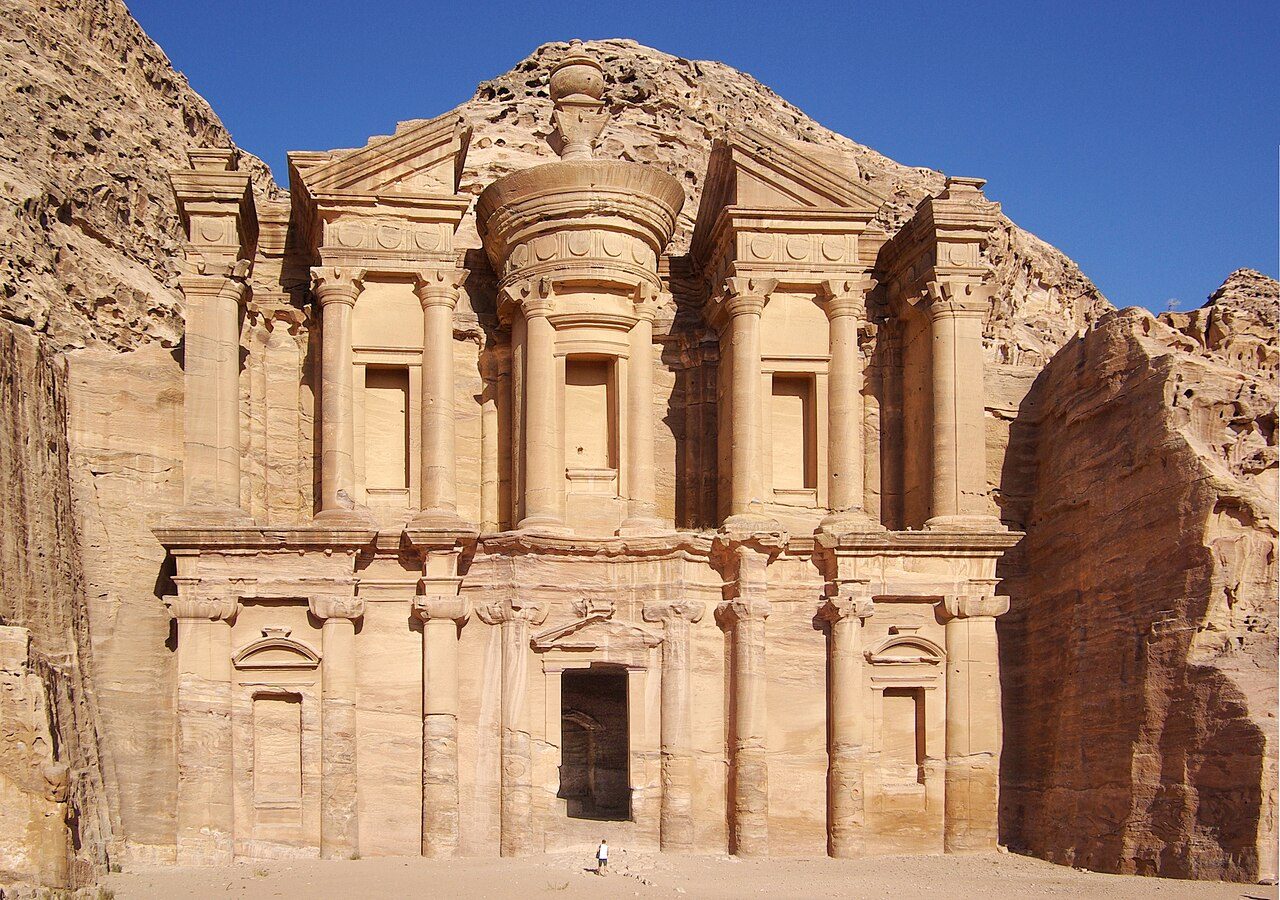
Photo credits (2)
- Al_Khazneh_Petra.jpg : Graham Racher from London, UK derivative work: MrPanyGoff, CC BY-SA 2.0, via Wikimedia Commons
- Berthold Werner, Public domain, via Wikimedia Commons