
Petra
Carved directly into the sandstone canyons of southwestern Jordan’s Shara Mountains, Petra feels monumental yet intensely intimate. Walking through the Siq, a dim fissure flanked by sheer cliffs soaring eighty meters high, your footsteps echo on ancient paving stones until the rose-tinted facade of Al-Khazneh, the Treasury, appears through the crack. Established in the fourth century BC by the nomadic Nabataeans, who mastered desert hydraulics to control vital frankincense trade routes, the city unfolds into a vast open valley. Beyond the Treasury, explore the grand Street of Facades, the cavernous Royal Tombs cut into the mountain ridges, and the massive first-century monastery, Ad-Deir, reached via an eight-hundred-step stone stairway overlooking the desolate Araba rift. In the adjacent town of Wadi Musa, evening life revolves around steaming platters of mansaf, tender lamb simmered in fermented jameed yogurt over turmeric rice, alongside freshly baked flatbread. Inside the archaeological park, local Bdoul Bedouins maintain their traditions, frequently welcoming travelers with cups of cardamom-infused black tea steeped over juniper embers. A regular evening ritual illuminates the Siq after dark with thousands of candles accompanied by traditional Bedouin flute music. Plan your journey for spring or autumn, starting at six in the morning to beat the midday desert heat, and prepare to navigate the expansive, unpaved terrain primarily on foot.
Read more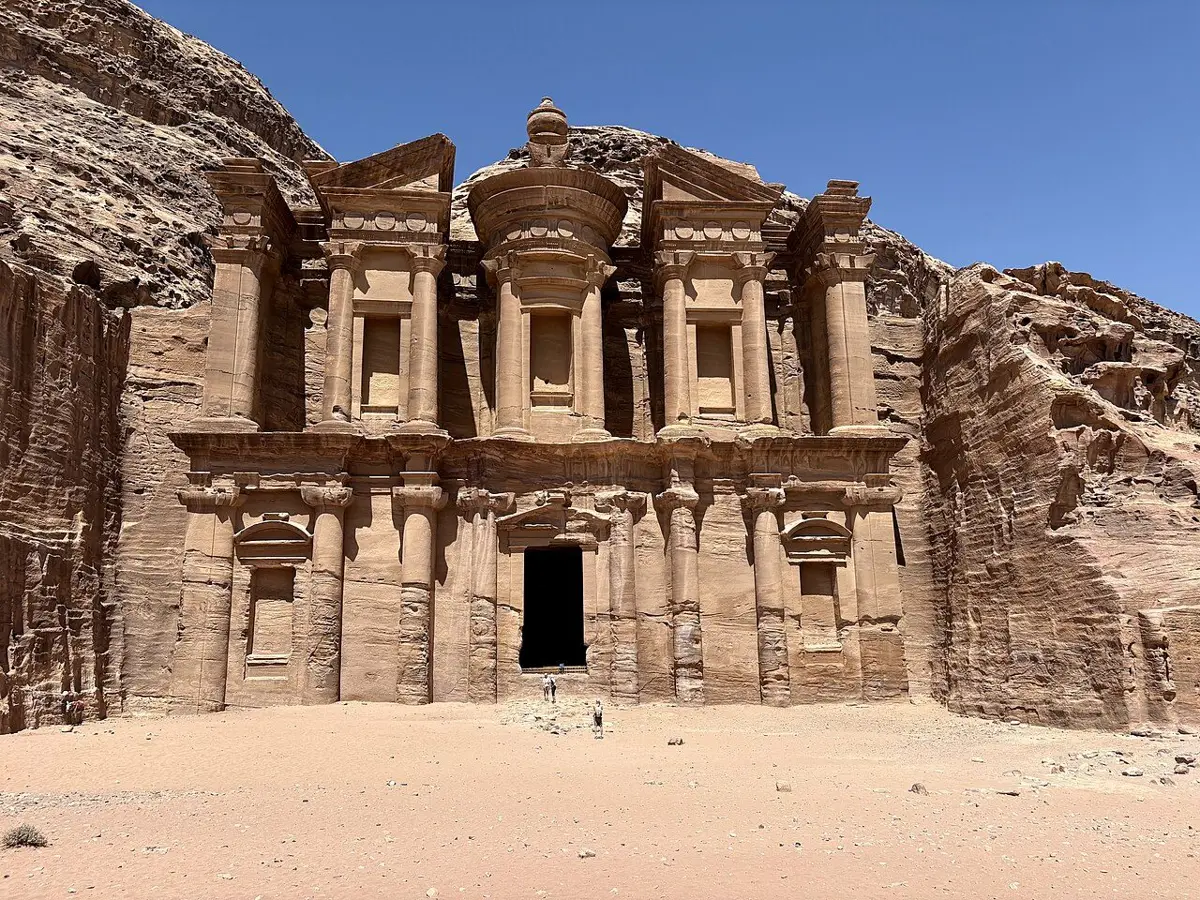
What's on in Petra
A multi-stage desert adventure trail run taking endurance athletes from Little Petra across rugged canyons into the open sands of Wadi Rum.
Official infoEvents are collected automatically from the web. Dates can change, so please check the official information before you travel.
What to see in Petra
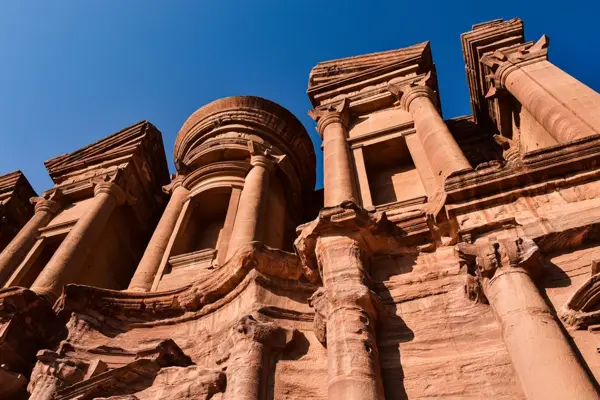
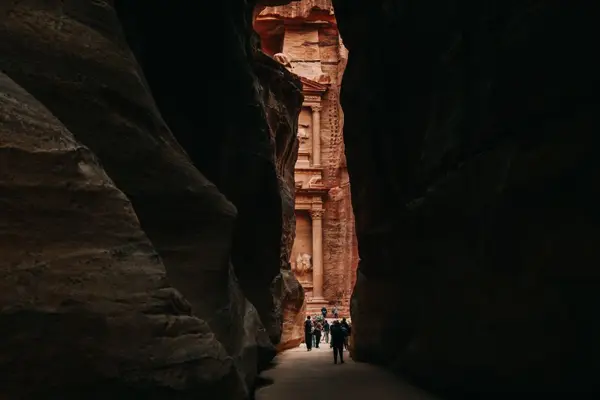
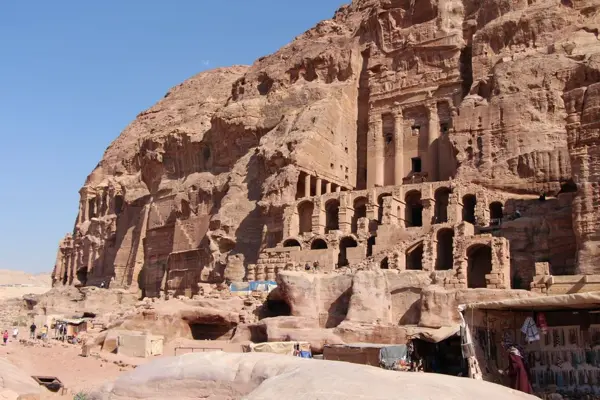
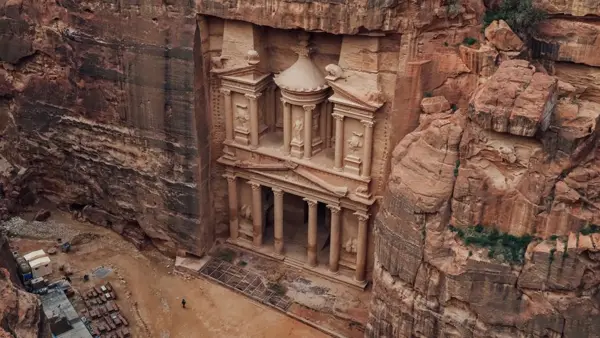
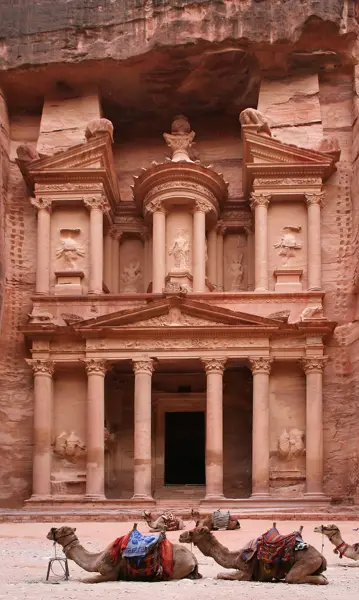
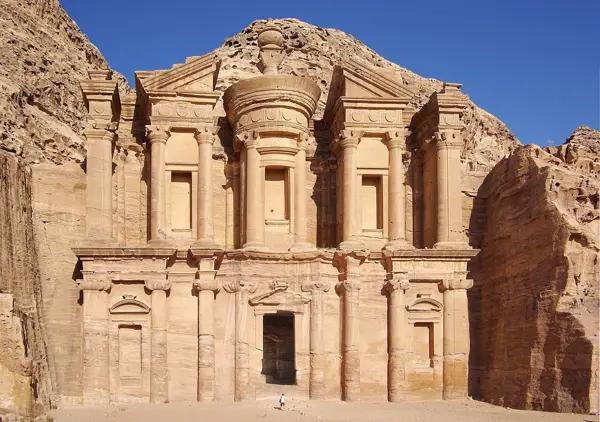
Photo credits (3)
- ほっきー, CC0, via Wikimedia Commons
- Al_Khazneh_Petra.jpg : Graham Racher from London, UK derivative work: MrPanyGoff, CC BY-SA 2.0, via Wikimedia Commons
- Berthold Werner, Public domain, via Wikimedia Commons