
 New added
Royal Tombs
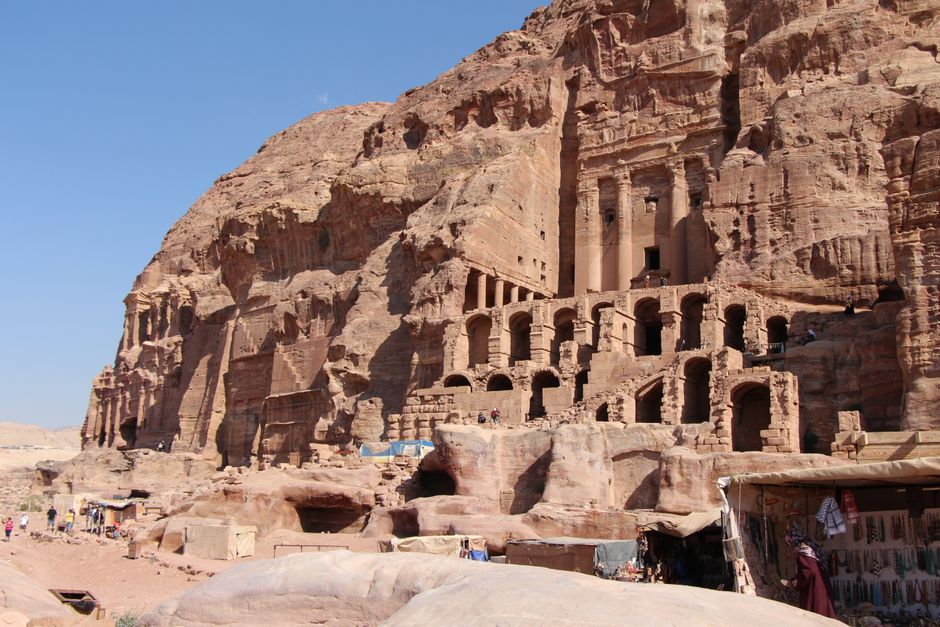
Carved directly into the sheer western cliff face of the Jabal al-Khubtha massif during the first century CE, the Royal Tombs showcase the architectural audacity of the Nabataean kingdom at its zenith. These monumental facades—comprising the Urn, Silk, Corinthian, and Palace Tombs—fuse Classical Hellenistic pediments with indigenous Mesopotamian crowstep motifs. The Urn Tomb, attributed to King Malichus II, presides over the terrace atop a monumental two-tiered substructure of vaulted stone arcades; in 446 CE, Byzantine Bishop Jason consecrated its cavernous interior into a cathedral, etching a Greek dedicatory inscription that survives inside. Nearby, the grand Palace Tomb replicates the multi-tiered theatricality of a Roman palace, while the adjacent Silk Tomb reveals nature’s own artistry, its exterior rippling with vibrant, undulating bands of ochre, magenta, and charcoal mineral veins. Climbing the weathered rock-cut staircases to the broad courtyard of the Urn Tomb, you step out onto an immense stone platform commanding sweeping views across the ancient Colonnaded Street and the Petra basin below. Entering the hollowed chambers, the desert glare yields to cool, echoing air steeped in the dry scent of exposed mineral earth. In the late afternoon, the setting sun strikes the sheer sandstone, setting the vibrant striations of the Silk Tomb ablaze in shades of fiery amber and plum. High above the valley floor, away from the bottlenecks of the Siq, the only sounds breaking the stillness are the wind sweeping across the canyon rim and the distant chime of goat bells rising from the wadi below.
More in Petra
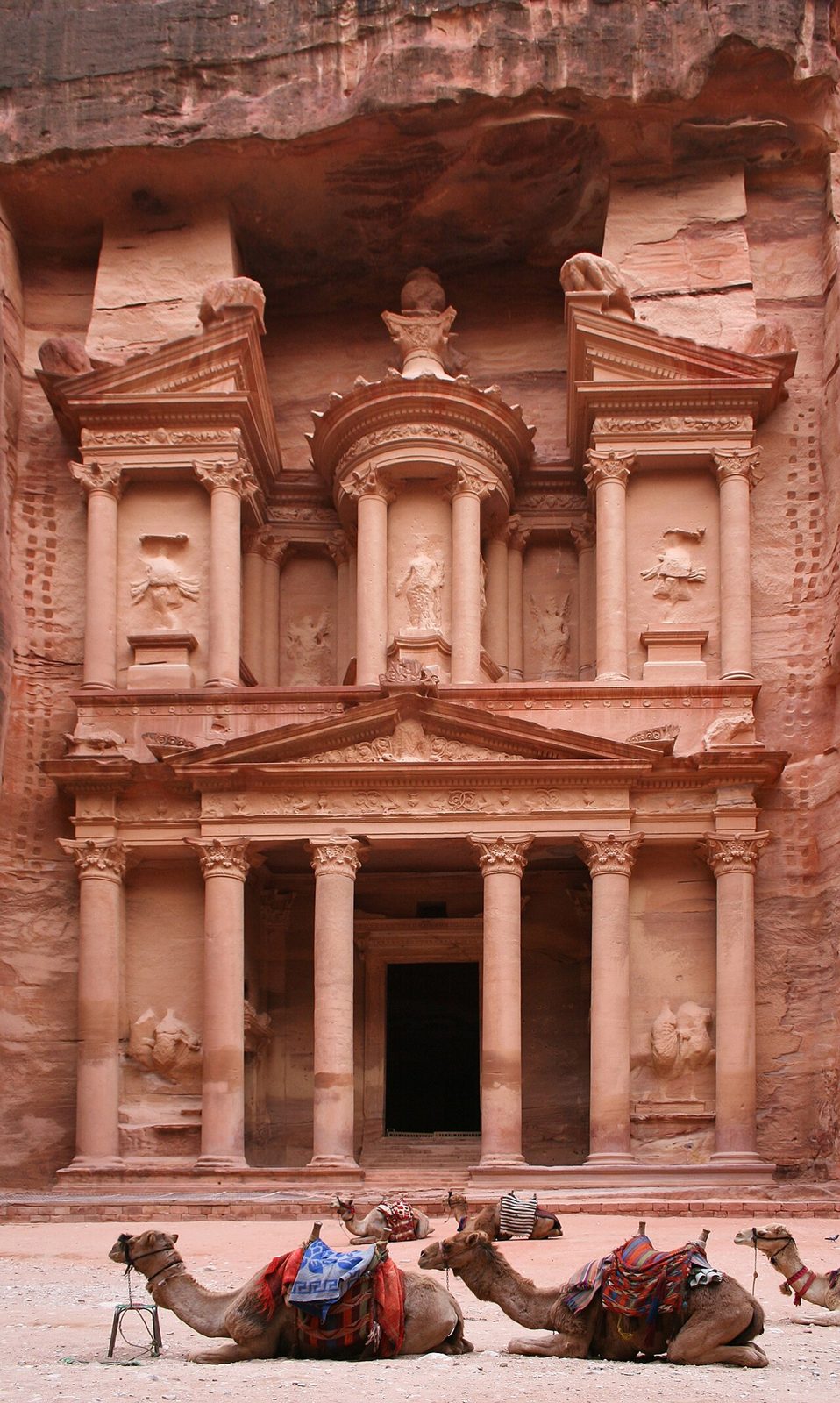
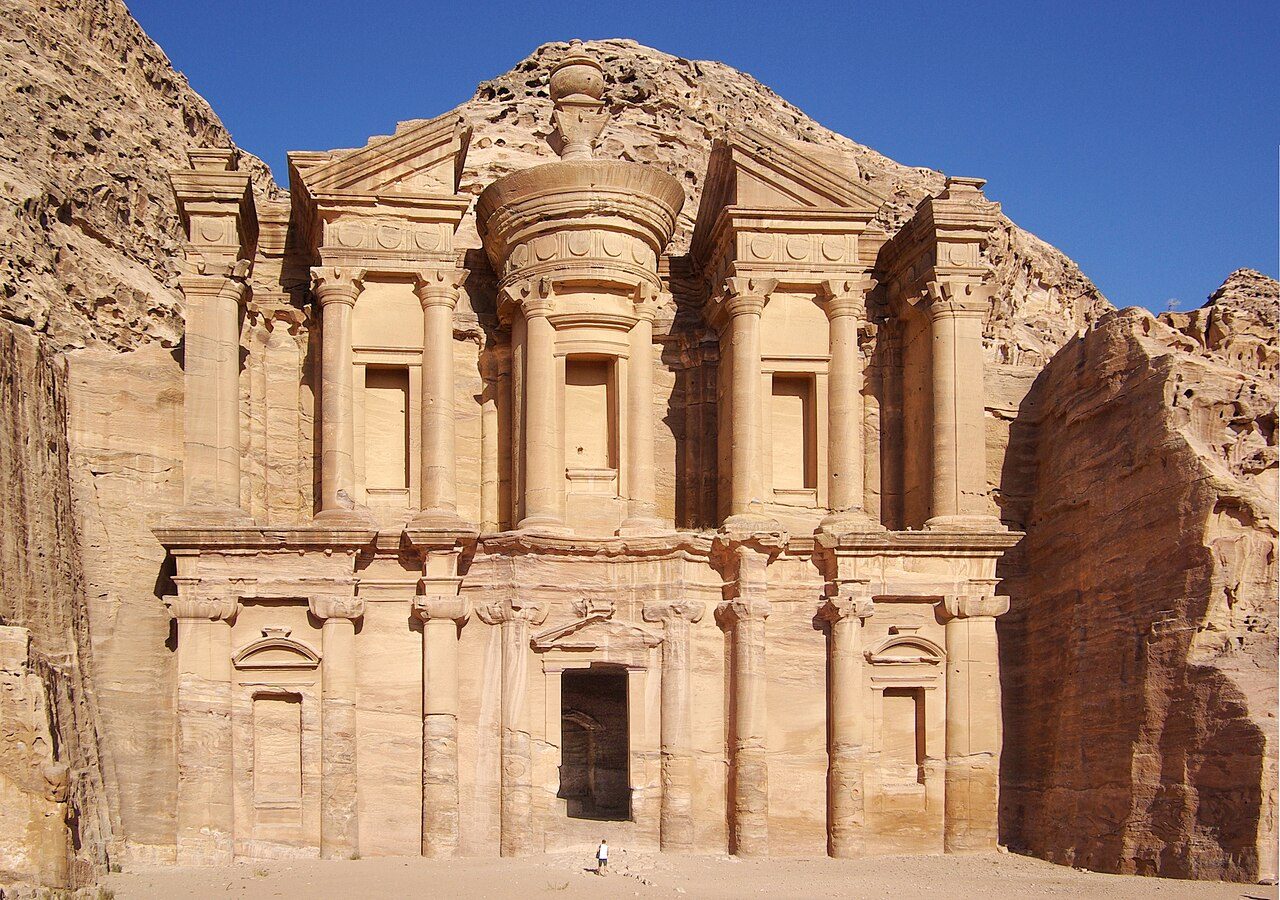
Photo credits (2)
- Al_Khazneh_Petra.jpg : Graham Racher from London, UK derivative work: MrPanyGoff, CC BY-SA 2.0, via Wikimedia Commons
- Berthold Werner, Public domain, via Wikimedia Commons