
 New added
Monastery
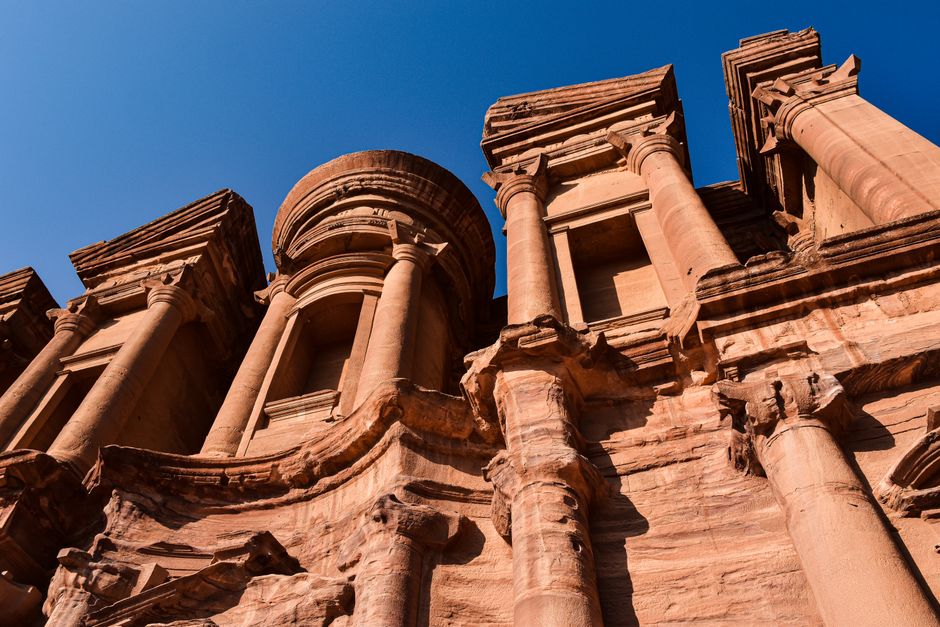
Emerging onto a wind-scoured sandstone plateau after ascending more than 800 rock-hewn steps through a rugged mountain gorge, travelers are suddenly confronted by the colossal, golden-ochre facade of Ad Deir. Spanning nearly 50 meters wide and standing 45 meters tall, the rock-cut monument immediately shrinks onlookers into insignificance against the vast desert backdrop. Its architecture represents Nabataean mastery at its zenith, fusing Hellenistic symmetry with austere desert power. Two lower flanking pavilions frame a monumental entrance, while the upper tier features a broken pediment encircling a central circular tholos, all crowned by an imposing nine-meter-tall urn carved directly from the living stone. Engineered during the mid-1st century CE—likely during the reign of King Rabbel II—the monument originally functioned as a sacred hall for religious gatherings dedicated to the deified monarch Obodas I. Inside, past the colossal threshold, visitors encounter a single, cavernous room echoing with desert wind, illuminated only by natural light and anchored by an empty altar niche at the rear. Faint cruciform carvings etched into the interior walls reveal that Byzantine monks later repurposed this pagan sanctuary into a desert retreat, ultimately bestowing the site with its enduring Arabic moniker: the Monastery.
More in Petra
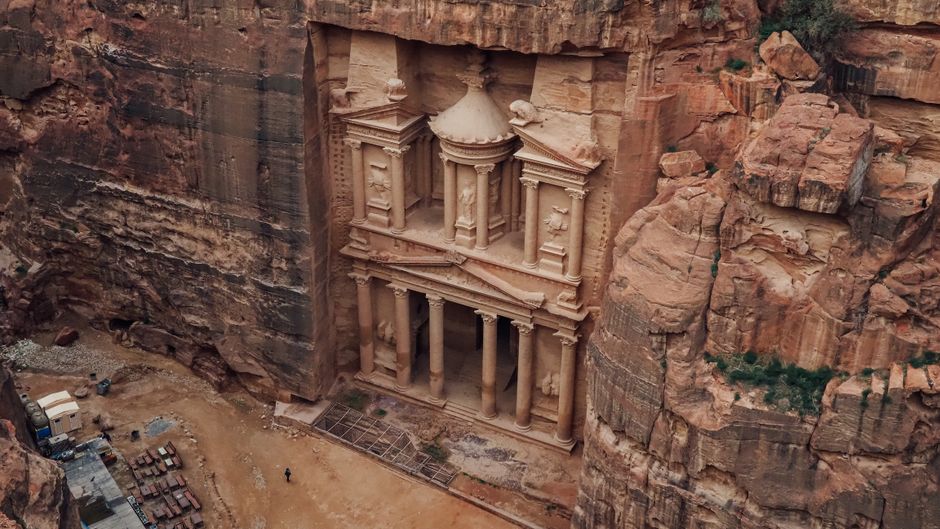
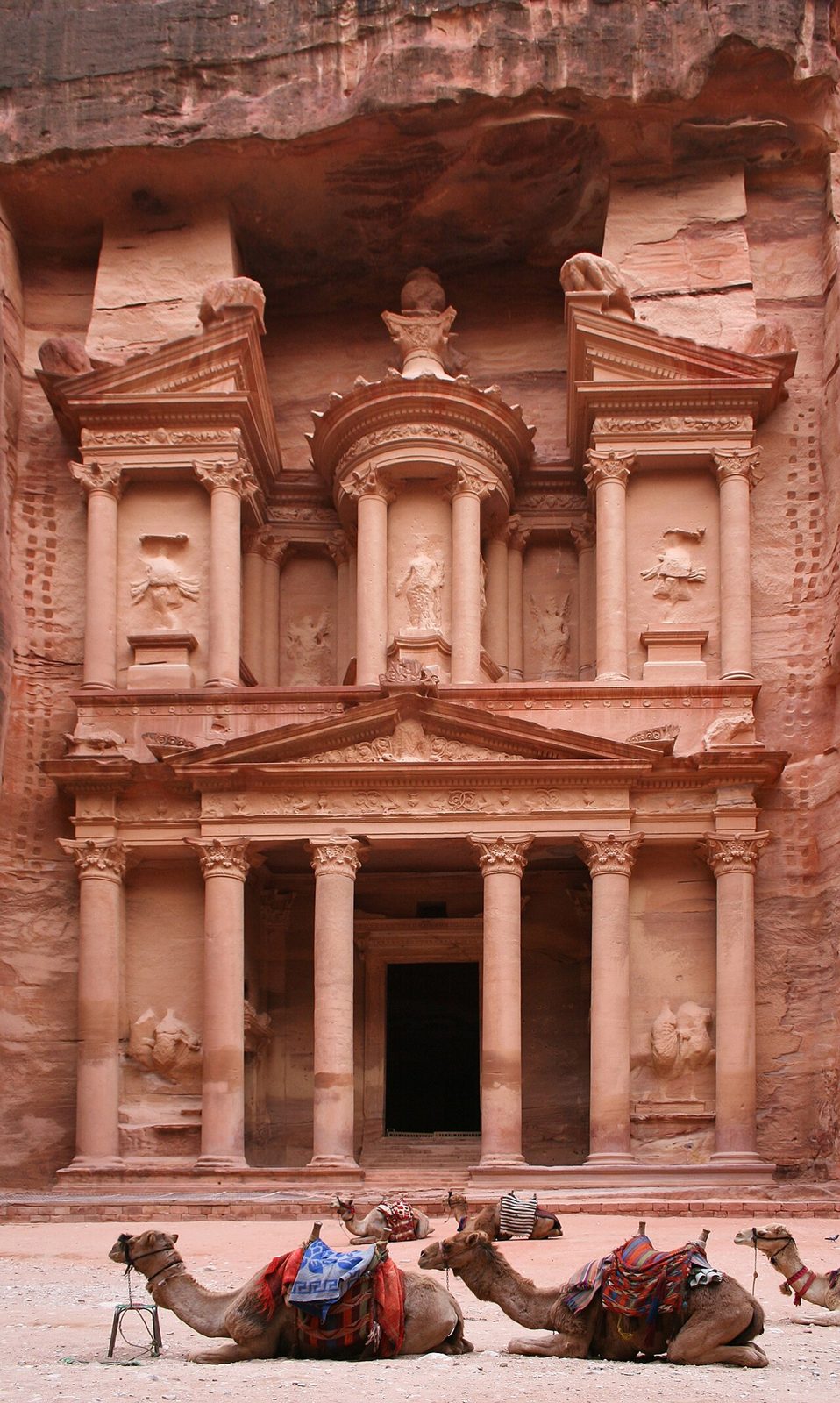
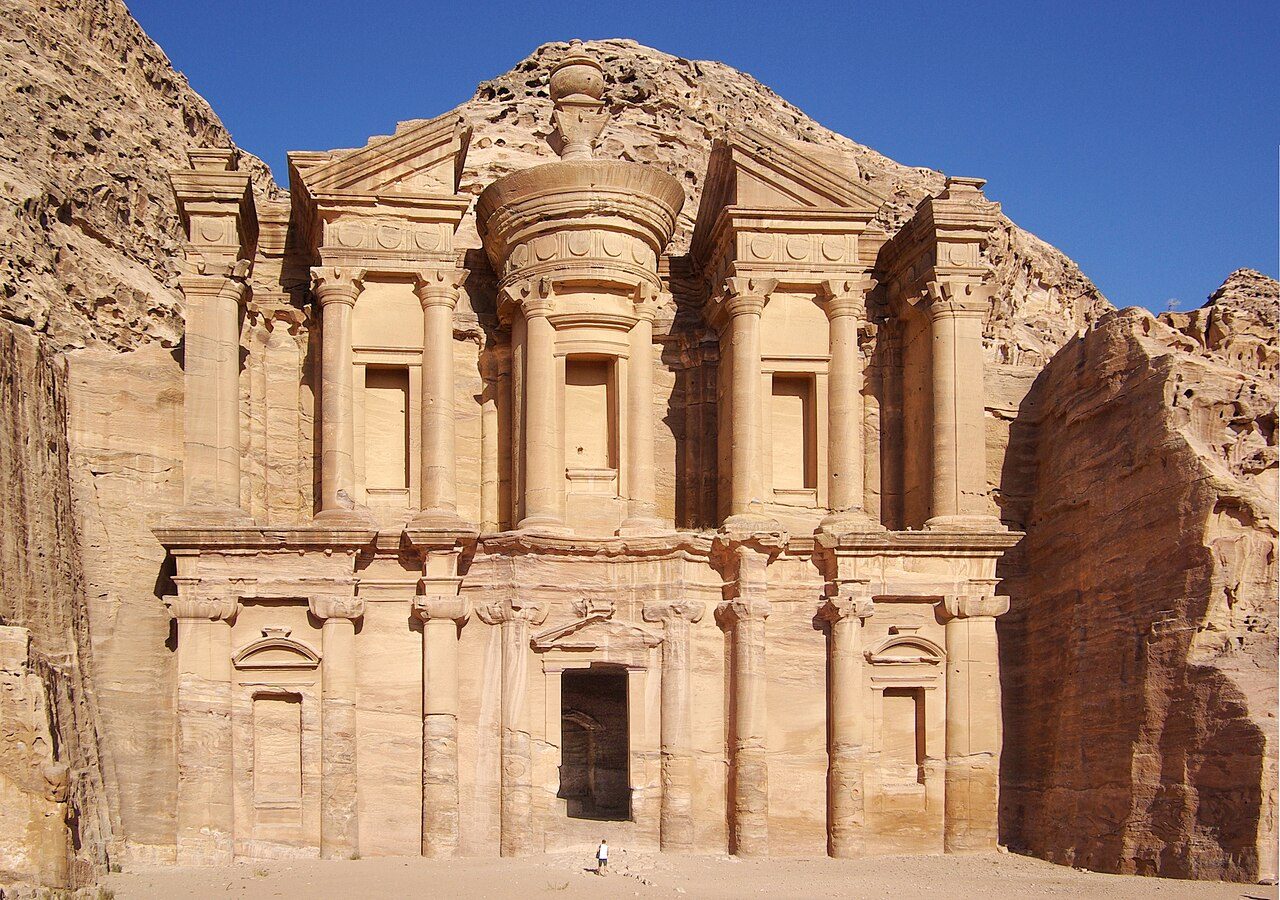
Photo credits (2)
- Al_Khazneh_Petra.jpg : Graham Racher from London, UK derivative work: MrPanyGoff, CC BY-SA 2.0, via Wikimedia Commons
- Berthold Werner, Public domain, via Wikimedia Commons