
 New added
1 / 2
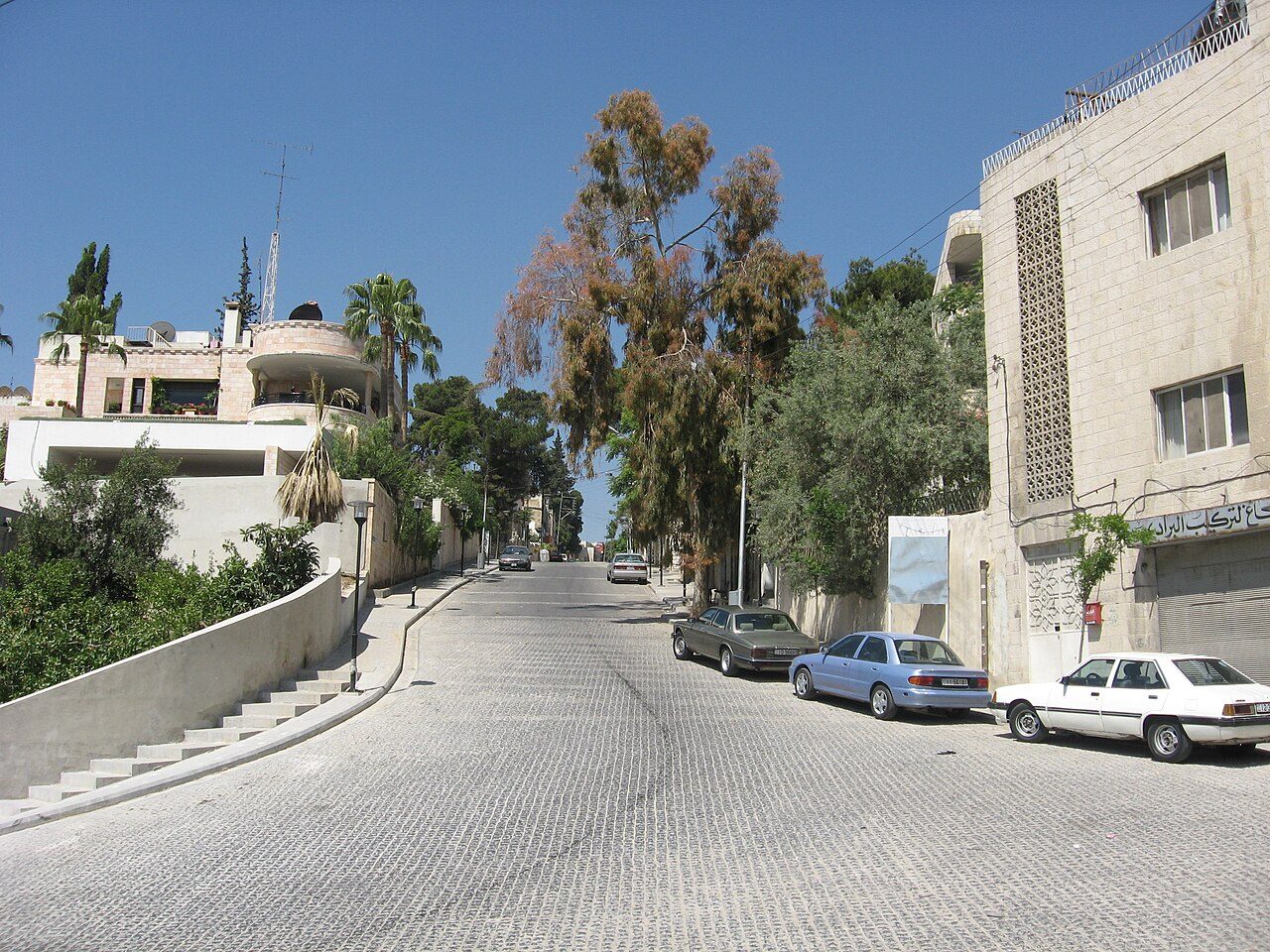
Rainbow Street
Tracing the crest of Jabal Amman, Rainbow Street emerged during the 1920s as an enclave for the nascent Emirate of Transjordan’s political and mercantile elite. Originally designated Abu Bakr al-Siddiq Street—before adopting its popular moniker from the mid-century Rainbow Cinema—this ridge preserves Jordan’s early 20th-century architectural shift. Stately private residences, most notably the late-1920s Mango House, showcase the Levant’s transition to modernity with hand-hewn yellow limestone masonry, deep-set triple-arched loggias, and intricate wrought-iron balconies. Beneath the shade of century-old olive and jacaranda trees, figures such as King Talal and early diplomatic envoys once walked these stone corridors, cementing the district’s role in modern Jordanian statehood. Today, visitors tread uneven flagstones flanked by vibrant street art and terraced staircases that plunge steeply toward the historic downtown basin. The sensory landscape is dense and immediate: the fragrance of cardamom-steeped coffee mingles with the sharp scent of mint and the sizzle of sesame-crusted patties outside Falafel Al Quds, a sidewalk institution operating since 1966. Iron lanterns illuminate restored stone villas that now house independent galleries, antiquarian bookshops, and rooftop cafés. Standing at the street’s eastern overlook, travelers look past clay-tiled parapets into the sprawling amphitheater of Amman’s white-stone hills, where the illuminated Roman pillars of the Citadel gleam against the violet desert dusk.
More in Amman
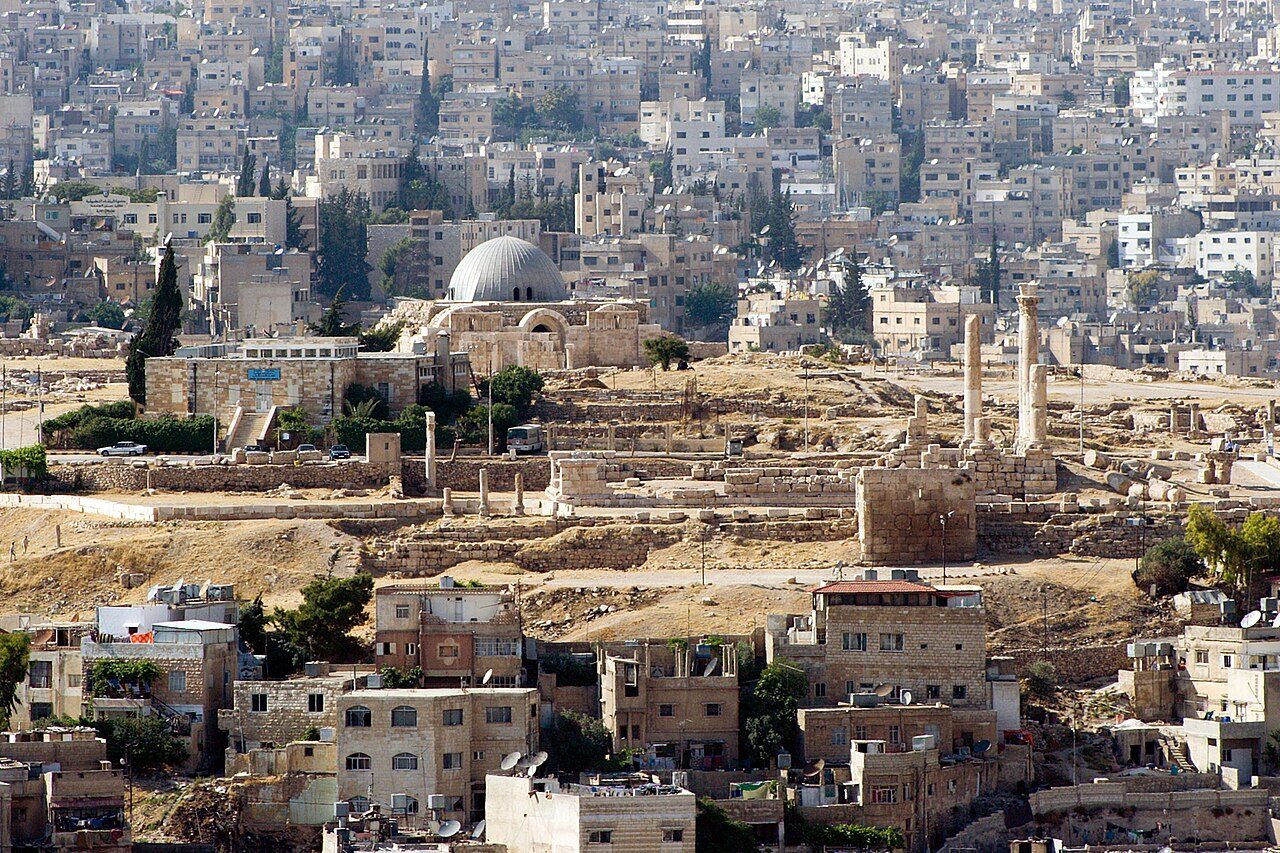
Photo credits (7)
- Ldud at English Wikipedia, Public domain, via Wikimedia Commons
- Gadora81, CC BY-SA 4.0, via Wikimedia Commons
- Bernard Gagnon, CC BY-SA 4.0, via Wikimedia Commons
- Berthold Werner, CC BY 3.0, via Wikimedia Commons
- David Bjorgen, CC BY 2.5, via Wikimedia Commons
- The original uploader was Freedom's Falcon at Arabic Wikipedia ., CC BY-SA 2.5, via Wikimedia Commons
- Berthold Werner, CC BY 3.0, via Wikimedia Commons